LightBlog

jeudi 30 janvier 2020

Xiaomi explains why under-screen cameras are far from achieving mass production

Since the time the first phones with notched displays appeared on the market, it has been clear that full-screen displays are the ultimate goal. At first, smartphones in the first half of 2018 went with a wide display notch like the iPhone X. Then the trend was to move to a smaller V-shaped or U-shaped notch, which was ubiquitously referred to as the “waterdrop notch”. At the end of 2018 and at the beginning of 2019, we saw the first phones with hole-punch cameras arrive in the market. Hole punch cameras are similar to cameras placed in waterdrop notches in terms of the amount of space occupied, and they were a necessary distraction. Until now, the only way to achieve a true full-screen display is to go with mechanical parts. This was first pioneered by the Vivo NEX with a pop-up camera, a technique that was adopted by several major vendors in 2019. A motorized automatic slide-up mechanism was used only by the OPPO Find X, and the final technique of having a mechanical, magnetic slider was only used in two phones (including the Xiaomi Mi Mix 3) in 2018 before it lost steam. In 2020, even the popup camera is losing momentum in favor of the hole punch camera, as device makers focus on the negative weight, space, and thickness constraints of having a popup camera instead of a hole punch or a waterdrop notch. Going with a hole punch instead of a popup camera enables certified water resistance, for example.

The ultimate goal, therefore, is clear. The industry must achieve the full-screen display without using mechanical parts. Theoretically, this would involve using an under-screen camera, which would move the camera beneath the display. This was achieved successfully with other components such as the proximity and ambient light sensors, but it’s difficult to achieve with a front camera. How difficult? Xiaomi and OPPO separately demoed their under-screen camera technologies in June 2019. At that time, and even now, it seems the best of both worlds. However, the technology doesn’t seem to be making its way to shipping phones anytime soon. Hole punches will be the preferred way of handling front cameras this year. Now, Xiaomi’s VP Lu Weibing has explained on Weibo why under-screen cameras are not ready yet, and why it will take more time for it to get mature.
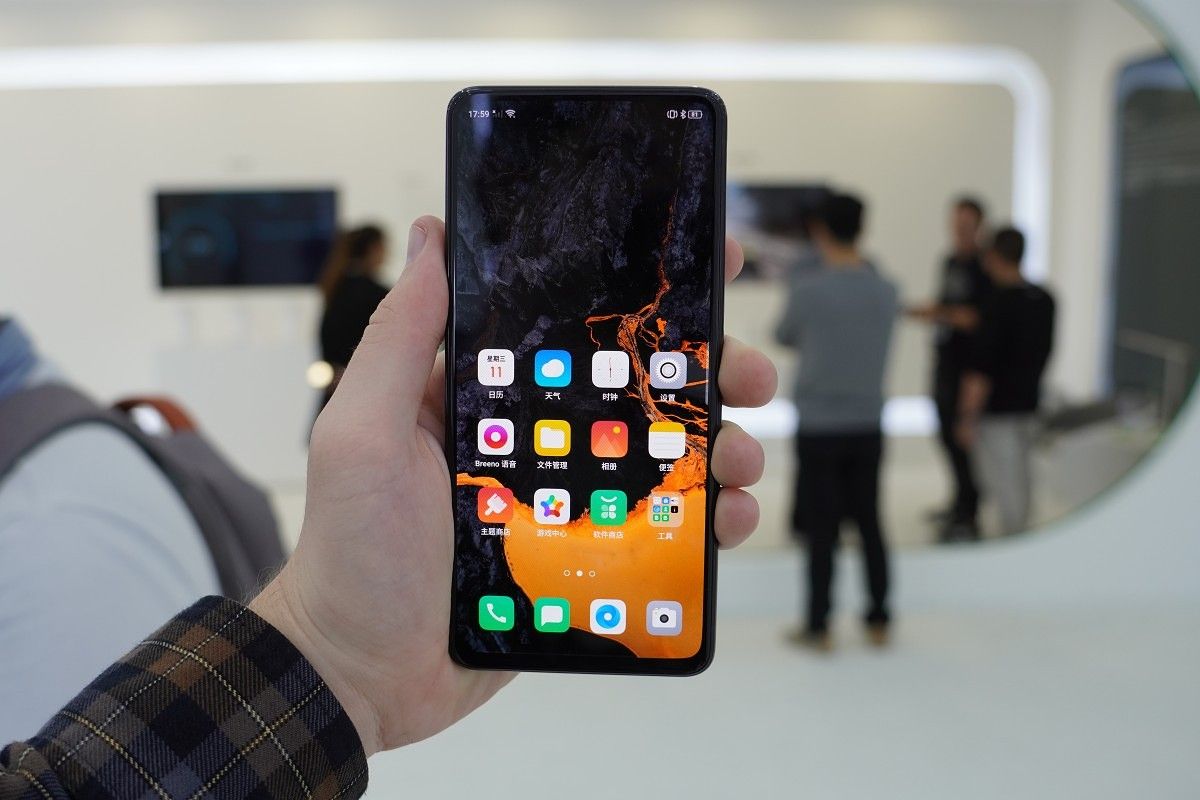
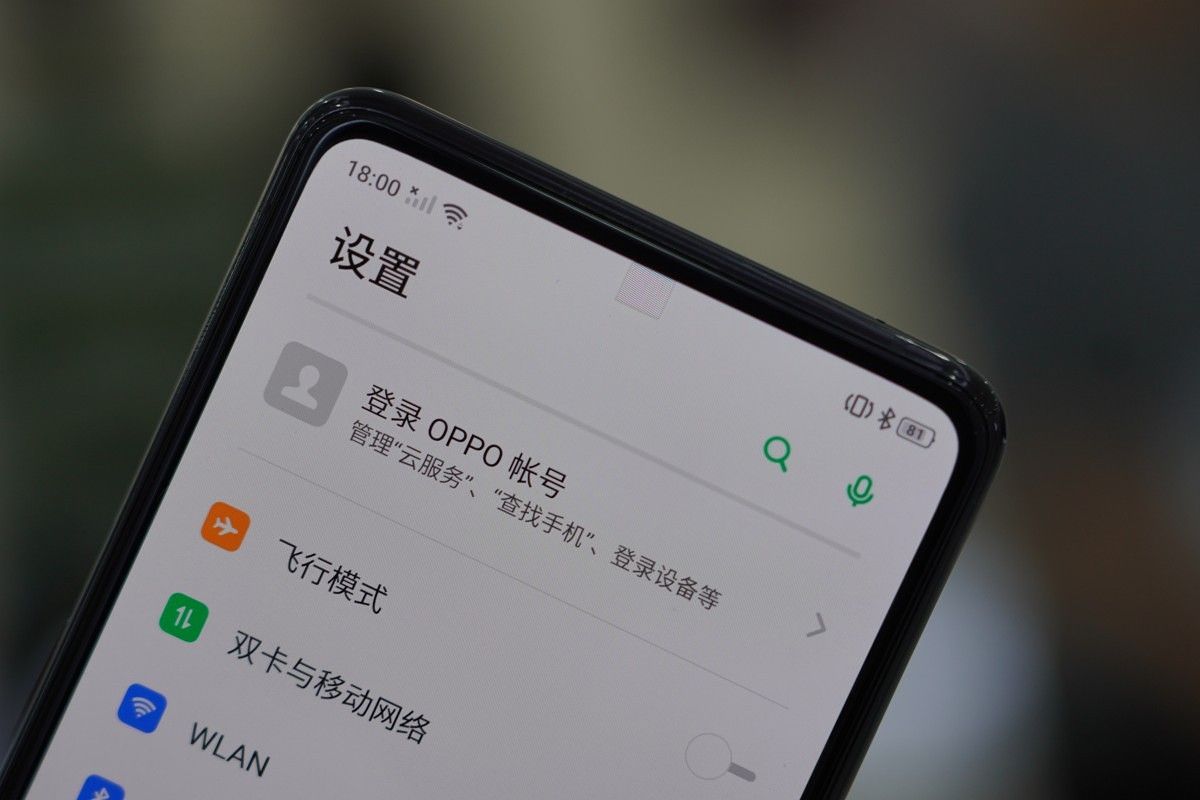
OPPO is one of two companies that have publicly demonstrated under-screen camera technology. Above are images of OPPO’s prototype smartphone with an under-screen camera.

Mr. Weibing refers to it as CUP – “Camera under Panel” on phones. This will achieve a true full-screen display without sacrificing space, but the current technology implementation has many difficulties. The crux of the matter is that the display’s PPI and the transmittance are in conflict with each other.

The current pixel density (measured in pixels per inch – PPI) of Xiaomi’s phones is 400 PPI. The high pixel density means that the light transmittance in the camera is very low, which has a serious effect on the image quality. If the PPI is lowered and the light transmittance is increased, Mr. Weibing notes that there will be a large gap between the PPI in the display area and the PPI of the entire screen. This will cause phenomena such as color patches in the display area.

Camera samples from OPPO’s prototype smartphone with an under-screen camera.

Right now, it is impossible to find an effective solution that takes into account both display effects and camera effects with current technical capabilities, according to Mr. Weibing. He states that although Xiaomi released the CUP-based DEMON technology in 2019, the company is “far from achieving mass production”. He concludes on an optimistic note by saying that the entire industry is working hard to overcome this issue.

While OPPO hasn’t stated on whether its own under-screen camera solutions face the same technical issues, the underlying physics is the same. This means we definitely won’t see a phone with an under-screen camera this year, and it’s unlikely that the issues will be solved in 2021. Until then, the debate of hole punches and waterdrop notches versus popup cameras will go on.


Source: Xiaomi | Via: GSMArena

The post Xiaomi explains why under-screen cameras are far from achieving mass production appeared first on xda-developers.


from xda-developers https://ift.tt/36D9KGU
via IFTTT

Unicode 13 announced with 62 new emoji for 2020

Emoji have radically changed the way we communicate online. They’re the eventual evolutions to the emoticons we used to have between the late 90s and the early 2000s, and since they were initially conceived, they have evolved into something that can accurately represent our emotions or visually represent anything we want to express. They get extended every year, with a number of new emoji being added to every year’s new Unicode release and new versions of every major OS (Android, iOS, Windows) adding support for these new Unicode releases. Now, we’re getting to know the latest Unicode release, Unicode, 13, with over 62 new emoji being added for this year.

Approximation of what all the new emoji will look like

The newest release of Unicode will be adding a bunch of new emoji, such as a smile with a tear, a polar bear, as well as the transgender flag and a bunch of other additions. Unicode 13 also modifies and adds a bunch of gender-inclusive emoji, which means that some emoji typically depicting common gender roles, such as feeding a baby as well as bride and groom, will now be available in women, men, and non-binary variants for gender inclusion.

The new emoji will be added through the year on upcoming OS updates to Android, iOS, and PC platforms, and if everything goes well we should be seeing them on most devices by the end of the year or early 2021. Instant messaging apps like WhatsApp should also begin preparing support in the coming months. As mentioned, there are 62 brand new emoji, but including variations on existing icons, that number goes up to 117. Check out the Emojipedia link below for the full list.

Source: Unicode, Emojipedia

The post Unicode 13 announced with 62 new emoji for 2020 appeared first on xda-developers.


from xda-developers https://ift.tt/3b0pzuL
via IFTTT

[Update: Galaxy S10 5G] Stable Android 10 (One UI 2.0) begins rolling out to the Galaxy S10 in the US

Update (1/30/20 @ 10:05 AM ET): The Samsung Galaxy S10 5G model is finally getting Android 10 (One UI 2.0).

Samsung kicked off the One UI 2 beta (Android 10) for the Galaxy S10 series back in October. Late last month, the stable update started rolling out to beta testers in Germany. Today, the company has started rolling out the stable version of One UI 2 to Galaxy S10, S10+, and S10e beta testers one month early.

Samsung Galaxy S10 XDA Forum || Samsung Galaxy S10+ XDA Forum || Samsung Galaxy S10e XDA Forum

The update was announced in the beat app first and has since been confirmed by T-Mobile. S10 device owners on T-Mobile, Sprint, and Xfinity Mobile have reported receiving the update already, and some users in Canada as well. The build numbers of the entire family below:

  • Galaxy S10 (G973USQU2CSKP)
  • Galaxy S10+ (G975USQU2CSKP)
  • Galaxy S10e (G970USQU2CSKP)

The One UI 2 update comes in around 2.4GB in size and includes the December security patch. As Samsung’s announcement says, this update is rolling out to beta testers before it officially arrives for others. So if you have been enrolled in the One UI 2 beta program on your Galaxy S10, you can download stable Android 10 before everyone else. It should be a matter of time before the update starts appearing on AT&T, Verizon, and more Canadian devices.

Source: Reddit | Via: Droid-Life


Update: Galaxy S10 5G

The Galaxy S10 series started receiving Android 10 (One UI 2.0) in the US back in December, but the 5G model was not included. It appears the rollout has finally begun for those rocking the 5G-capable Galaxy S10. So far, T-Mobile has sent out the update (G977TUVU3BSL5) as of January 27th. It includes Android 10, WEA 3.0, and “Messaging and other improvements.” Go to Settings > Software update to check for the update.

Source: T-Mobile

The post [Update: Galaxy S10 5G] Stable Android 10 (One UI 2.0) begins rolling out to the Galaxy S10 in the US appeared first on xda-developers.


from xda-developers https://ift.tt/38J3cJ1
via IFTTT

HBO’s Android app slowly rolls out the ability to download shows or movies for offline viewing

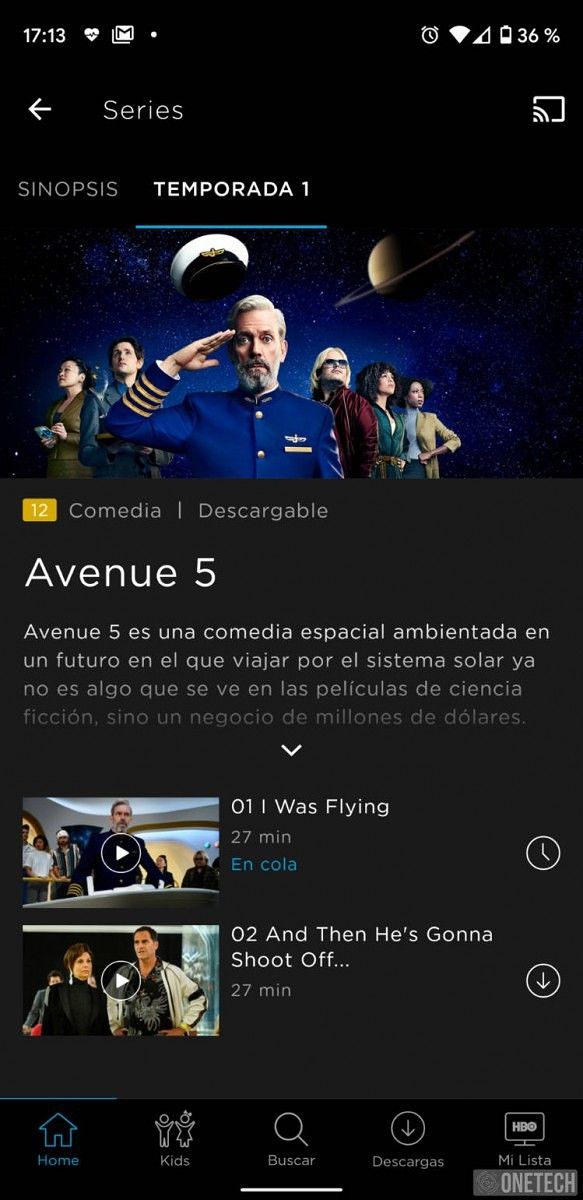
Seemingly every company has their own streaming service, after an online streaming craze kickstarted by Netflix years ago. Disney+ is the most recent, high-profile offering and it features nearly all of Disney’s back catalog – admittedly a whole lot of media. Other companies such as Amazon have Prime Video, whilst HBO has HBO GO and HBO NOW, home to much of the network’s most coveted offerings on-demand. While competitors from the likes of Disney, Netflix, and Amazon allow you to download shows and movies for offline viewing, until now, HBO’s streaming services did not. That’s now changing, as the app finally allows you to save content for later offline viewing.

The feature is seemingly enabled in the latest version of the HBO application for the service you are subscribed to, but it may not be rolled out to everyone just yet. There are a few restrictions on the service though, one being that it has a limitation of 25 titles at a time. Not all titles can be downloaded either, and those that are downloaded will be removed from your device 2 days after viewing, even if you didn’t finish it. Only shows and movies that are marked with an arrow icon will be available for download.

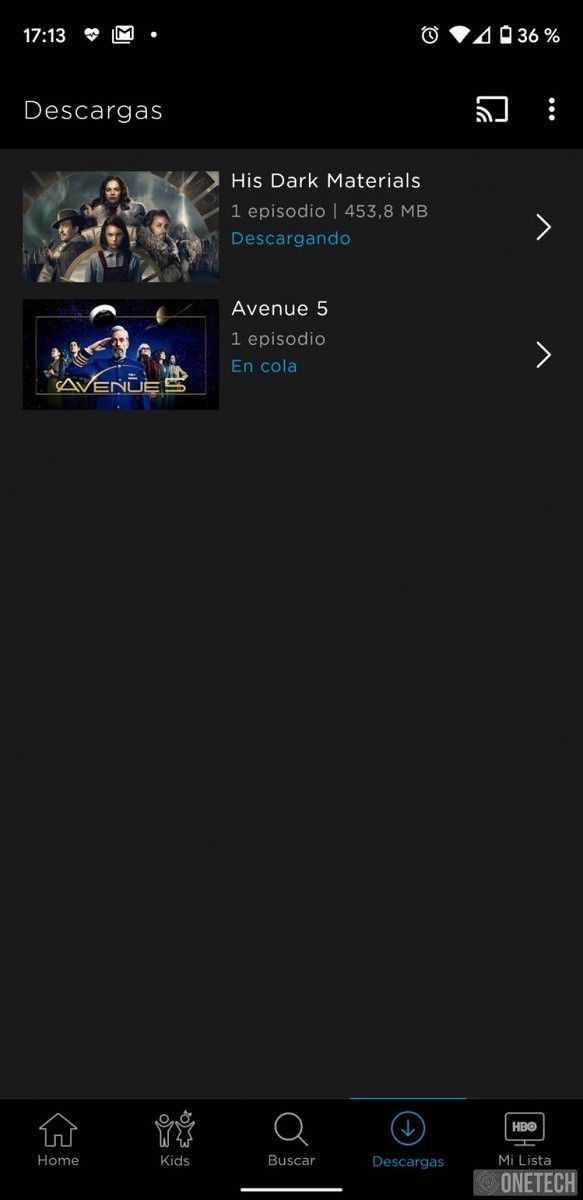
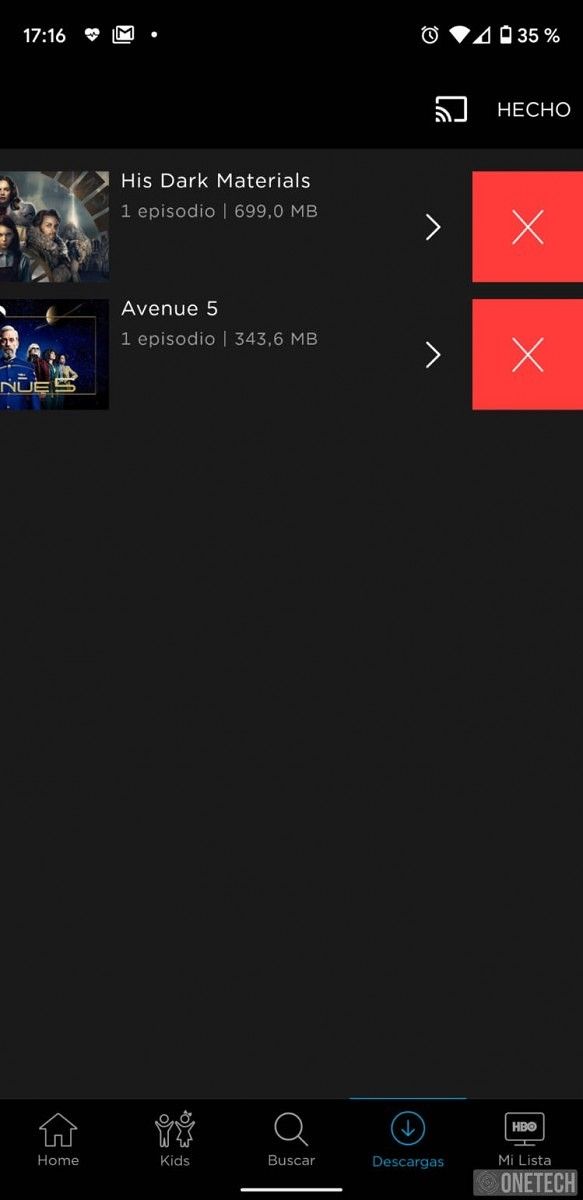
Each show and movie downloaded will be shown in a “Downloaded” section from within the HBO app, which shows the number of episodes saved, the size it takes up, and gives you the ability to remove it from your device. Here you can also view how many more titles you’re allowed to download, along with enabling a setting to only download titles over WiFi.

HBO app download HBO app download HBO app download

In case you’re wondering what the difference is, HBO GO comes as a part of a cable TV subscription, whilst HBO NOW is aimed more internationally and can be subscribed to like you would subscribe to any other streaming service. The downloads feature has potentially been in the works a while, though the feature is only starting to pop up for people in the past few weeks. HBO’s initial limitation on downloading, as per their FAQ, was that you would only be able to have 15 titles downloaded at a time, though obviously they’ve increased that.

If you have the feature, let us know in the comments if it works, and what you can download!


Source: OneTech

Via: PhoneArena

The post HBO’s Android app slowly rolls out the ability to download shows or movies for offline viewing appeared first on xda-developers.


from xda-developers https://ift.tt/2ObAIig
via IFTTT

Texas detective says the data encryption of modern Android phones is superior to iPhones

The US government has been trying to pressure companies like Apple to create a backdoor in its smartphones to help law enforcement agencies access encrypted data when needed. Such a backdoor could help agencies gather crucial information about a detainee, which can then be used as evidence in a court of law. However, critics have argued that giving the government easy access to smartphone data defeats the entire purpose of encrypting it in the first place. Apple, among other companies, has refused to cooperate so far. But a recent report from Vice claims that the government has been doing a decent job of cracking smartphone encryption even without their help when it comes to most iPhones. Android smartphones, however, have been getting increasingly more difficult to crack.

The report cites statements from Detective Rex Kiser, who conducts digital forensic examinations for the Fort Worth Police Department. In his statement, Kiser said, “A year ago we couldn’t get into iPhones, but we could get into all the Androids. Now we can’t get into a lot of the Androids.” The report further reveals that Cellebrite — a company that government agencies hire to crack smartphones — already has a tool that can crack iPhone encryption all the way up to the iPhone X. The tool can successfully get investigators access to data such as GPS records, messages, call logs, contacts, or even data from specific apps like Instagram, Twitter, LinkedIn, and more, which can be used to prosecute criminals.

However, the same Cellebrite tool hasn’t seen much success with Android encryption on a variety of handsets. For instance, the tool wasn’t able to extract any social media, internet browsing, or GPS data from devices like the Google Pixel 2, which features a tamper-resistant hardware security module, and the Samsung Galaxy S9. And in the case of the Huawei P20 Pro, the software didn’t get access to anything at all. To this Kiser told Vice that, “Some of the newer operating systems are harder to get data from than others … I think a lot of these [phone] companies are just trying to make it harder for law enforcement to get data from these phones … under the guise of customer privacy.”

But the aforementioned information doesn’t mean your Android device is uncrackable. Even though Cellebrite’s tool doesn’t work on some Android devices, it doesn’t mean investigators can’t extract the data they need for an investigation. The process is just a bit more labor-intensive and takes more time. According to Vice’s sources, even brand new devices like the iPhone 11 Pro Max can be cracked, but the process isn’t as easy as hooking up the device to a cracking tool to get the job done. Nonetheless, the report still does suggest that some Android phones are more difficult to crack than iPhones, making them a safer alternative if security and privacy are major concerns.


Source: Vice

Via: Android Authority

The post Texas detective says the data encryption of modern Android phones is superior to iPhones appeared first on xda-developers.


from xda-developers https://ift.tt/36CSbGM
via IFTTT

mercredi 29 janvier 2020

[Update: Launched in India] Fossil Hybrid HR smartwatch with an analog dial and always-on display launched for $195

Update 1 (01/30/2020 @ 2:04 AM ET): Fossil has launched the Hybrid HR in India for a price of ₹14,995 (~$210) onwards. Scroll to the bottom for more information. The article as published on November 8, 2019, is preserved as below.

While Fossil is primarily known for making traditional watches, the company has been releasing some really compelling smartwatches over the last couple of years. Even though some of Fossil’s smartwatches prioritize fashion over tech, their Sport smartwatch from last year was one of the first to feature Qualcomm’s Snapdragon Wear 3100 chip. Over the last couple of years, the popularity of Fossil’s smartwatches has grown to the extent that even Google was prompted to buy $40 million worth of smartwatch tech from the company earlier this year. Most recently, the company released its Gen 5 smartwatches featuring Snapdragon Wear 3100, 1GB of RAM, speakers and a lot more. And now, it has released a new lineup of hybrid smartwatches that include an analog dial and an always-on display.

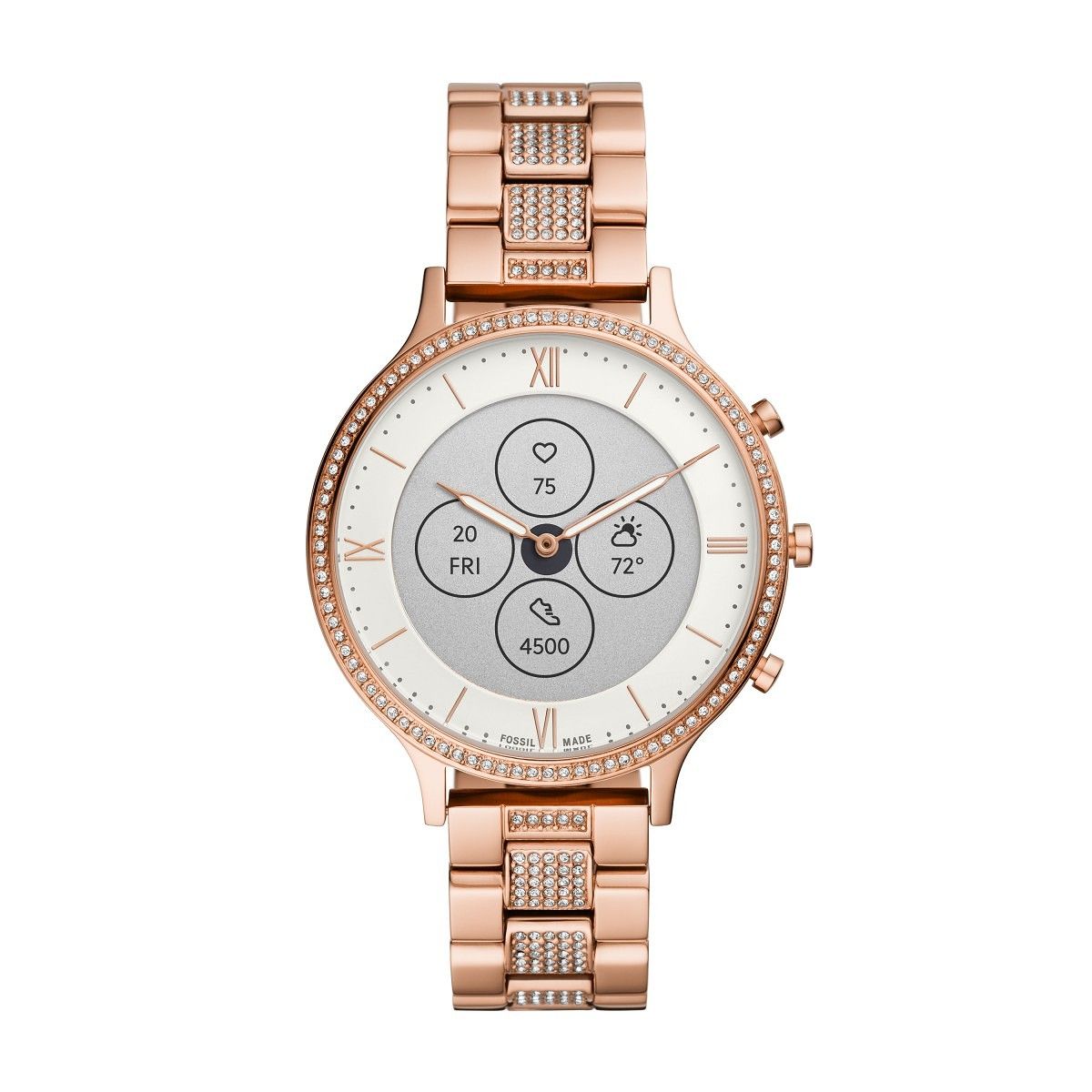
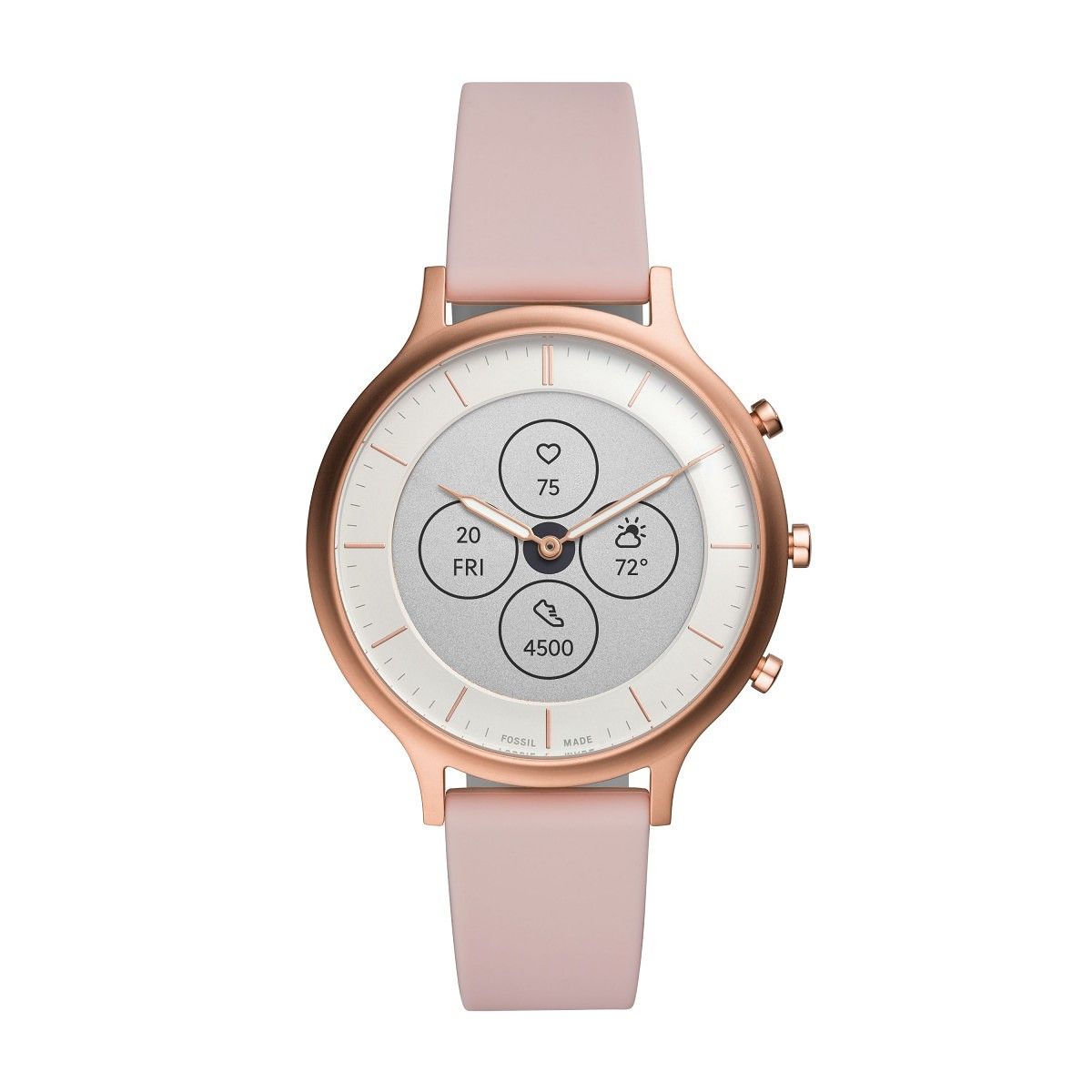
The new Fossil Hybrid HR lineup seamlessly combines physical watch hands with a low-powered always on-display, offering the perfect blend of fashion and tech. The Hybrid HR features a monochromatic circular display in the center, which is capable of displaying crucial information like activity tracking data, weather information, and app notifications. It even offers heart rate tracking capabilities and the company claims that the watch can last over two weeks on a single charge. On top of that, the watch features fast-charging capabilities and can charge up to 80% in just an hour. The smartwatch has a 42mm dial, Bluetooth 4.2 low energy for connectivity, and 16MB of onboard storage. It’s water-resistant up to 3ATM and comes with a 2-year limited warranty.

Priced starting at $195, the new smartwatch is already up for sale on the company’s website and in select retail stores globally. However, it will be released in the Indian market on November 18th. The Fossil Hybrid HR is currently available in four different variants, with the Brown Leather and Black Silicone variants priced at $195, while the Rose Gold and Stainless Steel variants are priced at $215.

Source: Fossil
Via: The Verge


Update: Fossil Hybrid HR launched in India for ₹14,995 (~$210) onwards

Fossil has finally launched the Hybrid HR smartwatch in India for a price of ₹14,995 (~$210) onwards. The Hybrid HR variants include the Charter HR which is compatible with 18mm straps and Collider HR which is compatible with 22m straps.

Buy the Fossil Collider Hybrid HR from Amazon.in
Buy the Fossil Charter Hybrid HR from Amazon.in

The post [Update: Launched in India] Fossil Hybrid HR smartwatch with an analog dial and always-on display launched for $195 appeared first on xda-developers.


from xda-developers https://ift.tt/2CppVuB
via IFTTT

Realme C3 with 5000mAh battery launching in India on February 6

Realme started its journey in India back in 2018 and since then, the company has launched a great portfolio of smartphones in a variety of price segments. While the company was initially limited to budget and mid-range devices, it broke that shell late last year with the launch of its first flagship — the Realme X2 Pro (review). The Realme X2 Pro was soon followed by the Realme X50 5G in China, the company’s first 5G-enabled device with a 120Hz dual hole-punch display and Snapdragon 765G processor. Earlier this month, the company revealed that it will hold a global 5G launch event on February 24 at MWC 2020 where it’s expected to launch the X50 5G internationally. Reports suggest that Realme might also launch another flagship device alongside the X50 5G, powered by Qualcomm’s latest Snapdragon 865 flagship SoC. Ahead of the MWC event, however, Realme will be launching a new budget device as part of its Realme C series.

Realme C3

Realme’s C series of smartphones are known for offering entry-level specifications at a very affordable price. The last smartphone in the series — the Realme C2 — was launched back in April 2019 alongside the Realme 3 Pro. The device featured a 6.1-inch HD+ display with a waterdrop-style notch, MediaTek’s Helio P22 chipset, up to 3GB of RAM, and up to 32GB of internal storage. The device was released at a starting price of just ₹5,999, making it one of the best affordable smartphones with a dual-camera setup.

Realme C3

The upcoming Realme C3 is expected to build upon the C2’s legacy and a launch announcement of Flipkart suggests that it might be successful in doing so. As per the announcement, the Realme C3 will feature a massive 5,000mAh battery, as opposed to the C2’s 4,000mAh unit, a 6.5-inch display with an 89.8% screen-to-body ratio, and a dual-camera setup with a 12MP primary shooter. The smartphone will be available in 3GB and 4GB RAM variants, with 32GB and 64GB of storage respectively. As of now, we have no further information from the company regarding the Realme C3, but we expect to learn more as the launch event on February 6th draws closer.


Source: Flipkart

The post Realme C3 with 5000mAh battery launching in India on February 6 appeared first on xda-developers.


from xda-developers https://ift.tt/37G05QW
via IFTTT