LightBlog

lundi 6 janvier 2020

Motorola starts rolling out Android 10 to the Motorola One Vision

After rolling out stable Android 10 to the Motorola One Power last month, Lenovo-owned Motorola is now bringing the latest version of Android to its mid-range smartphone, the Motorola One Vision. The company has begun rolling out the stable OTA to One Vision owners in Brazil. According to the Motorola Brazil software support page, the company kicked off the staged software rollout of Android 10 on January 6, 2020, and that all One Vision units should receive the update by February 6.

The Android 10 update carries build number QSA30.62-24, and it also packs in the January 2020 security patches. As for what to expect from the new software, Android 10 brings along many exciting features and improvements to the table including the much-requested system-wide dark mode, a new gesture navigation system, Focus mode, Live Caption support, revamped permissions and much more.

If you haven’t received the update yet, you can head to Settings > System > System updates to see if it’s available for you. Motorola hasn’t revealed yet when it will bring Android 10 to other regions such as India, the UK, and European markets, however, given the roll-out is already underway in Brazil, we presume it shouldn’t take too long.

Motorola One Vision XDA Forums || Buy Motorola One Vision from Flipkart

The Motorola One Vision was launched back in May last year with Android 9 Pie running out of the box. It’s a mid-range device featuring a 6.3-inch punch-hole display with a 21:9 aspect ratio, Exynos 9609 octa-core SoC, a 48MP rear camera and a 25MP front shooter, 3,500mAh battery and 128GB of onboard storage. The phone also has Motorola’s “M” batwing logo imprinted within the fingerprint sensor, giving it some personality despite its modest appearance. The highlight point of the device was definitely its 21:9 aspect ratio display, which made the phone pleasant for video consumption in that format. You can read more about the Motorola One Vision in our hands-on.


Source: Lenovo Forums
Via: PiunikaWeb

The post Motorola starts rolling out Android 10 to the Motorola One Vision appeared first on xda-developers.


from xda-developers https://ift.tt/35vh0E6
via IFTTT

Samsung Galaxy S9 and Note 9 get DeX for PC support with One UI 2.0 (Android 10) update

Shortly after the launch of the Galaxy Note 10 last year, Samsung introduced the new DeX integration with Windows and Mac PCs for the device. The feature was soon ported over to the Galaxy S10 series and there were rumors that the company was planning on extending support to its flagship lineup from 2018 with the One UI 2.0 update. Now, with the rollout of the Android 10 update for the Samsung Galaxy S9 series and Note 9, the DeX for PC support is finally making its way to the devices.

According to a recent report from Sammobile, the DeX for PC solution now supports the Samsung Galaxy S9, Galaxy S9+, and Note 9. With the One UI 2.0 update, Galaxy S9 and Note 9 users will now be able to connect their phones to a Windows or Mac PC using a USB cable and use it in a desktop environment. DeX for PC is a useful tool that allows users to get work done on documents stored on their devices, play mobile games with a keyboard and mouse, and drag/drop files from their phone to the PC and vice-versa.

However, in order to use DeX for PC, you’ll first need to download the app from the company’s official website. When you have that installed on your system, you just need to connect your phone to the PC and start using your phone in a desktop layout. It’s also worth noting that the DeX for PC support works on the Android 10 beta for these devices, so you don’t need to install the latest stable update to enjoy the new features.


Via: Sammobile

The post Samsung Galaxy S9 and Note 9 get DeX for PC support with One UI 2.0 (Android 10) update appeared first on xda-developers.


from xda-developers https://ift.tt/35qgY05
via IFTTT

Diesel’s new Fadelite smartwatch runs Wear OS and has a translucent band

Fossil’s sub-brands have been busy working on new Wear OS watches. Last week, we saw Skagen’s new Falster 3, and now today at CES 2020, Diesel announced the Fadelite. These watches feature stylish bands and vivid color options along with some respectable specifications for Wear OS.

The Fadelite (pronounced fade-lite) comes in one size meant for men and women. There are four color options and they all feature a fading effect: red to black, black to clear, blue to clear, and clear “iridescent.” The clear design is by far the most interesting and something we haven’t seen much with Wear OS watches. The size of the case is 43mm and there is one single “globe” button on the side that acts as a dial.

diesel fadelite diesel fadelite diesel fadelite wear os

Thankfully, Diesel has equipped the Fadelite with the Snapdragon 3100 SoC, but it only has 512MB of RAM (according to 9to5Google). The watch is also “swim-proof” and has NFC, GPS, heart-rate tracking, and all the Google Assistant features you’d expect. Besides the fading colors, there’s not a lot that wows us about the Fadelite. It seems like your typical Wear OS device with a little extra pizazz. The Fadelite will be available in the four flashy colors in March for $275.


Source: Diesel

The post Diesel’s new Fadelite smartwatch runs Wear OS and has a translucent band appeared first on xda-developers.


from xda-developers https://ift.tt/39NwVkn
via IFTTT

January 2020 security patches rolling out with numerous fixes for Pixel devices

Google kicked off 2020 with the first Android security update of the year. After failing to deliver the last update of 2019 to some Pixel 3 and Pixel 3 XL owners, they finally managed to fix the delay. The January 2020 security patch includes fixes for a lot of security vulnerabilities and exploits. It’s worth noting that most of them are categorized as high severity vulnerabilities, so fixing them should drastically improve the security of the devices.

If you’re one of those users who didn’t receive the December 2019 Android security patch until now, you will receive a cumulative update of these two months. As for me, I received the last update on time, so this one was only 12.7MB in size. The newest security patch is available on all supported Pixel devices, which means that OG Pixel and Pixel XL users are left out of luck. Apart from the various security improvements, the January 2020 security patch also includes numerous functional updates. Google fixed some noticeable bugs on the Pixel 2, Pixel 2 XL, Pixel 3, Pixel 3 XL, Pixel 3a, Pixel 3a XL, Pixel 4 and Pixel 4 XL devices. One of those annoyances was the notification ghosting issue, which I can confirm is now fixed on the Pixel 3.

If you’re already running the latest December Android security patch, this should be a pretty small update for you. Though, you may receive a joint December/January security update, which is larger in size. To no one’s surprise, Essential was quick to follow up with an update, also including audio improvements in the package.

Download Factory Images | Download OTA Images

Android Security Bulletin | Pixel Update Bulletin


Source: Google

The post January 2020 security patches rolling out with numerous fixes for Pixel devices appeared first on xda-developers.


from xda-developers https://ift.tt/39Nm61J
via IFTTT

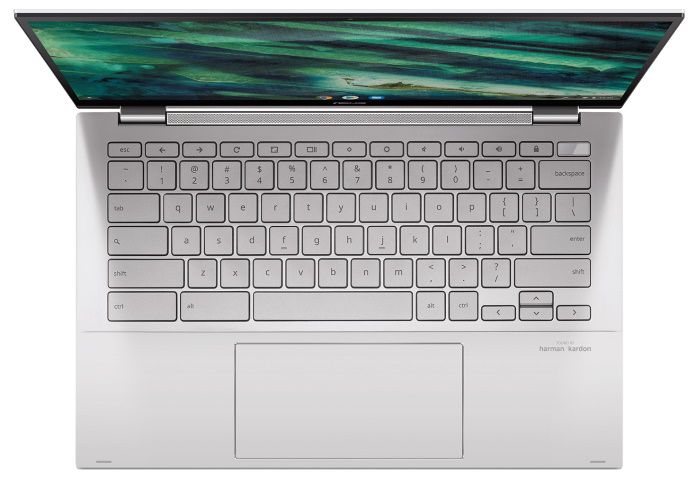
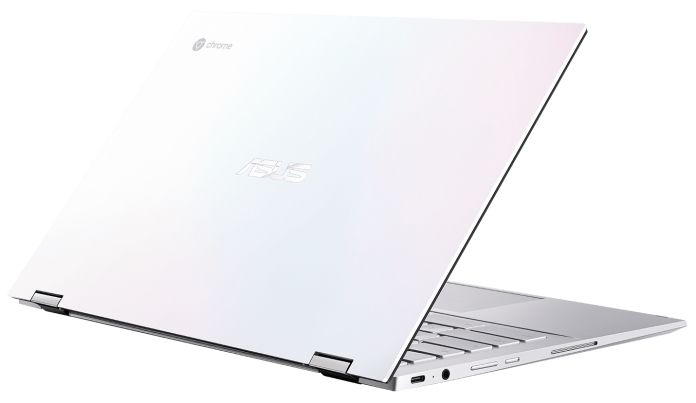
The ASUS Chromebook Flip C436 is a high-end Chrome OS laptop with a 10th gen i7 processor

ASUS is one of the few companies that still constantly pumps out Chromebooks. Their Flip C434 was one of the most popular Chrome OS devices of 2019 due to its form-factor and more than capable internals. Now ASUS is taking it a step further by improving some very important specifications, as well as adding some touches on the outside, too. The new ASUS Chromebook Flip C436 shares an overall look with its predecessor. It’s still a 14-inch 2-in-1 Chrome OS device in a magnesium body. Though, we should mention that it’s 350g lighter and 1,94mm slimmer.

The biggest improvement over the previous model is the new line of processors. The Chromebook Flip C436 uses 10th Generation Intel processors up to i7. This SoC allows the Chromebook to have WiFi 6 and Bluetooth 5 support. You can accompany the new processor with 16GB of RAM and a proper 512GB SSD. Memory of this size was not supported in the previous model of Chromebook Flip. Unlike most Chromebooks with slow eMMC storage, the ASUS Chromebook Flip C436 has NVME SSD onboard.

You will also find a fingerprint sensor on the newer model of the Chromebook. USI-compatible stylus support is yet another welcomed addition which will make selecting a stylus for the device much easier. You will also notice a different port selection. Last year’s model included a full-sized USB port, while this one only has two USB 3.1 Gen 1 Type-C ports. What hasn’t changed is the 1080p 14-inch display, though it has noticeably smaller bezels with an 85% screen-to-body ratio.

Chromebook Flip C436
CPU Intel® Core™ i7-10510U Processor
Intel® Core™ i5-10210U Processor
Intel® Core™ i3-10110U Processor
Display 14-inch four-sided NanoEdge display with only 4.9mm slim bezel and 85% screen-to-body ratio
OS Chrome OS
Graphics Intel® UHD Graphics
Main memory LPDDR3 8GB/ 16GB (2133MHz)
Storage 128GB/ 256GB/ 512GB PCIe Gen3 x2 NVMe M.2 SSD
Wireless Dual band Wi-Fi 6 (802.11ax)
Bluetooth® 5.0
I/O 2 x USB 3.2 Gen 1 Type-C (Full function)
1 x micro SD card (up to 2TB extension)
1 x audio jack COMBO
Battery 42WHr battery Li-Polymer, 3 cell
Dimensions 319.54 x 205.3 x 13.76 mm
Weight 1.1kg

That’s basically everything that’s new with the ASUS Chromebook Flip C436. The pricing and availability of the device are still unknown, as ASUS has just unveiled it at CES. Expect more information about those in the upcoming days. Chromebook Flip will be available in Aerogel White and Transparent Silver.


Source: ASUS | Via: Business Wire

The post The ASUS Chromebook Flip C436 is a high-end Chrome OS laptop with a 10th gen i7 processor appeared first on xda-developers.


from xda-developers https://ift.tt/2Fsj7xX
via IFTTT

Lenovo’s new Smart Tab M10 2nd Gen is an affordable 10-inch tablet that doubles as a smart display

Lenovo has made a marked commitment to smart displays, even being one of the first manufacturers to roll out a Google Assistant-powered smart display. The concept of a Smart Displays is pretty simple – you connect it to your Google account, and you can access all of the Google Assistant’s features with a constant, visual aid as well. Lenovo is taking that a step further, as at CES 2020, they’ve announced a follow-up to last year’s Smart Tab M10, the Smart Tab M10 FHD+ 2nd Gen that doubles as a smart display. This is made possible through the Google Assistant’s ambient mode, which can be enabled on selected Android devices.

Lenovo says that most tablets when at home are unused for 23 hours a day on average. This means that turning them into a smart display gives them more use, and at a starting cost of $189, the Lenovo Smart Tab M10 2nd Gen might be worth investing in. It comes with a smart charging station that holds the tablet upright while charging it and will turn it into a smart speaker with a screen. It can pick up your voice from across the room as well, with a dual microphone setup and a dedicated signaling chip for processing information from both. The tablet automatically converts into a smart photo frame when not in use.

The tablet is also designed for families, and natively supports multiple accounts and face unlock for each user. There’s also a kids mode, a posture alert, and a bumpy environment alert. When it detects that the user’s posture is poor, it can alert them to that fact. When it detects a bumpy environment, such as a car or a van, it can tell the user to stop using the device.

The Lenovo Smart Tab M10 2nd Gen will be available in North America in 2020, at a starting price of $189.

The post Lenovo’s new Smart Tab M10 2nd Gen is an affordable 10-inch tablet that doubles as a smart display appeared first on xda-developers.


from xda-developers https://ift.tt/2rZuDxz
via IFTTT

Lenovo’s foldable PC, the ThinkPad X1 Fold, launches this year for $2499

Back in May last year, Lenovo first unveiled a preview of the world’s first foldable PC as part of its ThinkPad X1 family. At the time, the company merely showcased the design of the upcoming device featuring a large foldable display with thick bezels on all sides. Later in the year, Mircosoft also followed suit with the Surface Neo — a dual-screen foldable tablet running Windows 10X. But while Microsoft’s Surface Neo is still a long way out, Lenovo has now revealed details of its upcoming foldable laptop at CES 2020.

The foldable laptop, which has been dubbed ThinkPad X1 Fold, features a 13.3-inch foldable pOLED display with a 4:3 aspect ratio. Lenovo aims to reimagine mobile computing with the X1 Fold, offering users a unique chassis built with a combination of lightweight alloys and carbon fiber. Developed in collaboration with Intel, the always-connected ThinkPad X1 Fold will be powered by Intel Core processors with Intel’s Hybrid Technology and it will initially be available with Windows 10 in mid-2020. The company is also planning on offering the device with Windows 10X, much like the Surface Neo, at a later date.

Lenovo ThinkPad X1 Fold

Lenovo claims that the ThinkPad X1 Folio will weigh in at just 1kg, including the leather folio case which has a built-in kickstand to prop up the display. The unique notebook features a multi-link torque hinge mechanism to manage stresses when folded or unfolded. Lenovo had to work through six different hinge designs and more than twenty variations to arrive at this final design. For those of you who aren’t comfortable with the idea of typing on a touch screen, Lenovo will also be releasing an optional Bluetooth Mini Fold keyboard for the device and a ThinkPad X1 Fold Stand to quickly place the device in either portrait or landscape orientation.

Lenovo ThinkPad X1 Fold

The ThinkPad X1 Fold with Windows 10 is expected to be available in mid-2020 with prices starting from $2,499. The company has released no concrete information about the Windows 10X version and it might be available at a later date. The aforementioned ThinkPad X1 Fold Stand will go on sale in the second half of 2020 and the company will reveal its pricing closer to the launch date.

The post Lenovo’s foldable PC, the ThinkPad X1 Fold, launches this year for $2499 appeared first on xda-developers.


from xda-developers https://ift.tt/35ucTYI
via IFTTT