LightBlog

vendredi 31 janvier 2020

Motorola celebrates selling 100 million Moto G phones by offering discounts

Despite the changing hands of Motorola’s ownership, the company has managed to endure turmoil and remain relevant ever since 2013. With the Motorola G Stylus and the Motorola G8 series set to arrive on the market, the company seems to be doing better than ever. To celebrate selling 100 million Moto G Phones over the years, the company is offering some mega-discounts and offers on a wide range of options on their website. The Moto G line of smartphones has always focused on being affordable, as its one of its main selling points. Taking that into consideration, it’s no wonder why the company has managed to prevail for so long.

Of course, there are certainly cheaper smartphones available that can offer the same or even more than Motorola’s offerings, but the fact is that Motorola has been a mainstay in most markets for years and years. It’s a brand perceived to be quality, with a lot of staying power in the mind of consumers. That won’t just go away, especially as 100 million devices sold is a huge number of devices for a company to ship, no matter the time period or the number of devices that is included in that sales figure.

Offers range from $100 off of the Moto G7, a buy one get one free offer on the Moto G6 and more. The offers seemingly only apply to the US market, and they can only be applied off-contract through Motorola’s own website. Be sure to check out the link below to see if any of the offers interest you!


Source: Motorola | Via: 9To5Google

The post Motorola celebrates selling 100 million Moto G phones by offering discounts appeared first on xda-developers.


from xda-developers https://ift.tt/2S8dD13
via IFTTT

UFS 3.1 announced with improvements in speed and power efficiency for flash storage chips

Universal Flash Storage, known as UFS, is the flash storage standard that is used in flagship phones and upper mid-range phones. The Samsung Galaxy S6 was the first phone to use UFS storage in 2015. In the years since, it has slowly been spreading to lower-cost segments of the market, to the point where the newest lower mid-range phones now also have UFS storage. UFS storage is much faster than the eMMC flash storage standard, which is still used in budget phones. In 2019, the JEDEC Solid State Technology Association, which is responsible for the development of standards for the microelectronics industry, announced UFS 3.0. While most 2019 flagships opted to stick with the older UFS 2.1 NAND, some phones such as the OnePlus 7 series, the Samsung Galaxy Fold, the Samsung Galaxy Note 10 series, and the Realme X2 Pro did opt to use the newer, faster UFS 3.0. Now, JEDEC has announced UFS 3.1, improving the UFS 3.0 standard with speed and power efficiency improvements.

The publication of UFS 3.1, JESD220E, was announced with a new optional new companion standard, JESD220-3: UFS Host Performance Booster (HPB) Extension. Both JESD220E and JESD220-3 are available for download from the JEDEC website.

The UFS 3.1 JESD220E standard brings three key improvements over UFS 3.0. First of all, it has a Write Booster, a SLC non-volatile cache that amplifies write speed. Secondly, new UFS device low power state called DeepSleep targets lower cost systems that share UFS voltage regulators with other functions. Finally, it has a Performance Throttling Notification that allows the UFS device to notify the host when storage performance is throttled to high temperature. The use of an SLC non-volatile cache is probably most crucial feature here, as it will help improve real-world performance. This technology is used in devices that use mobile NVMe SSDs, such as the Apple iPhone and iPad. Also, all of these features are already supported by SSDs, so the inclusion of these features in UFS 3.1 will help close the gap between the two.

The JESD220-3 Host Performance Booster (HPB) Extension) provides an option to cache the UFS device logical-to-physical address map in the system’s DRAM. JEDEC states: “For UFS devices with a large density, using system DRAM provides larger and faster caching thereby improving the read performance of the device”.

JEDEC UFS has continued its collaboration with the MIPI Alliance to form its Interconnect Layer. It references the MIPI M-PHY v4.1 physical layer specification and the MIPI UniPro v1.8 transport layer specification.

Now that UFS 3.1 has been announced, it’s probable that it will be adopted by some 2020 flagships. The OnePlus 8 series would be a prime contender, and so would the Samsung Galaxy Note 20 series. It’s not as big an update as UFS 3.0 was over UFS 2.1 (as the theoretical top bandwidth speed remains the same at 23.2Gbps), but the real-world improvements in storage performance and battery life for lower cost devices will be welcome. Storage performance has historically been a bottle-neck on mobile devices, so it’s good to see continuing improvements here.


Source: JEDEC

The post UFS 3.1 announced with improvements in speed and power efficiency for flash storage chips appeared first on xda-developers.


from xda-developers https://ift.tt/3b2QCFt
via IFTTT

Nubia’s next Red Magic gaming phone may support 80W fast charging

Nubia is a China-based company that is primarily known for making gaming phones. Previously, it was a subsidiary of ZTE, but since 2017, it’s considered to be an independent associate company after ZTE reduced its stake in it to 49.9%. In 2019, it released the Nubia Red Magic 3 gaming phone (review), which was an affordable Qualcomm Snapdragon 855-powered flagship with a 90Hz AMOLED display. In the second half of the year, it released the Nubia Z20 (review) with dual displays. While Nubia isn’t as well-known as the established market players in China, it’s managed to create its own niche. Earlier this month, its President and co-founder Ni Fei had revealed that its next flagship would have a 144Hz display—a feature supported by the new flagship Qualcomm Snapdragon 865 SoC. Now, Mr. Fei has shared a post on Weibo that reveals another major feature of its upcoming Red Magic flagship: 80W fast charging.

Nubia Red Magic phone featuring 80W fast chargingThe post shared by Mr. Fei shows a photo of an upcoming Nubia phone that is using 9.6A at 8.4V. This means it’s being charged at 80W using the USB Type-C Power Delivery protocol. The phone in question should debut as the Nubia Red Magic 5G. MWC is a probable launch time-frame, although it’s possible that Nubia could skip the event and launch the phone later.

Currently, OPPO has the honor of having the quickest fast charging solution on the market, known as 65W SuperVOOC 2.0 charging. Right now, it’s only used in the OPPO Reno Ace, while the Realme X2 Pro (review) uses a 50W version of SuperVOOC. We expect the upcoming OPPO Find X2 to also feature 65W fast charging, though. Xiaomi’s upcoming flagship, the Mi 10 Pro, will feature 66W fast charging. Both Xiaomi and OPPO have demoed 100W and 120W fast charging solutions in 2019, although they haven’t made their way to any shipping phone yet.

The upcoming Nubia Red Magic 5G flagship phone, therefore, will probably be the fastest charging on the market when it debuts with 80W fast charging. It’s not all good news, though. There are concerns about how this rate of fast charging will quickly deteriorate the life span of the phone’s battery. Vendors such as OPPO and Xiaomi have implemented safety procedures, but we still haven’t got the complete answers. Samsung has chosen to go with USB-C Power Delivery 3.0 standardized fast charging in the Galaxy Note 10 series (and also in the upcoming Galaxy S20 series).

The Nubia Red Magic 5G will feature the Snapdragon 865 SoC and a 144Hz display, but not much is known about the rest of its specifications. We expect to learn more about Nubia’s upcoming flagship in the time frame leading up to its launch.


Source: Nubia | Via: Android Central

The post Nubia’s next Red Magic gaming phone may support 80W fast charging appeared first on xda-developers.


from xda-developers https://ift.tt/2UkkeIN
via IFTTT

Huami Amazfit T-Rex Review: A Smartwatch that’s Durable in Build and Battery

Hinted by its namesake, Amazfit and its products are all about assisting you in your fitness goals and improving your well-being. Amazfit’s new smartwatch, the T-Rex, is the health-tech company’s rugged offering: it’s meant to be a companion that is capable of withstanding the elements while you’re out on your adventures.

Specification Amazfit T-Rex
Dimensions

47.7 × 47.7 × 13.5 mm

Weight 58g (with strap)
Body Material

Polymer materials

Waterproofing

5ATM, supports swimming

Screen
  • 1.3”AMOLED, 360×360 (392 ppi)
  • Corning Gorilla Glass 3 + anti-fingerprint coating
Sensors
  • BioTrackerTM PPG Bio-Tracking Optical Sensor
  • 3-axis acceleration sensor
  • Geomagnetic sensor
  • Ambient light sensor
Positioning

Dual-Sattelite GPS + GLONASS

Connectivity

Bluetooth 5.0/BLE

Battery

390mAh LiPo (Minimum value)

Supported Devices

Android 5.0 or iOS 10.0 and above

Design

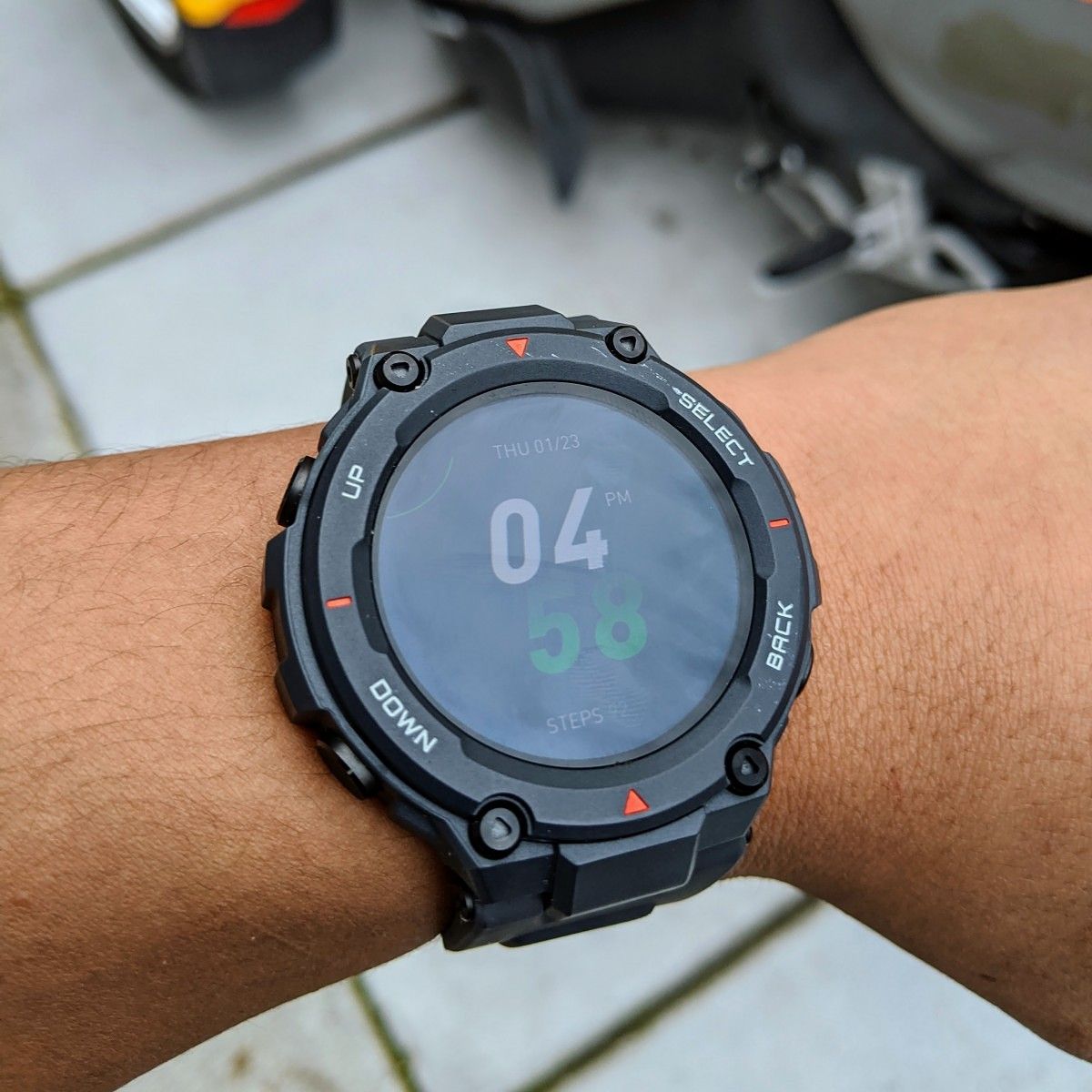
The T-Rex has an unmistaken sports-watch design language all around. It has a crafty, durable outer ring bezel, with a stretchy silicone strap that doesn’t irritate my skin. The strap is also easy to replace. The watch body itself is at the larger end, measuring 48mm. And with the included strap, the T-Rex weighs 58g, which I haven’t found to be fatiguing at all. The 1.3-inch display is inset, protected by Gorilla Glass 3, and well-surrounded by the outer ring. The casing has bumpers for impact resistance, and the whole enclosure is sturdy enough to withstand a dozen military-grade tests from the MIL-STD-810G standard. This means that the T-Rex can withstand extreme temperatures and humidity (-40°C to 70°C), can resist some abrasive compounds, and can take a dive down to 50 meters. There are four buttons on the watch to navigate the watch interface, but they feel pretty cheap and are probably my least favorite aspect of the design.

For a $130 rugged watch, the display on the Amazfit T-Rex is quite adequate. It’s an OLED with 360×360 pixels over its 1.3-inch screen, or about 392 pixels-per-inch. The display can get up to 350 nits of brightness, which is decent for the price. This should be fine for quickly checking your watch in all but the sunniest conditions, in which navigating through the T-Rex does become impractical. And for the watch aesthetic, the dial face loses most of its vibrancy when viewed outdoors.

Inspired by G-SHOCK

The aesthetics of the Amazfit T-Rex undeniably take after G-SHOCKs, down to the lettering on the case ring and the style of the available watch faces. While the T-Rex does not look or feel quite as premium as Casio’s offerings, in neither the body nor the strap, I’m okay with the overall look of this thing (besides being too big for my wrists) for street/sportswear. Although, I do feel that it’s being held back by Amazfit’s limited selection of watch faces — few of which I would ever actually use.

The issue with this sporty-style smartwatch is that when the display isn’t active, the whole body aesthetic just looks silly with a blank dial, especially with how big it is. Fortunately, the T-Rex’s OLED display does support an Always On Display, at the cost of a healthy portion of the watch’s extensive battery life. However, Amazfit only offers two Always On watch faces: an analog dial and a digital face, both being disjointed designs from any of the watch face selections. Admittedly I’m rather inept at reading analog clocks, but I found the digital offering for the Always On Display so terrible that I preferred the other option, where awakening the main watch face would be the faster way for me to read the time.

Software & Features

Compared to some of Amazfit’s previous smartwatches, there isn’t really any difference with T-Rex on the software side. But if this is your first look at an Amazfit watch, they provide some useful features to aid you in your workouts and even in your sleep (if you’re into that kind of thing). Amazfit’s smartwatches run on their own closed Android-based operating system, called Amazfit OS. Sadly, this means that the T-Rex’s software capabilities are limited to what Amazfit can offer in its OS, and that’s it. The interface and touch experience are not the most responsive, but it’s consistent without any major hangups or crashes. A swipe up or down takes between the quick toggles, step counter, and heart rate panel. A swipe right reveals your texts and notifications (given you enable the watch access to this information in the Amazfit App), and a swipe left reveals Amazfit OS’s available apps.

Amazfit OS’s included apps include StatusHeart RateWorkoutActivitiesWeatherMusicAlarmEvent reminderTimer, CountdownFind my phoneCompass, and Settings. Tushar Mehta wrote a thorough rundown of all these apps in his review of the Amazfit GTR.


Here’s a rough list of what the T-Rex can do:

  • Continuous heart rate detection, heart rate alert, heart rate sharing, heart rate time graph, & sleep assistant
  • Step counter, calorie & distance tracker
  • Own GPS & Compass
  • Idle alert – Watch will vibrate if you’ve been inactive or sitting for too long
  • Lift wrist to wake
  • Always On Display
  • Alert incoming calls, texts & notifications
  • Reminders
  • Find watch from phone & Find phone from watch
  • Flashlight
  • Do Not Disturb
  • Workout & Activity tracker + logger
  • Weather forecast
  • Music control
  • Timer & stopwatch
  • “SELECT” button shortcut

The Workouts app is the heart of Amazfit’s watches, which can record and track your exercises. Once you begin tracking your workout, the T-Rex will show you information related to the exercise, such as elapsed time, distance traveled, speed, heart rate, and a few others, including graphs of some of the data. Once you finish your workout, you may save it, and it is recorded on the Activities log, which you can also view on the Amazfit app on your phone for a full breakdown. In the Amazfit app, it also allows you to save one long picture of all the workout’s information, which I thought was neat.

The other apps and features themselves are straight-forward, but I found some of them to just be a pain to use. The Workouts selection seems overloaded with too many up-front options for exercises, and many of the selections track the same metrics anyway. When looking up the weather, the T-Rex would sometimes tell me there is no info and to update it in the app when I already have. Lifting the watch doesn’t always work even at the highest sensitivity, and the watch doesn’t wake when I turn my wrist, forcing me to use my other hand or spazz my arm.

The GPS can take anywhere from five-to-fifteen seconds to lock in outdoors, which is longer than I’d like, but I found it to be normal for a smartwatch. In terms of accuracy, I’ve tracked a few runs with both the T-Rex’s “dual-satellite GPS” (which I’m not sure if that’s dual-frequency GNSS) and my OnePlus 7 Pro (which does support dual-frequency GNSS), on a measured loop. The discrepancies weren’t too large — about 0.05 miles difference between the phone and the watch for a couple mile jogs with a good GPS signal. Since the T-Rex does have physical buttons, one cool thing Amazfit provides is assigning a shortcut to the “SELECT” button. When it’s pressed on the main watch face screen, it launches the Amazfit app of your choosing. By default, it launches the Workout app and shows you the variety of exercises that can be tracked. However, I believe it would be helpful if it could launch into one of the specific Workouts instead, or if the Workouts list were re-arrangeable.

No music streaming

What’s vital and missing from the T-Rex as a quasi-fitness watch is music storage and streaming. Right now, the T-Rex can only control the music service running on your phone. But when tracking a workout on the T-Rex, you can’t even change your music from there. Music is an integral part of exercising for many people, and carrying around a phone is not ideal for many physical activities, such as running or swimming. As Huami’s CEO Huang Wang once said, during his announcement of Amazfit’s new products at CES 2020, “No music, no fun.”

A watch made for fitness and adventure is incomplete without its own music streaming capabilities.

Furthermore, if I am to carry my phone on a run, I could just use an app like Runkeeper on my phone instead of using the built-in GPS on the T-Rex. For me, the omission of music streaming relegates the T-Rex as a heart rate detector in most cases since I’d rather utilize my phone for assistance if I have it with me.

Battery

If there’s one thing I’ll boast about for the T-Rex, it’s how long it lasts on a single charge. Amazfit claims 20 days of battery life on the T-Rex with heart rate monitoring always on, Always On Display turned off, and with normal usage. That’s way past my expectations for the battery life of a smartwatch, so I felt confident in turning on the Always On Display purely for the aesthetic. With the feature turned on, I was seeing 5–6 days before the watch would power off. Always On Display was a big hit for the battery, but battery life can be still be classified as excellent. I tested it out without the Always On Display enabled, after 5 full days I ended with 75% battery, right on track for the advertised 20-day juice. I decided to keep it on, despite cutting the T-Rex’s runtime to a quarter of its touted stamina. If you go on a hike and lose your phone, Amazfit says the T-Rex can last up to 66 days without a Bluetooth connection to a phone.

The T-Rex charges with a magnetic pogo pin connector, which I don’t find to be the most user-friendly; the correct docking orientation isn’t immediately obvious, and the charger repels and incorrectly latches while rotating the watch to find the proper charging position. But at least this thing recharges from empty pretty fast — after discharging to zero, it takes just less than 30 minutes to charge to 50% (which is another three, or ten, or thirty-three days battery life), and about another hour to fully top off to 100%.

Final thoughts

I absolutely love the concept of a durable fitness watch. I really do. It gives me peace of mind that the tech exposed on my wrist will be fine when I want to get physical. But I’m not sold on the T-Rex being anything more than a heart rate tracker and step counter. It does sort of match a street/sporty aesthetic, but you’ll need wrists big enough for the T-Rex to not look like a watch from Ben 10. At $130, it’s much cheaper compared to some of the smartwatches from bigger brands, but not “smart” enough to really even compare. This thing is nowhere near a replacement for any of the tools or capabilities of your smartphone — no notification actions, no music streaming, no texts or calls — though I understand that this is not the T-Rex’s aim. It’s an alternate way of doing things that you can already do on your phone while also tracking your heart rate. For me, the T-Rex would have potential as a stand-alone accessory, apart from my phone, if only it had onboard music storage. But without being able to listen to tunes, my workout is lugged down more than just carrying my phone.

Amazfit has provided us a Gun Grey T-Rex for review.

The post Huami Amazfit T-Rex Review: A Smartwatch that’s Durable in Build and Battery appeared first on xda-developers.


from xda-developers https://ift.tt/36NP0My
via IFTTT

10 of the Best VPNs From 2019 That Are Still on Sale

Over the past year, digital privacy has regularly made the headlines. As a result, we are much better educated about how big companies and governments collect data. If you would like to keep your web history private or disappear completely online, using a VPN is a must. Here are some of the best providers from 2019, still with major reductions at the XDA Developers Depot.

Seed4.Me VPN: 3-Yr Subscription

This lightweight VPN keeps things simple while providing full protection. It offers full anonymity, with 30 servers to choose from and a selection of VPN protocols. Order now for $19.99 to get a three-year subscription covering unlimited devices, worth $107.55.

SlickVPN: Lifetime Subscription

With 125 gateways available and un-throttled speed, SlickVPN is perfect for regular travelers. The service protects your data with AES-256 encryption, and the company has a strict no-logging policy. Worth $1,200, lifetime subscriptions are now only $19.99.

The KeepSolid App Bundle Ft. VPN Unlimited

This bundle of four apps includes a two-year subscription to VPN Unlimited — one of the most popular services in the world. You also get the KeepSolid Private Browser, which encrypts and anonymizes your mobile web traffic. The bundle is worth $603.42, but you can get it now for $59.99.

Trust.Zone VPN: 3-Yr Subscription

Another great option for the privacy-minded, Trust.Zone VPN makes sure your browsing stays anonymous—even to Trust.Zone. Plus, you can install the software with one click for hassle-free use. For total security, the company keeps no logs and does not ask for your personal details. Normally $319.68, three-year subscriptions are now $69.99.

KeepSolid VPN Unlimited: Lifetime Subscription

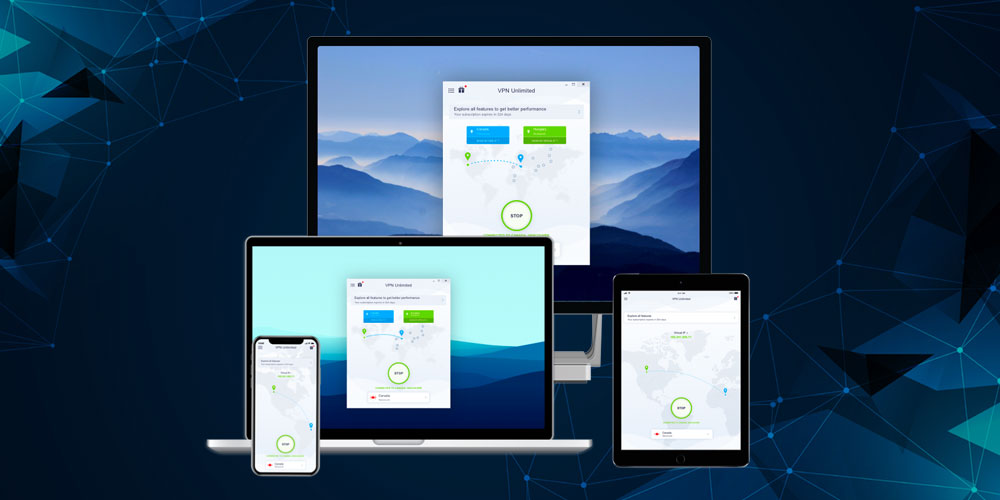
This top-rated VPN is used by 10 million people around the world. It provides 400 servers in 80 locations across the globe, with fast connections, P2P support, secure encryption, and a choice of VPN protocols. Worth $499.99, lifetime service is now just $39.99.

BulletVPN: Lifetime Subscription

As the name suggests, BulletVPN offers impressive speed. Available on a huge range of devices, this service lets you unlock Netflix, Hulu, BBC iPlayer, Amazon Prime Video, and many more sites. Normally $540, lifetime subscriptions are currently $39.

VPN.asia Lifetime Subscription

Combining AES-256 encryption and SHA-256 hash authentication, VPN.asia keeps your data locked down. This service supports P2P file sharing, and you can stream content via 40 servers in 30 countries. Order now for $49 to get lifetime protection on five devices, worth $1,296.

ZoogVPN: Lifetime Subscription

This innovative VPN supports most protocols, including the brand new IKEv2. It provides reliable service thanks to a network of cherry-picked servers, with zero logs and 99.9% uptime. Normally worth $710, lifetime subscriptions covering five devices are now $29.99.

Ivacy Lifetime Subscription

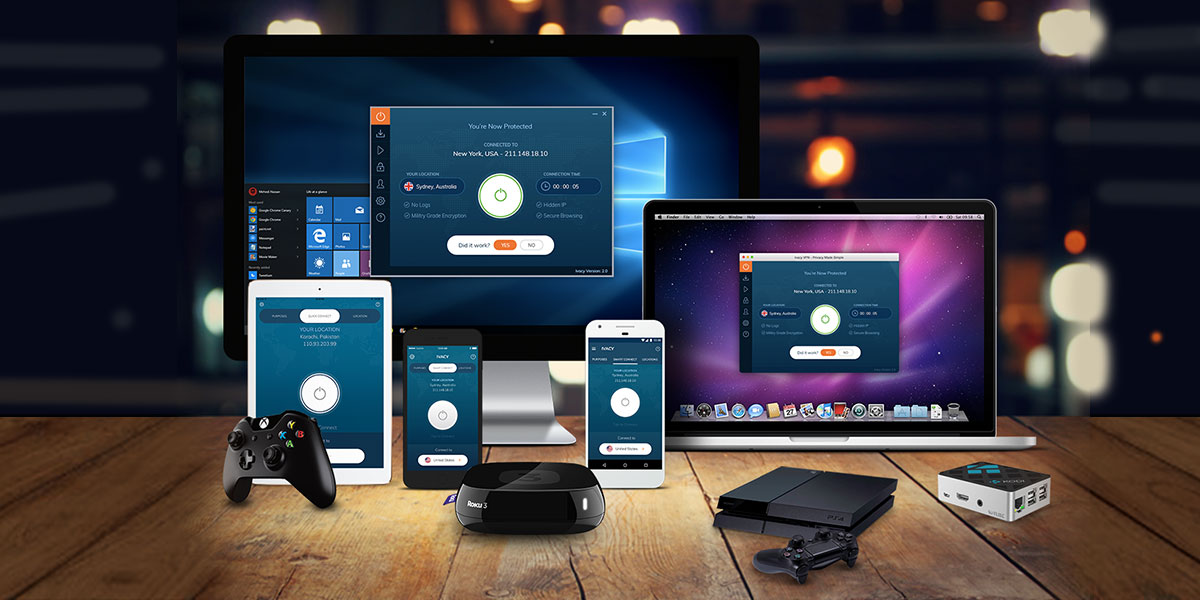
Want to keep your whole family secure? Ivacy protects 10 devices at the same time, including game consoles and routers. You can choose from over 1,000 servers around the world, with P2P support and military-grade encryption. Order now for $59.99 to get a lifetime subscription, worth $2,338.

NordVPN: 2-Yr Subscription

Offering double-encryption and access to 3,521 servers in 61 countries, it is easy to see why NordVPN has such great reviews. The service is fast and reliable, with no logs and a built-in kill switch to protect your privacy. You can pick up a two-year subscription now for $95.99, saving 66% on the standard price.

Prices subject to change

The post 10 of the Best VPNs From 2019 That Are Still on Sale appeared first on xda-developers.


from xda-developers https://ift.tt/2uSp5pC
via IFTTT

Google releases OpenSK, an open-source 2FA security key platform

While Google has done a lot for mobile security, a little known fact about the company is that they love to dabble with security keys. The Titan line of security keys has full integration with your Android or iOS smartphone and can be used to authenticate your login to your Google account. Google has now launched OpenSK, an open-source project that will allow developers to create and build their own 2FA security key.

OpenSK, written in Rust, is simple as it supports both the FIDO U2F and FIDO2 standards. It follows the legacy of other open-source projects such as Solo and Somu, another set of open-source security key platforms. Google’s hopes are that developers and security key manufacturers alike will benefit.

By opening up OpenSK as a research platform, our hope is that it will be used by researchers, security key manufacturers, and enthusiasts to help develop innovative features and accelerate security key adoption.

With this early release, developers will be able to flash OpenSK on a Nordic chip dongle. The Nordic chip dongle supports all of the major features of FIDO2, such as NFC, Bluetooth Low Energy, USB, and a dedicated hardware crypto core.

“We’re excited to collaborate with Google and the open source community on the new OpenSK research platform,” said Kjetil Holstad, Director of Product Management at Nordic Semiconductor. “We hope that our industry leading nRF52840’s native support for secure cryptographic acceleration combined with new features and testing in OpenSK will help the industry gain mainstream adoption of security keys.”

OpenSK is written in Rust and runs on TockOS for better isolation and cleaner OS abstractions. Rust has strong memory safety which can help protect against logical attacks, whilst TockOS offers a sandboxed architecture for better isolation of the security key applet, drivers, and kernel. If you’re interested, be sure to check out the link below.


Source: Google | Via: AndroidPolice

The post Google releases OpenSK, an open-source 2FA security key platform appeared first on xda-developers.


from xda-developers https://ift.tt/2UavYxj
via IFTTT

Apex Legends is still on track for mobile release

The rise of the Battle Royale genre has taken all platforms by storm. After stirring up a storm on PC, games like PUBG, Fortnite, and Call of Duty swiftly made their way over to consoles and mobile devices. On mobile, the genre blew up even further, with games like PUBG Mobile and Call of Duty Mobile creating a cult following. In order to cash in on the growing mobile market, EA also announced that it would be bringing its battle royale title Apex Legends to mobile back in May last year. Now, according to a recent report from PC Gamer, Electronic Arts is working with a partner in China to develop the mobile version of its popular battle royale game.

The report cites a statement from EA’s Q3 earnings call which reveals that the company is still going strong on its plans to bring Apex Legends to mobile and also release the game in the Chinese market. During the earnings call, EA’s chief financial officer Blake Jorgensen reportedly said:

“Rolling mobile out in China, you need to have a partner, and we’re—as we’ve said in the prepared remarks today—we’re working with a partner there, and we’re very excited about the opportunity … That partner is also helping us develop a mobile Apex for the globe—more to come on that in terms of timing.”

As of now, the company has released no concrete timeline for the game, but we expect to learn more when the development approaches completion. It’s worth noting that this isn’t the first time EA has approached a Chinese developer to flesh out a mobile version of one of its AAA titles. The company has previously released FIFA Online 4 and Need for Speed Online which were both developed in partnership with Tencent. Interestingly, both PUBG Mobile and Call of Duty Mobile have also been developed under the Tencent umbrella.


Source: PC Gamer

The post Apex Legends is still on track for mobile release appeared first on xda-developers.


from xda-developers https://ift.tt/2uPpxVT
via IFTTT