LightBlog

vendredi 31 janvier 2020

Developers have exploited the Samsung Galaxy S9 and Note 9 to get root access on the Snapdragon models

Samsung phones sold in the U.S. are notoriously difficult to root. Samsung Knox makes rooting especially annoying, and it tends to break a lot of things if you do manage to get root. Users in the U.S. can’t even unlock the bootloader to root their devices in the first place. Every once in awhile, though, developers figure out an exploit that allows us to root. The Snapdragon Galaxy S7, Snapdragon Galaxy S8, and Snapdragon Galaxy Note 8 were possible to root using exploits, for example. The same developers behind the SamPWND exploit for the S8/Note 8 are back again with exploits that allow for root access on the Snapdragon Galaxy S9, Galaxy S9+ and Galaxy Note 9 — although there is a catch.

Samsung Galaxy S9 XDA Forums ||| Samsung Galaxy S9+ XDA Forums
Samsung Galaxy Note 9 XDA Forums

The catch is that rooting the Snapdragon Galaxy S9, Galaxy S9+ and Galaxy Note 9 requires a certain Android version being installed on the devices. Root isn’t available for the devices on the up-to-date firmware at this point in time. Currently, you are only able to root the Snapdragon Galaxy S9, Galaxy S9+ and Galaxy Note 9 if you’re running Android 8.0 or 8.1 Oreo. This is two major versions of Android behind the current release based on Android 10. You also need to be running what’s called a combination firmware — firmware that Samsung uses in the factory for testing. The combination firmware is the only reason root is possible, but it also has its own limitation: Flashing it will cap the battery charging to a max 80%, unfortunately. On the other hand, Samsung Knox is still working (because you aren’t unlocking the bootloader), so apps like Secure Folder or Samsung Pay continue to work. Plus, you get to keep your warranty in countries where software modifications may void it.

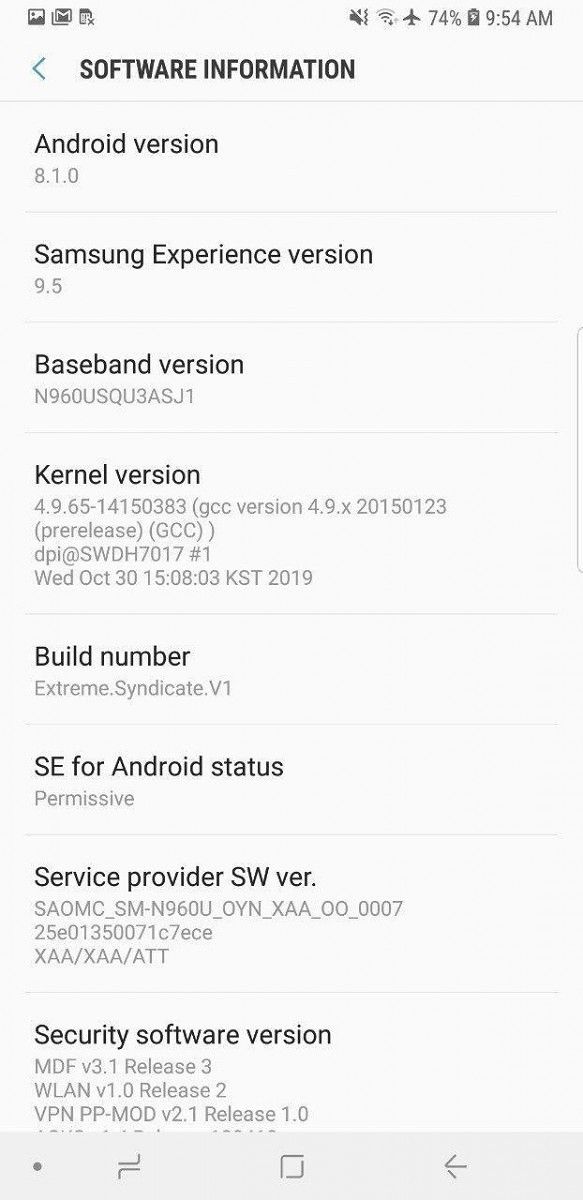
Galaxy S9 and Galaxy Note 9 root access Galaxy S9 and Galaxy Note 9 root access

Another peculiarity with this root method for the Galaxy S9, Galaxy S9+, and Note 9 is that it does not use Magisk, meaning this isn’t systemless root. Instead, it’s using SuperSU. Since the bootloader is still locked, there is no way to patch the boot image for Magisk to work. So with SuperSU, we get an entirely system-based root solution. That also means that, unfortunately, SafetyNet Attestation will not pass, which means apps like Google Pay and Pokémon Go won’t work.

What’s more is that there is also no TWRP available due to Safestrap causing a kernel panic. You will also need to use a specific button combination every time you boot your phone to make sure to disable write protection. Fortunately, you can install the Xposed Framework. This allows for a lot of functionality and customization given the plethora of modules out there. Although most custom ROMs can’t be flashed because of the locked bootloader, it possible to install a GSI. The developers have already tested and booted an AOSP Android 9 Pie GSI on the Galaxy S9+, as shown below.
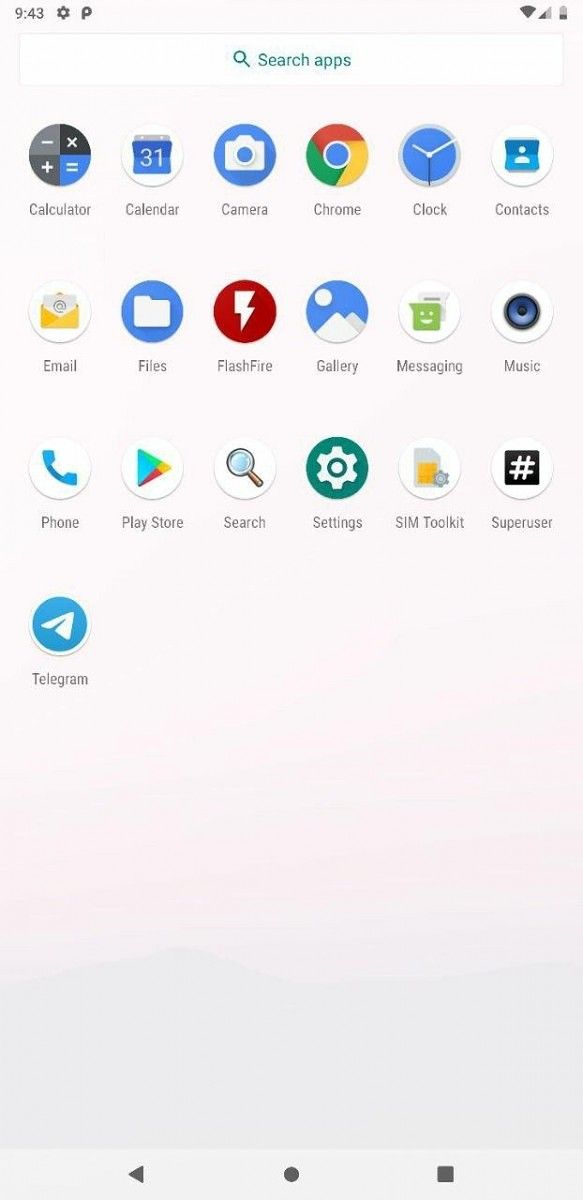
All the instructions you need have been posted in the forum posts linked below. The process requires some Odin flashing along with running some scripts from your computer and in the FlashFire app. Instructions for flashing the GSI are also linked in the forum post.

Root for Galaxy S9 (G960U/U1) ||| Root for Galaxy S9+ (G965U/U1) ||| Root for Galaxy Note 9 (N960U/U1)

We want to give a shout out to the developers behind the Extreme Syndicate root project. Team Syndicate is composed of XDA Recognized Developer/Retired Forum Moderator elliwigy, Recognized Contributor jrkruse, Senior Member klabit87, Senior Member me2151, and Member GSM-CHEN. They all spent countless hours working on getting root access for these devices.

The post Developers have exploited the Samsung Galaxy S9 and Note 9 to get root access on the Snapdragon models appeared first on xda-developers.


from xda-developers https://ift.tt/2OhbW06
via IFTTT

[Update: Fixed] Google changes how Play Store changelogs are previewed, resulting in some awkward phrasing

Update 1 (5:08 PM EST): Google has confirmed that this issue has now been fixed on the Play Store.

The Google Play Store has received a number of updates over the last few months. Google added one-tap buttons to leave betas and more, the Google Play Pass subscription, and a brand new Material Theme redesign. That new design gave us (eventually) a Dark Theme that works with the Android 10 system setting, but it also brought a strange change to the changelog previews.

The “What’s new” section on an app listing is where developers can share any new features or fixes that were included in the update. Some developers use this better than others, but that’s a different topic. One strange decision that Google made with the Material Theme redesign was to shorten changelogs by removing text from the middle of the excerpt. The beginning and the end of the changelog are smushed together with ellipsis separating the text. Here are two examples:

As you can see, this is a messy solution to shortening the excerpt. The text is combined in different spots depending on screen size, font scaling, and screen orientation. It would make much more sense to truncate the excerpt from the end. One side effect of Google’s method is some humorous and NSFW text combinations showing up in the Play Store. Here are two examples:

PayPal

New in this version: Improvements and bug… so you’ve always got the latest and greatest.

HotStar

We regularly update our app to provide you a…ss a thing, just keep your Updates turned on.

One developer has taken matters into their own hands and created a script that generates multiple possible shortened text results based on your changelog. The script then automatically checks for bad words and tells you if it finds anything. Admittedly, this is a pretty strange problem, but it’s something that people are noticing on the Play Store. If you’d like to avoid having your changelog chopped up into unfortunate phrasing, check out the project on GitHub below.

Source: GitHub


Update: Fixed

On the Google Issue Tracker, a Google employee confirmed that the issue has now been resolved. Play Store changelogs should no longer be awkwardly split in the middle.

The post [Update: Fixed] Google changes how Play Store changelogs are previewed, resulting in some awkward phrasing appeared first on xda-developers.


from xda-developers https://ift.tt/2MoIeWM
via IFTTT

Hands-on with the Honor V30 Pro 5G [VIDEO]

The Honor V30 Pro was announced back in November as the company’s latest flagship device. The phone is only available in China right now, but we expect a global launch (as the Honor View 30) to be announced at MWC. XDA TV’s TK Bay got his hands on the 5G model ahead of the global launch event and gave us a good rundown of the device.

There is a non-Pro version of the Honor V30 as well, but TK has his hands on the Pro 5G model. The main difference between the two devices is the rear-facing camera setup. While both the devices feature triple cameras, the Honor V30 Pro adds OIS to the primary 40MP sensor. It also has a 12MP secondary wide-angle sensor with auto-focus and an 8MP telephoto sensor with auto-focus.

Honor V30 XDA Forums

The front features a double-wide hole punch, which houses the 32MP and 8MP wide-angle lens. The Honor V30 Pro has 8GB of RAM with both 128GB and 256GB storage options. Another difference between the devices, which is quite unusual, is that the base Honor V30 features a larger 4,200mAh battery, while the V30 Pro packs in a 4,100mAh battery. Also, keep in mind that you will need to sideload Google services on this device. Check out TK’s video below to see the hands-on in full.

The post Hands-on with the Honor V30 Pro 5G [VIDEO] appeared first on xda-developers.


from xda-developers https://ift.tt/3aZInds
via IFTTT

[Update: Voted Passed, Law Pending] The EU will vote to force all smartphones to adopt USB-C

Update (1/31/20 @ 3:35 PM ET): To reduce e-waste, the European parliament has voted in favor of standardizing charging.

Since smartphones with USB-C started coming out in 2015, the standard has come a long way. Nowadays, it has become, well, the standard connector for almost all Android smartphones out there, from flagship phones to budget devices. With the exception of certain, really cheap phones and accessories, micro-USB is, for most intents and purposes, pretty much dead as of 2020. Even dirt-cheap smartphones like the Redmi 8A have started to come out with USB-C support. But there are still some odd ducks out there. Particularly Apple, which still clings onto their proprietary Lightning port because of revenue purposes as well as certain Android OEMs that, for some reason, are still not done with the old micro-USB port.

The whole point of standards is to have something that everyone uses: you should be able to plug the same cable on any phone you want to charge. And for this reason, the European Union wants to change that. This is not the first time they tried to intervene here, but previous legislation has made it so that they would strongly encourage, yet not mandate, USB-C adoption. If this law is passed, then all smartphone manufacturers, no matter how big or small, would be obligated to use USB-C on their devices if they want to sell their phones within the European economic area.

This would include Apple which does sell their phones in Europe. Although the upcoming iPhone 11S/12 lineup is rumored to come with USB-C, it is still just a rumor and other rumored devices, such as the iPhone SE2, are set to carry a Lightning connector–the passing of this legislation could affect the launch of this device, and potentially even other Apple devices currently in the market.

An initial draft of this law has been approved by a majority of voting members, but it still needs to receive approval from the EU Council in order to become law.

Source: European Parliament | Via: 9to5Google


Update: Voted Passed, Law Pending

The EU Parliament has voted in favor of a resolution that calls for much tougher action to reduce e-waste. They are calling for the European Commission to come up with stricter rules by July 2020. As of now, nothing is changed, but parliament is making it clear that something must be done.

One of the ways the Commission has attempted to reduce waste is to reduce “unnecessary variety.” This is where USB-C comes into play. Back in 2009, there were over 30 charger types on the market. Today there are only 3. Still, Apple, one of the biggest players in this space, continues to use a proprietary charging standard. Apple claims a universal standard would “stifle innovation.” All of the dongles that Apple and 3rd-parties sell create tons of e-waste.

The resolution says consumers shouldn’t need to buy new chargers/adapters with each new device. Parliament wants the Commission to introduce a strategy to decouple the purchase of chargers from a new device. The Commission has said they welcome the resolution and acknowledged its current approach has not met expectations. The next step is to come up with the actual legislation, which is planned for Q3 2020.

Via: TechCrunch

The post [Update: Voted Passed, Law Pending] The EU will vote to force all smartphones to adopt USB-C appeared first on xda-developers.


from xda-developers https://ift.tt/2Ri7nU0
via IFTTT

Source: Here are the Moto G Stylus specifications and stylus features

Motorola just celebrated selling 100 million total Moto G smartphones since the first Moto G was announced back in 2013. The Moto G line has expanded significantly since its initial debut and with the 7th generation, the company released 4 different smartphones in the series: the regular, Play, Power, and Plus. In late 2019, Motorola introduced its first two 8th generation Moto G devices, the Moto G8 Play and Moto G8 Plus. It’s become clear that Motorola is preparing to launch the regular Moto G8 and the Moto G8 Power, but we’ve also recently learned that Motorola will introduce an entirely new phone to the G line: the Moto G Stylus. We have obtained what are very likely the device’s specifications as well as the possible uses for its signature feature, the stylus pen.

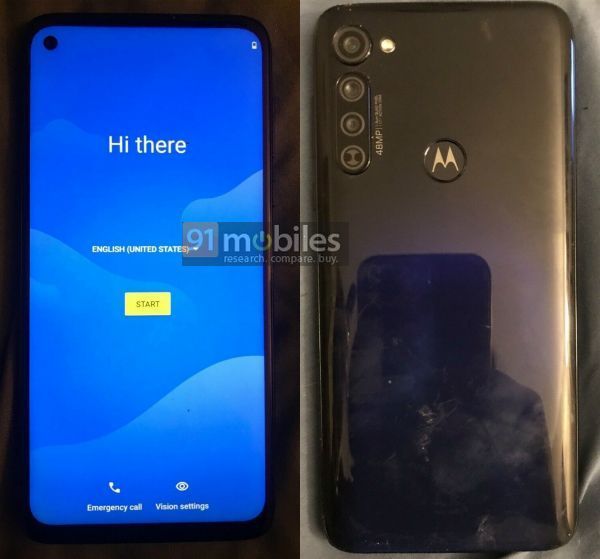
Last week, famed leaker Evan Blass published an image of an upcoming Motorola phone that, at the time, he was unable to identify. The image, which is featured at the top of this article, depicts a phone with a stylus and a single punch-hole display. This week, the same phone was leaked on 3 separate occasions. The first leak, by 91Mobiles, was of another render of the device, this time showing the back. The second leak, by Mexican blog Xataka, showed live photos of the device alongside its stylus. Finally, 91Mobiles published another look at the device, this time showing off the front and back of the device in real-world images. From these 3 separate leaks, we learned about the basic design and some hardware specifications, but thanks to our source, we can fill in the rest of the blanks.

Motorola stylus phone

The first thing we wanted to confirm is the name. This phone will indeed be called the Moto G Stylus, as was first revealed by Evan Blass on his Twitter account. We can independently confirm this name, though thanks to Canada’s Radio Equipment List, the name isn’t really in doubt.

As I suspected, the device will be fairly similar to the upcoming Motorola Moto G8 Power in terms of specifications. The key differences between the Moto G Stylus and the Moto G8 Power are in the rear camera sensors and, of course, the existence of the stylus on the former. The basic specifications of the Moto G Stylus include its 6.36-inch 2300×1080 single hole-punch display, the Qualcomm Snapdragon 665, 4GB of RAM, at least 64GB of internal storage, a 4000mAh battery with 10W charging, Android 10, and a rear-mounted physical fingerprint scanner. In some regions, the phone will support NFC and/or dual nano-SIM cards.

On the rear of the phone, you’ll find a triple rear camera array consisting of a primary 48MP f/1.7 Samsung sensor (pixel binned down to 12MP), a secondary 16MP f/2.2 117° wide-angle “Action Cam” sensor, and a tertiary 2MP f/2.2 macro camera. The “Action Cam” was first introduced on the Motorola One Action, and it allows you to take horizontal wide-angle videos while you’re holding the phone vertically. This is possible because the camera sensor is mounted perpendicularly in relation to the other sensors. On the front, you’ll find a single 25MP f/2.0 camera under the punch-hole.

The render that’s shown below, which was sent to us by a source, depicts the bottom of the Moto G Stylus. From the render, we can see that there’s a 3.5mm headphone jack, a USB Type-C port, a bottom-firing speaker, and a slot for the stylus to be inserted.

Motorola Moto G Stylus bottom

The bottom of the Motorola Moto G Stylus

According to our source, there’s a new app on the device that can be used to do the following:

  • Open an app or launch a shortcut of your choice when the stylus is removed from the body
  • Take notes using “Moto Note.” The user can use their finger as an eraser while using the stylus to draw. The user can insert a watermark with the date on any notes they take.

Motorola will also allow users to keep track of the location of the stylus using the app. The app will record the time and location of the device the last time you removed the stylus from its body. When the stylus hasn’t been reinserted into the device for a period of time, the app can send a notification reminding the user to reinsert the pen.

Specification Motorola Moto G Stylus
Display 6.36″ 2300×1080 single hole-punch
Dimensions* 155mmx75mm (diagonal: 168mm)
SoC Qualcomm Snapdragon 665
RAM 4GB
Storage 64GB/128GB
Rear Camera(s) 48MP f/1.7 Samsung S5KGM1 + 2MP f/2.2 macro camera + 16MP f/2.2 117° wide-angle “Action Cam” sensor
Front Camera 25MP f/2.0
Battery and Charging* 4000mAh, 10W wired charging
Connectivity NFC (some regions), Dual SIM (some regions)
Software Android 10
Security Rear-mounted capacitive fingerprint scanner
Models XT2043-4, XT2043-5, XT2043-6
Regions North America, Latin America, China, International

*The exact dimensions and charging speed were lifted from the device’s FCC filing.

Although we don’t know the pricing or the launch date, we’ll likely learn more details as we approach MWC 2020. This device will likely be slightly more expensive than the Moto G8 Power given that it has a better (more marketable) camera configuration and stylus support.

The post Source: Here are the Moto G Stylus specifications and stylus features appeared first on xda-developers.


from xda-developers https://ift.tt/31eH6uy
via IFTTT

Motorola celebrates selling 100 million Moto G phones by offering discounts

Despite the changing hands of Motorola’s ownership, the company has managed to endure turmoil and remain relevant ever since 2013. With the Motorola G Stylus and the Motorola G8 series set to arrive on the market, the company seems to be doing better than ever. To celebrate selling 100 million Moto G Phones over the years, the company is offering some mega-discounts and offers on a wide range of options on their website. The Moto G line of smartphones has always focused on being affordable, as its one of its main selling points. Taking that into consideration, it’s no wonder why the company has managed to prevail for so long.

Of course, there are certainly cheaper smartphones available that can offer the same or even more than Motorola’s offerings, but the fact is that Motorola has been a mainstay in most markets for years and years. It’s a brand perceived to be quality, with a lot of staying power in the mind of consumers. That won’t just go away, especially as 100 million devices sold is a huge number of devices for a company to ship, no matter the time period or the number of devices that is included in that sales figure.

Offers range from $100 off of the Moto G7, a buy one get one free offer on the Moto G6 and more. The offers seemingly only apply to the US market, and they can only be applied off-contract through Motorola’s own website. Be sure to check out the link below to see if any of the offers interest you!


Source: Motorola | Via: 9To5Google

The post Motorola celebrates selling 100 million Moto G phones by offering discounts appeared first on xda-developers.


from xda-developers https://ift.tt/2S8dD13
via IFTTT

UFS 3.1 announced with improvements in speed and power efficiency for flash storage chips

Universal Flash Storage, known as UFS, is the flash storage standard that is used in flagship phones and upper mid-range phones. The Samsung Galaxy S6 was the first phone to use UFS storage in 2015. In the years since, it has slowly been spreading to lower-cost segments of the market, to the point where the newest lower mid-range phones now also have UFS storage. UFS storage is much faster than the eMMC flash storage standard, which is still used in budget phones. In 2019, the JEDEC Solid State Technology Association, which is responsible for the development of standards for the microelectronics industry, announced UFS 3.0. While most 2019 flagships opted to stick with the older UFS 2.1 NAND, some phones such as the OnePlus 7 series, the Samsung Galaxy Fold, the Samsung Galaxy Note 10 series, and the Realme X2 Pro did opt to use the newer, faster UFS 3.0. Now, JEDEC has announced UFS 3.1, improving the UFS 3.0 standard with speed and power efficiency improvements.

The publication of UFS 3.1, JESD220E, was announced with a new optional new companion standard, JESD220-3: UFS Host Performance Booster (HPB) Extension. Both JESD220E and JESD220-3 are available for download from the JEDEC website.

The UFS 3.1 JESD220E standard brings three key improvements over UFS 3.0. First of all, it has a Write Booster, a SLC non-volatile cache that amplifies write speed. Secondly, new UFS device low power state called DeepSleep targets lower cost systems that share UFS voltage regulators with other functions. Finally, it has a Performance Throttling Notification that allows the UFS device to notify the host when storage performance is throttled to high temperature. The use of an SLC non-volatile cache is probably most crucial feature here, as it will help improve real-world performance. This technology is used in devices that use mobile NVMe SSDs, such as the Apple iPhone and iPad. Also, all of these features are already supported by SSDs, so the inclusion of these features in UFS 3.1 will help close the gap between the two.

The JESD220-3 Host Performance Booster (HPB) Extension) provides an option to cache the UFS device logical-to-physical address map in the system’s DRAM. JEDEC states: “For UFS devices with a large density, using system DRAM provides larger and faster caching thereby improving the read performance of the device”.

JEDEC UFS has continued its collaboration with the MIPI Alliance to form its Interconnect Layer. It references the MIPI M-PHY v4.1 physical layer specification and the MIPI UniPro v1.8 transport layer specification.

Now that UFS 3.1 has been announced, it’s probable that it will be adopted by some 2020 flagships. The OnePlus 8 series would be a prime contender, and so would the Samsung Galaxy Note 20 series. It’s not as big an update as UFS 3.0 was over UFS 2.1 (as the theoretical top bandwidth speed remains the same at 23.2Gbps), but the real-world improvements in storage performance and battery life for lower cost devices will be welcome. Storage performance has historically been a bottle-neck on mobile devices, so it’s good to see continuing improvements here.


Source: JEDEC

The post UFS 3.1 announced with improvements in speed and power efficiency for flash storage chips appeared first on xda-developers.


from xda-developers https://ift.tt/3b2QCFt
via IFTTT