OnePlus’ flagships from 2018, the OnePlus 6 and the OnePlus 6T, received the Android 10 update back in December last year. The update introduced all of the new features Google introduced in Android 10, along with a couple of OxygenOS-specific features for the two devices. Now, the company is rolling out OxygenOS Open Beta 5 for the two devices, with the Android security patches for February 2020 and several optimizations.
As per a recent post on the OnePlus forums, the update brings a couple of bug fixes, improvements to the Zen Mode, optimizations for the India-specific Work-Life Balance feature, and more. Here’s the complete changelog for the latest OxygenOS Open Beta update for the OnePlus 6/6T:
System
Fixed and removed white bar below the keyboard
Fixed the issue with app crashes during installing and updating
Improved system stability and fixed general bugs
Updated Android security patch to 2020.02
Network (India Only)
Integrated the VoWifi registration for the Jio Sim
Improved OnePlus Account login for synchronization of badges and user’s data
Work-Life Balance (India Only)
Optimized message notification
Optimized the mode and app selection
Added location, calendar, auto-track feature
Message (India Only)
Fixed issue with message categorization
Fixed issue with transaction messages showing wrong entity values
Improved brand name and logo identification of sender
If you’re on the beta channel already, you should receive the update notification on your device in some time. If in case you don’t wish to wait, you can download the respective update package from the link below. Users on the beta channel will need to install the incremental update on their device, whereas users currently on the stable channel will need to flash the full OTA. It’s also worth mentioning that since this is a beta update you may encounter some bugs after installing the update.
The Sony Xperia 10 and the Xperia 10 Plus (review) are two mid-range phones that were launched at MWC 2019. The Xperia 10 has a Qualcomm Snapdragon 630 SoC, while the Xperia 10 Plus steps up to the Snapdragon 636 SoC. Both phones have 21:9 aspect ratio displays. The Xperia 10 has a 6-inch FHD+ LCD, while the Xperia 10 Plus has a 6.5-inch FHD+ LCD. The Xperia 10 has 3GB of RAM, while the Xperia 10 Plus steps up to 4GB. Both phones have 64GB of internal storage along with a microSD card slot.
The Xperia 10 (codename: kirin) has a 13MP primary camera along with a 5MP depth sensor, whereas the Xperia 10 Plus (codename: mermaid) has a 12MP primary camera and an 8MP optical zoom/bokeh secondary camera. Both phones have 8MP front cameras. The Xperia 10 and the Xperia 10 Plus feature 2,870mAh and 3,000mAh batteries respectively with support for USB-PD fast charging. They were launched with Android 9 Pie, and Sony has promised an Android 10 update sometime in early 2020.
Readers can check out the TWRP installation instructions for both phones and download the recovery via the source links. TWRP needs to be temporarily booted via fastboot on these phones, and it needs to be flashed via the ramdisk method. As always, flashing TWRP requires an unlocked bootloader.
Update 2 (02/26/2020 @ 06:40 AM ET): We now have another look at the upcoming OPPO smartwatch.
Update 1 (02/18/2020 @ 10:50 AM ET): OPPO’s Brian Shen has shared another image of the upcoming OPPO Watch.
At last year’s OPPO Inno Day event in China, the company confirmed that it will be launching a variety of new products in Q1 2020. The company revealed that following the launch of the Reno3 and Reno3 Pro 5G, it will be bringing a new smartwatch, smart wireless headphones, a 5G hub, and AR glasses to the market. At the time, OPPO had been teasing a new smartwatch for a while and the company’s VP, Head of Research, Levin Liu, also confirmed that the upcoming OPPO smartwatch will be unveiled in Q1 2020. As expected, OPPO has now released the first teaser of the upcoming smartwatch which showcases its Apple-watch like square design.
The teaser in question was recently shared by OPPO’s VP Shen Yiren on Weibo, who now goes by the name ‘Confident eyebrows’ on the platform. The image showcases a square smartwatch with rounded corners and a slightly curved display. The watch has a gold-colored case with two buttons on the right edge and a cream-colored watchstrap. The design is undeniably inspired by the Apple Watch, much like the Xiaomi Mi Watch from last year, to the point that even the wallpaper in the teaser looks like something straight from the Apple’s collection.
As of now, OPPO has released no technical information about the upcoming smartwatch. However, the company did talk about having the “technological know-how” to enable eSIM support at the Inno Day event, which leads us to believe that the smartwatch will most likely feature eSIM support.
The last teaser of the OPPO Watch showed off the square display with curved edges, two side buttons, gold finish, and the overall Apple Watch-like design. Today, Brian Shen has shared a new image of the watch, this time focusing on the curved screen and 3D glass. In the tweet, he claims it will be a “game-changer.” Looking beyond the marketing-speak, however, there doesn’t appear to be anything unique about this design. The new image also appears to show a leather watchband, compared to the previous image that featured a silicone band. It’s hard to tell from the image, but this one looks to be silver.
Update 2: Another look at the upcoming OPPO smartwatch
Another render of the OPPO smartwatch was leaked, further highlighting its screen curve, Apple Watch-like design and software.
The Settings UI does not look like Android Wear OS, so it is possible that this could be a custom OS. However, the leaker does mention that the watch runs on “Android system, not a large bracelet” (rough translation), which implies that it is indeed an Android-based smartwatch and not just a smart fitness tracker.
Just a few days ago, Samsung officially unveiled its Galaxy S20 series at the Galaxy Unpacked event. As expected, the company launched three devices as part of this year’s flagship lineup, including the Galaxy S20, Galaxy S20+, and Galaxy S20 Ultra. All three devices are powered by either Qualcomm’s Snapdragon 865 SoC or Samsung’s own Exynos 990 chipset, they feature the latest LPDDR5 RAM, and compared to last year’s flagships, they also include significantly larger batteries. The Galaxy S20 packs in a respectable 4,000mAh battery with 25W fast charging, the S20+ has a 4,500mAh battery with the same fast charging support and the S20 Ultra packs in a massive 5,000mAh battery with 45W fast charging support. While these numbers may not seem all that impressive compared to other smartphones in the market, they’re definitely a major improvement for Samsung. But that’s not all that Samsung has improved in the Galaxy S20 series when it comes to charging.
As per a recent report from Business Wire, the Samsung Galaxy S20 series are the first smartphones to receive certification based on USB Power Delivery (USB PD) 3.0 specification with the Programmable Power Supply (PPS) feature. Information about the certification was released by the USB Implementers Forum (USB-IF) today, which is the support organization for the advancement and adoption of USB technology. For those of you who aren’t familiar with the USB PD 3.0 and PPS standards, the certification basically means that all three devices in the Galaxy S20 series will work flawlessly with third-party fast chargers as long as the chargers are also similarly certified. In effect, the Galaxy S20 and 20+ will work with certified chargers with a 25W output, while the Galaxy S20 Ultra will work with certified chargers with a 45W output.
The 45W is only enabled from 0% to 30%, after that it goes down to 25W. It’s basically useless.
Interestingly, the Galaxy Note 10 Plus (review) from last year also supported USB PD 3.0 and PPS, but it didn’t receive official certification from the USB-IF. It’s also worth noting that despite the certification several reviewers, including our own Max Weinbach, have reported that the Galaxy S20 Ultra doesn’t seem to charge that fast, even with Samsung’s first-party 45W USB PD PPD certified charger.
Update 1 (02/26/2020 @ 06:15 AM ET): OPPO has confirmed the “3K” resolution of the Find X2, clearing the air over this specification. Scroll to the bottom for more information. The article as published on February 10, 2020, is preserved as below.
We have been hearing about OPPO’s next flagship, the Find X2, for some time now. Last month, the device passed through Thailand’s NBTC certification website while a leak from Ice Universe shed light on some of the possible specifications of the device. In the most recent round of leaks, live images and screenshots of the OPPO Find X2 were leaked on Weibo which gave us our first look at the design of the device and also revealed some of the display features.
Now OPPO VP Brian Shen has taken to Twitter to reveal the resolution, screen refresh rate, and other display properties of the OPPO Find X2. According to Shen, the OPPO Find X2 will feature a QHD+ display with a screen refresh rate of 120Hz. Moreover, the display will be capable of reaching 1200 nits of brightness in HDR mode and will also support upscaling SDR content to HDR.
This is my kind of ‘Flagship’
120Hz Refresh rate 2k Resolution 240Hz Sampling SDR to HDR conversion HDR up to 1200nits brightness 100% DCI-P3
But OPPO may not be able to produce enough units to meet the initial demand. In a separate post on Weibo, Mr. Shen warned that the ongoing Coronavirus outbreak will likely impact the production capacity of the OPPO Find X2 as the factories and manufacturing plants in Hubei and other Chinese provinces are still under lockdown. How severe the impact will be, we don’t know yet but this could mean the international release may get delayed.
Update: OPPO Find X2 to sport 120HZ 3K resolution display
OPPO has clarified the device resolution on the OPPO Find X2. The phone has now been officially and explicitly confirmed to come with a 120Hz refresh rate 3K resolution (3168 * 1440) display with a touch sampling rate of 240Hz.
This would give the phone a high pixel density of 513 ppi. Coupled with the high refresh rate and touch sampling rate, the Find X2 has its display as one of its strong points that the competition may not be able to match.
Update 2 (02/26/2020 @ 5:40 AM ET): The Skagen Falster 3 has been launched in India for ₹21,995.
Update 1 (01/07/2020 @ 5:10 PM ET): The Skagen Falster 3 has been officially announced at CES. The original article as published on January 3, 2020, is preserved as below. Scroll to the bottom for more information.
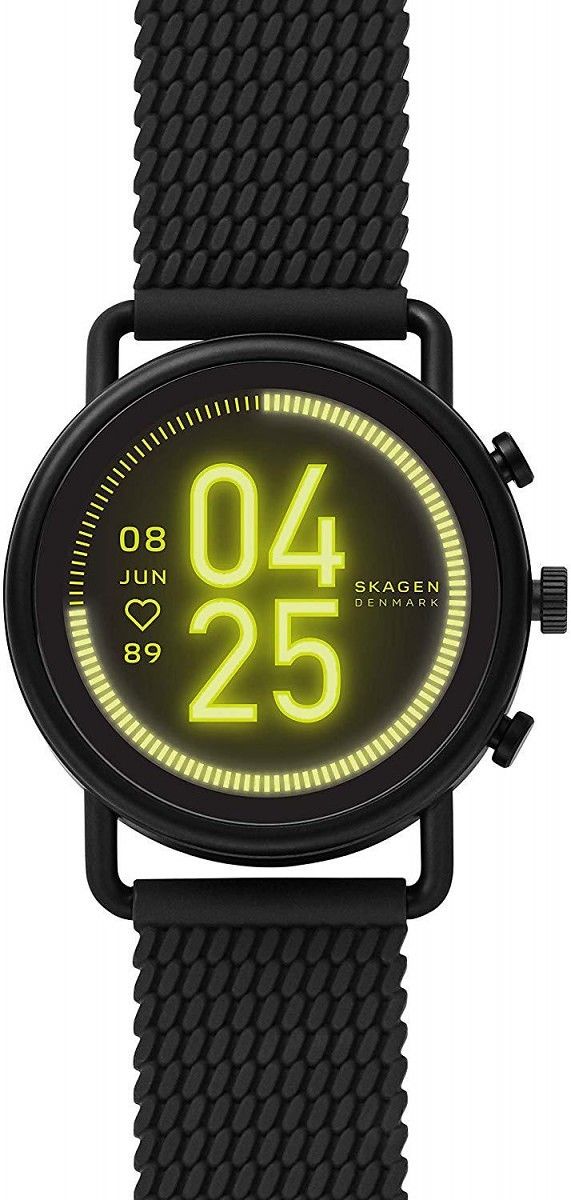
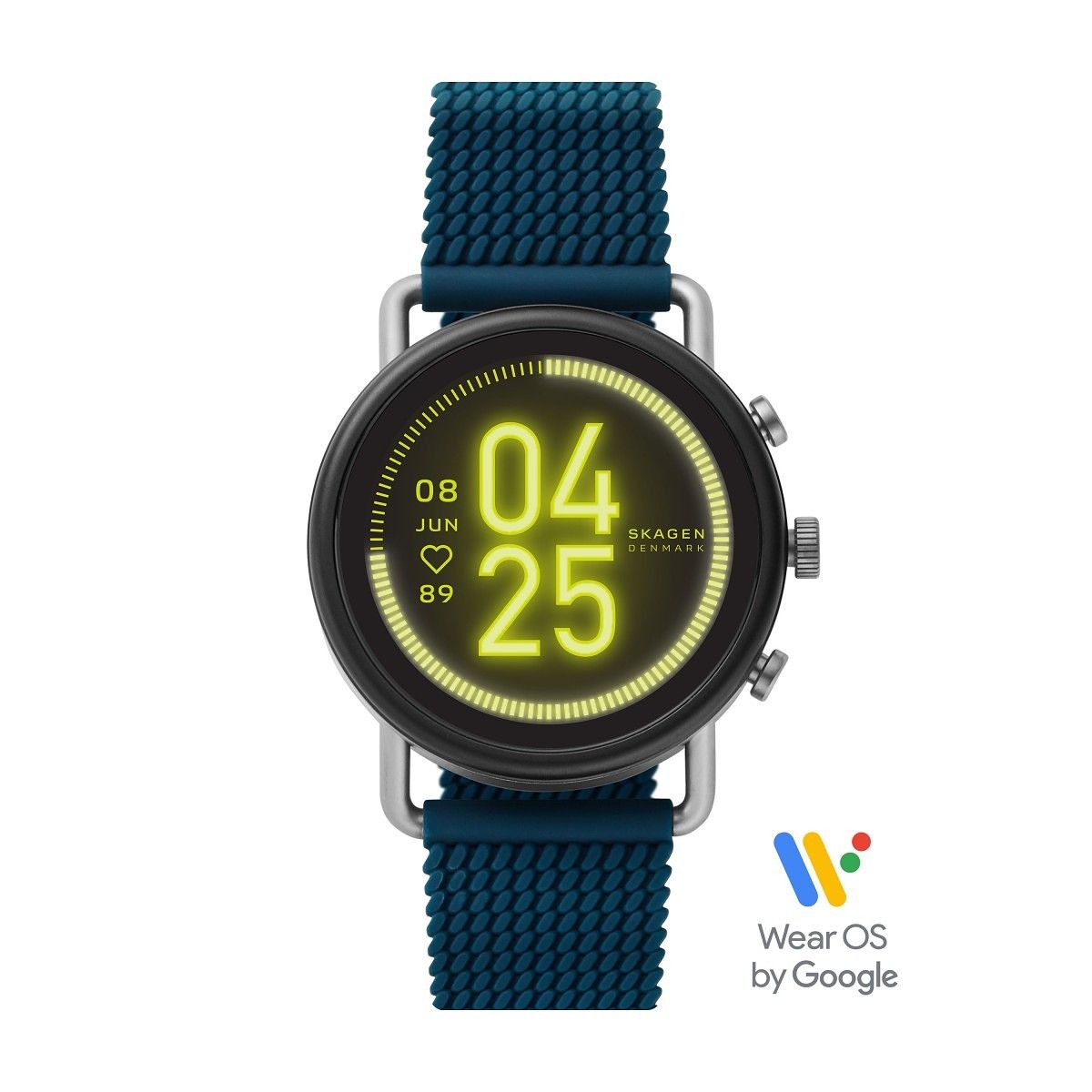
Wear OS may not be a super popular smartwatch platform, but it does have some big names behind it. One of the brands that is most responsible for pumping out solid Wear OS smartwatches is Fossil. Skagen is a subsidiary of Fossil, and the Skagen brand has also been behind some very nice looking smartwatches. The next device in their line up appears to be the Skagen Falster 3, which has appeared online ahead of its launch on a now-removed Amazon listing.
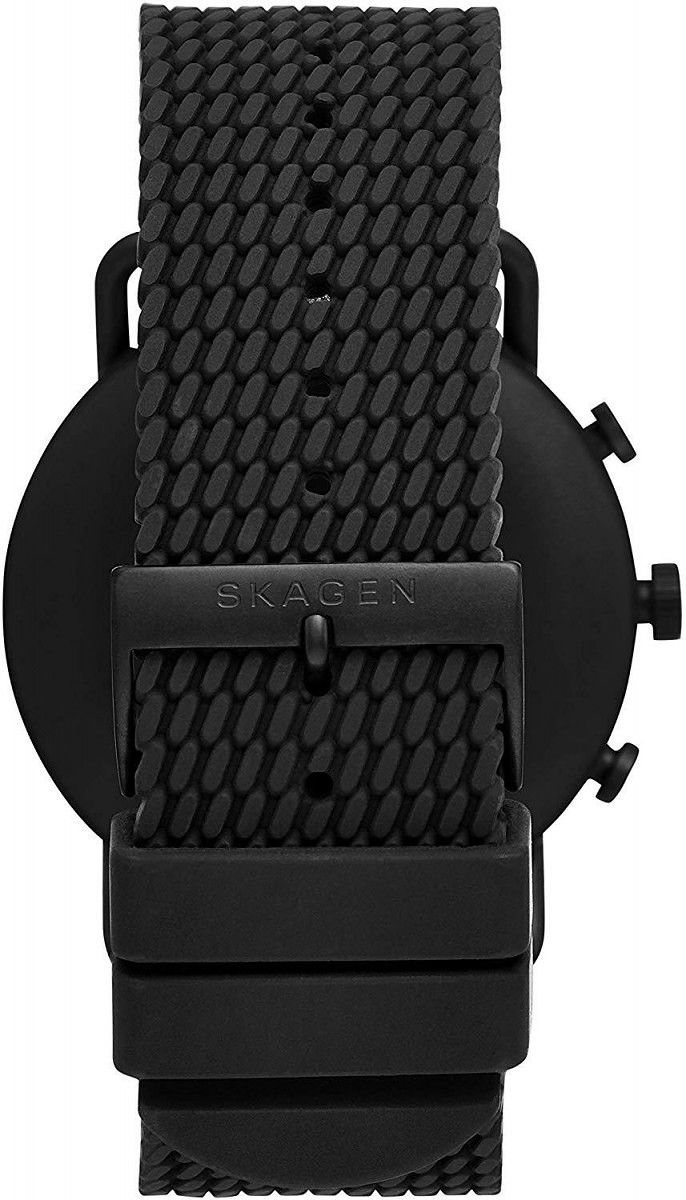
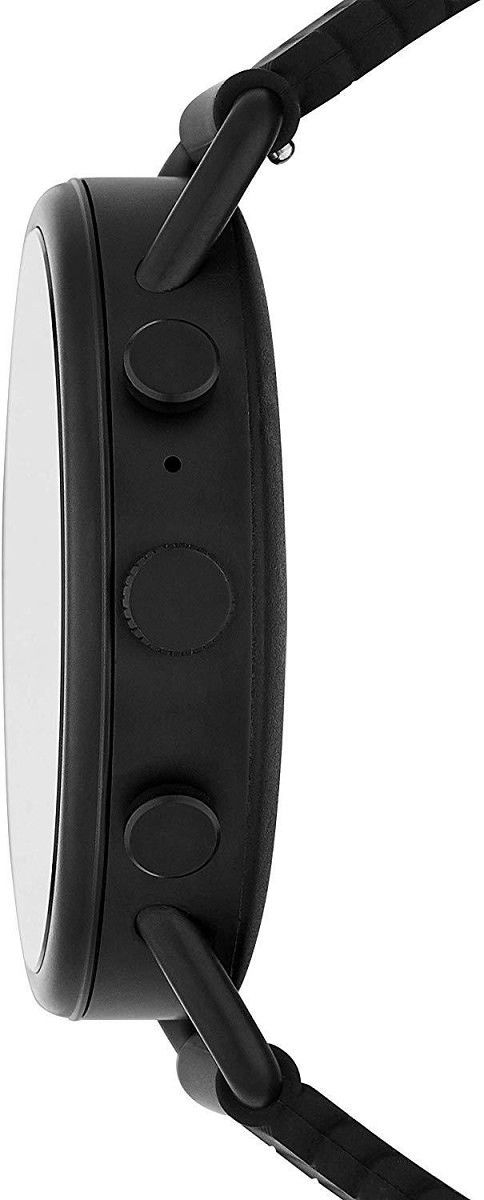
The Skagen Falster 2 was a very well-designed smartwatch and the Falster 3 doesn’t change a lot about that. It retains the same flat sides, pronounced watchband lugs, and three buttons along the right side. Unfortunately, the Amazon listing doesn’t give much information about the specifications. We can see is it will be available in four color options: Black Silicone, Blue Silicone, Gunmetal Steel Mesh, and Leather – Silicone Backed. It will be water-resistant to a depth of 50 meters with NFC and GPS as well. The listing mentions “24 hours of battery life based on usage.”
It should be safe to assume the Skagen Falster 3 will feature the Snapdragon Wear 3100 processor and 1GB of RAM to match the Fossil Gen 5 series. Skagen watches are typically more expensive than the regular Fossil watches, and that’s the case here as well. The Amazon listing shows a price of $295 and a release date of January 25th.
After prematurely showing up on Amazon earlier this week, the Skagen Falster 3 has been officially announced. The Amazon listing took a lot of the wind out of the sails as we’ve already seen what the device looks like. As expected, the watch features the Snapdragon Wear 3100 chip and 1GB of RAM. It also has a speaker for alerts and taking calls, a 1.3-inch OLED display, a 42mm case, NFC support, GPS positioning, swim-proofing (down to 30m depth) and 8GB of internal storage. The Falster 3 has leather, metal, and silicone mesh band options. The watch costs $295 and is available right now.
Update 2: Skagen Falster 3 smartwatch with Wear OS launched in India for ₹21,995 ($307)
Skagen has launched the Falster 3 smartwatch in India for ₹21,995 ($307). The watch will be available at “all leading retail channels”, but at the time of writing, we could not locate product listings on Amazon.in and Flipkart.
The classic Moto Razr was much more than an iconic piece of technology – it was a status symbol. Almost 15 years ago, when candy bar phones were the most prevalent, the Moto Razr captured everyone’s attention with its style quotient, sharp looks, and dazzling metallic colors. The Moto Razr V3 (which was actually the first in the Razr family) is believed to be the world’s best-selling clamshell phone ever. Over the course of four years – i.e. from 2004 to 2008, Motorola brought about various iterations in design but none so compelling and beguiling as the razor-sharp V3. Sadly, over the years, as technology progressed and users migrated to smartphones with touchscreen, buying choices were no longer being dominated by just design. Specifications started playing a big role and it was then that the popularity of clamshells, sliders, candy bars, and other peculiarly designed phones started dwindling. In 2011, Motorola tried to reanimate the Razr branding with the Droid Razr series running Android. However, most of the OG Razr’s fans did not accept a Razr without the iconic sharp edges and foldable design.
Behind the scenes, Motorola kept on working on a foldable smartphone over the last decade, and its vision was just realized last year in November when it launched the Motorola Razr as an Android smartphone with a vertically folding display. We first learned about Motorola’s vision to revive the Razr in January last year, when the WSJ published a report about the intended revival of the phone. Almost a week later, we witnessed the design being registered with the World Intellectual Property Organization (WIPO). Soon after, our Editor-in-Chief, Mishaal Rahman, scored some valuable information about the Razr (codenamed “voyager”) including some preliminary specifications and software features exclusive to the device. Over the course of 2019, we kept getting tidbits about the phone until the official launch later in the year.
Despite some hiccups in shipments, the phone finally became available in the U.S. earlier this month and Motorola is now vying to bring the Motorola Razr to India. I was invited to the Lenovo-Motorola office in Gurugram, India, for an interactive hands-on session with the new and equally enticing Motorola Razr. Besides letting me take a look at the phone and also allowing me to touch it and challenge the hinge design with vigorous flips, Motorola India also shared some insights about the phone.
But before I start, here’s a recap of the specifications of the new Motorola Razr.
eSIM, NFC, CDMA, LTE bands 2/3/4/5/7/13/20/28/66, Bluetooth 5.0 LE, GPS/GLONASS, WiFi 802.11 a/b/g/n/ac
Security
Capacitive fingerprint scanner
IP Rating
None, splash-proof nano-coating
Audio
Speaker at the bottom, no 3.5mm headphone jack, 4 microphones
Software
Android 9 Pie
Ports & Buttons
USB 3.0 Type-C port at the bottom, fingerprint scanner in the bottom bezel, power and volume buttons on the right side
Motorola Razr: Facts & Claims
Before I begin with the design, I want to throw some light on the facts shared and claims made by representatives of Motorola India. First, the work on the foldable Motorola Razr Android smartphone began about 10 years ago and the initial design for the phone was ready in 2011. Over the next four years, Motorola made several iterations and multiple prototypes while trying to perfect the design. In the process, Motorola filed for about 100 patents for the hinge that is meant to prevent the display from slacking.
While the final shape of the phone was nearly ready by 2015, the lack of a proper folding screen technology resulted in Motorola having to delay the fold till 2019. The fit of the foldable display was further perfected over around 14 generations to make sure there’s no bulge or crease to hamper the premium experience that this $1,400 phone aims to offer.
Furthermore, the international media noticed that the Motorola Razr bears a label saying it’s “Made in India.” The brand’s representatives, however, helped me with some insights on this. According to them, while the PCBs for the phone are being assembled in Lenovo’s factory in Sriperambudur, India, the rest of the phone is being made in China. As per the Federal Trade Commission’s regulations, the country of origin of an imported phone is where the PCB or the logic board of the phone is assembled. These regulations may vary with the region. For instance, for the phones to be sold in India, the place of origin is where the majority of the phone – not just the PCB – is assembled. Therefore, the Indian units, when available in India, are most likely to come with a “Made in China” label, instead. Since I did not see an Indian retail unit, I can’t make a solid claim. The prototype unit that I was handling had no clear indication of the place of manufacture.
With these set on the side, let me take you through my impressions of the Motorola Razr’s design.
Motorola Razr Hands-on: First Impressions of the Design
The Motorola Razr from the very first glimpse appears laced with nostalgia and makes you wanna reach out for it. Even though I’d seen the phone in several photos and videos, I was totally awestruck with the design. Despite being notably chunkier and heavier than the original Moto Razr, the new foldable phone fits very comfortably in the hand. It is also curvier on the edges which improves handling to quite an extent. The phone is bulky but the weight has been shifted towards the lower part so that it doesn’t tend to topple when you’re using it.
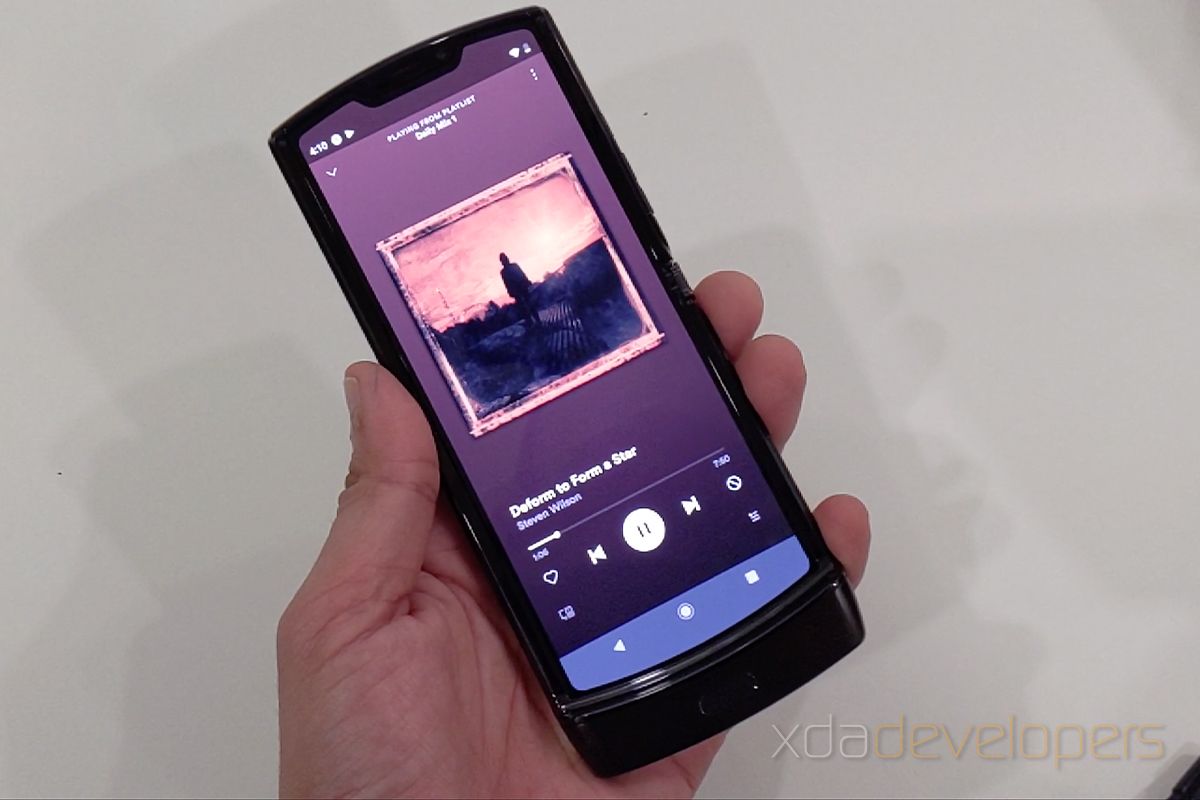
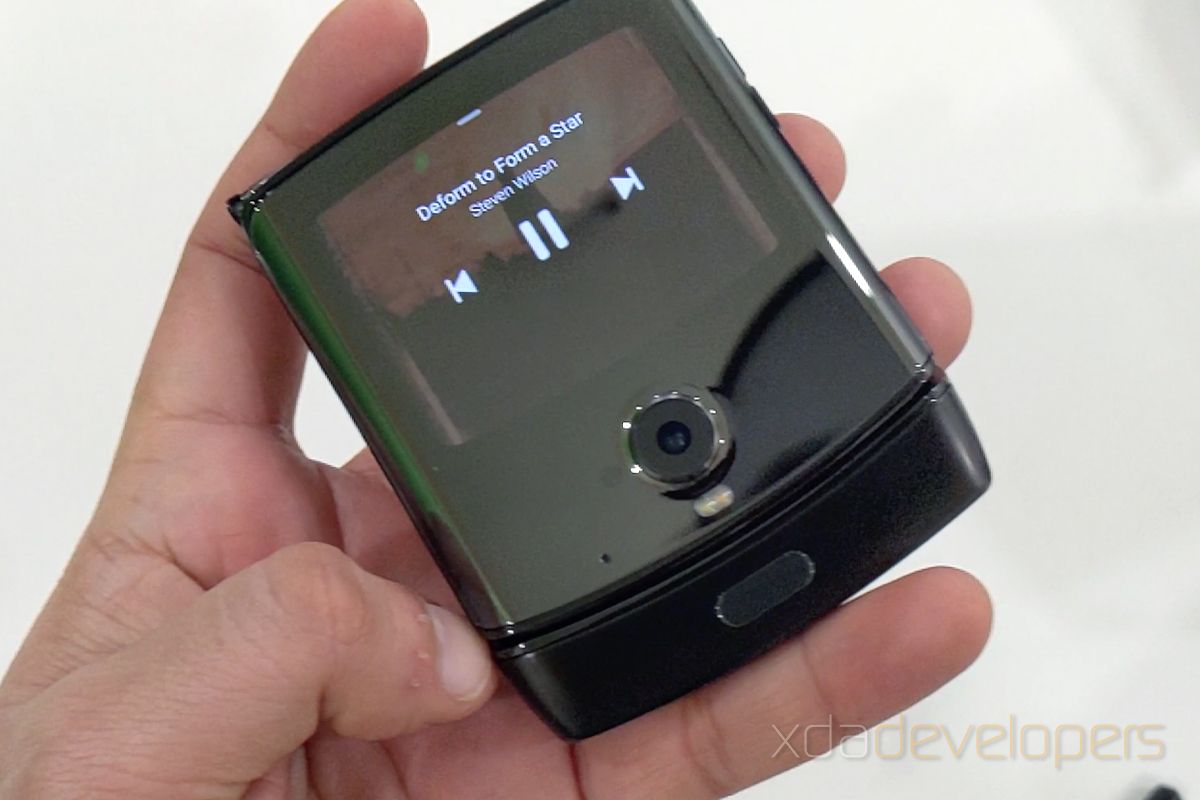
Unlike the older phone, the new Motorola Razr uses much less metal. The lower part of the Razr’s back is made of a rigid polycarbonate with a dotted surface for a good grip while the top half is protected under glass which also covers the 2.69-inch Quick View display and wraps around the periphery of the single camera. The backside of the hinge is made of metal and so are the side edges of the Razr. Despite this change in technology, the Motorola Razr also retains the chin and this houses a capacitive fingerprint scanner on the top. I initially mistook it for a push-button but it is rigid. The bottom of the phone features a USB-C port along with a mono speaker under a metallic grille that encompasses across the entire bottom edge. The volume rocker and the power button are on the upper right side of the phone.
The two sections of the folding Motorola Razr sit completely joined when folded and there’s no gap in between, unlike the Galaxy Fold. This is because of the hinge has scope for the foldable display to get slightly curved inwards when the phone is folded instead of forming a sharp crease. When opened, the Motorola Razr is not entirely flat and the upper half is slightly lifted when the phone rests on a flat surface opened but this should not be a problem for most users.
To me, what does seem to be a problem is the slight lift in the display when the phone is being opened. While Motorola claims that the internals of the phone under the display are tightly sealed, the lift can allow dust or small grain-sized particles to enter the area behind the display and cause damage from the behind when the display is flat open. However, it is also possible that the problem is rectified in the production units since the one I was using was a pre-launch prototype.
When opened, the Motorola Razr has a 6.2-inch flexible plastic OLED display. The upper and the lower edges of the display are curved to help with the classic shape while there’s a notch on the top for the selfie camera, the earpiece, and the ambient and proximity sensors. There are thin bezels around the display and you can also see the gears of the hinge mechanism that Motorola is very proud of. Inside the chin, there’s a primary microphone while there are three other microphones – i.e. four in total – for spatial audio capture.
The screen is attached to the top bezel around the display but is free from the bottom, such that it slides very slightly when you open or close the phone. As per Motorola, this reduces the stress on the display and also reduced the chances of creases or lumps around the fold – although a recently released marketing video says, “bumps and lumps are normal“. But are they acceptable? Absolutely not! And this is why depending on not just the looping hinge but also the sliding display makes sense. While this could initially freak you out, you should get used to the moving, especially since there’s a negligible chance you’ll use the display while opening or closing the phone.
The Motorola Razr runs stock Android currently on Android 9 Pie. Additionally, it has custom software like the Moto Camera and support for Moto gestures for camera and flashlight. You can also trigger the classic mode which launches an interface designed as an homage to the original Razr.
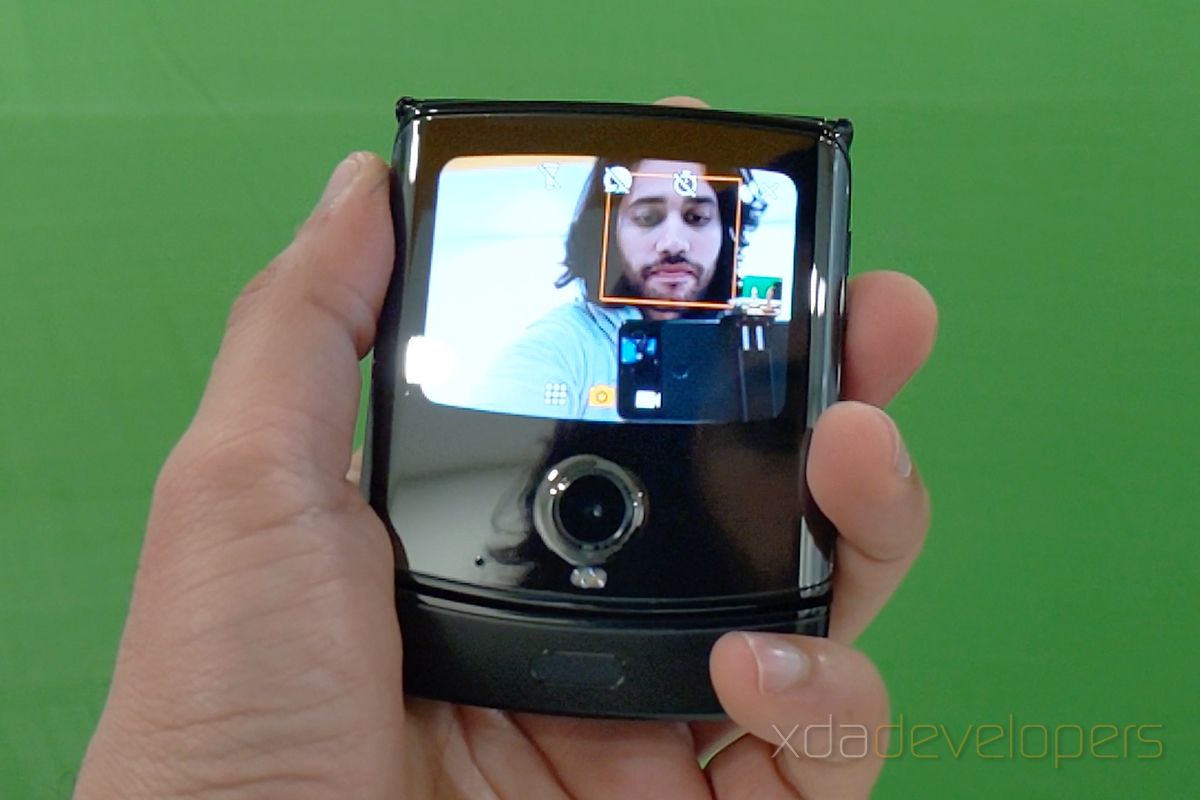
Coming back to the secondary Quick View display, it does not run a full version of Android – unlike Galaxy Fold – but you can use it for a seamless transition with certain music apps like Spotify, Gaana, Wynk Music, etc. When idle, the display shows the time as well as the battery and network statuses. It can also be used as a viewfinder for the camera for selfies – you can simply flick the phone twice to open the camera and tap the screen to click a picture. Additionally, the Quick View display on the Motorola Razr also lets you see notification alerts but you may not be able to see the content of the entire message fully and there’s no way you can reply to the notifications. Motorola is also working to bring support for Google Assitant and Google Maps for the smaller display. Lastly, when you’re clicking pictures of others when the phone is unfolded, the display shows animated smiling emojis to help capture everyone’s attention towards the camera.
All Charms and No Antics
As for the performance, the choice of Snapdragon 710 does feel odd, especially since Samsung has been using flagship chipsets on its foldable devices – Snapdragon 855 on the Galaxy Fold and Snapdragon 855+ on the Galaxy Z Flip. But, Motorola is confident that the phone can handle all the challenges of everyday usage. The target group for the Razr is unlikely to use it for gaming and will primarily use it as a style statement – and, there’s no doubt about the latter.
The Motorola Razr definitely feels like a phone that will attract a lot of attention. But how well will it sell? That depends on the pricing of the phone. In Indian currency, the $1,400 price tag translates to approximately ₹1,00,500 – a premium price that limits the Motorola Razr to the wealthy people in the country.
But, Motorola also told me that they are establishing the Razr as a franchise and will not restrict themselves to a single product. Will they bring more “affordable” phones in the series? We’ll learn soon. Meanwhile, you can also check out the hands-on video that our friends at Pocketnow shot during the international launch of the Motorola Razr:
What are your views on the Motorola Razr? Let us know in the comments below!



 The curved screen and 3D glass will be a game changer.

 120Hz Refresh rate
 2k Resolution
 240Hz Sampling
 SDR to HDR conversion
 HDR up to 1200nits brightness
 100% DCI-P3