LightBlog

vendredi 17 avril 2020

Vivo rolls out Android 10 with Funtouch OS to the Nex 3 5G

Google first rolled out a stable build of Android 10 to its Pixel devices back in September last year. Around the same time, Chinese OEM Vivo announced the Nex 3 5G, however, the device rolled out with Funtouch OS 9.1 based on Android 9 Pie, instead of an Android 10 version of Vivo’s custom skin. Following the launch of the Nex 3S 5G last month, which is essentially a Nex 3 5G with a Snapdragon 865 SoC, Vivo is now finally rolling out an Android 10-based build of Funtouch OS to the original Vivo Nex 3 5G.

As per a recent report from GSMArena, Vivo Nex 5G (model no. V1924A) users around the world are now receiving a build of Funtouch OS 10 (v6.0.1) based on Android 10. The new software release includes all of the features Google introduced with Android 10, along with the Android security patches for March 2020. But as far as Vivo’s own optimizations are concerned, the new build doesn’t pack in any major UI changes over Funtouch OS 9.1. The software does include some minor changes to the font and gesture navigations, but other than that it’s still pretty much the same as older versions of the software.


Via: GSMArena

Thanks to Max Weinback for the screenshot!

The post Vivo rolls out Android 10 with Funtouch OS to the Nex 3 5G appeared first on xda-developers.


from xda-developers https://ift.tt/3aiLCuM
via IFTTT

Xiaomi releases kernel sources for the Redmi Note 9 Pro and Redmi Note 8 Pro Android 10 builds

General Public Licence v2, better known as GPLv2, mandates every Android smartphone manufacturer to publicly release the part of Linux kernel code that they have shipped on their smartphones. OEMs like OnePlus and POCO are known for providing Day 1 source code release while others often take their sweet time to fulfill their legal obligation. Xiaomi, too, used to be one of the worst offenders of GPLv2 in its early days. But in recent years, it has made great strides in overturning that image. Xiaomi is still not as swift as OnePlus when it comes to releasing and keeping the kernel sources up-to-date, but it’s now in a much better position than several of its competitors.

XDA Forums: Redmi Note 9 Pro || Redmi Note 9 Pro Max

The company recently launched its newest phones in the Redmi Note series in India consisting of the Redmi Note 9 Pro (codename: curtana) and Redmi Note 9 Pro Max. Both devices come running Android 10 with MIUI 11 on top. And now the company has released the kernel source code for both phones, allowing the modding community to kickstart the development of custom ROMs and kernels. You can review the code at Xiaomi’s GitHub repository by clicking on the link below.

Kernel Sources for the Redmi Note 9 Pro/Note 9 Pro Max

Alongside this, Xiaomi has also released updated kernel sources for the Redmi Note 8 Pro’s Android 10 release. Xiaomi released the kernel source code for the Redmi Note 8 Pro (codename: begonia) on September 10th. This was for the initial Android 9 Pie release which the device was shipped with. Back in late February, Xiaomi rolled out the Android 10 update for the Redmi Note 8 Pro.  However, the kernel source code for the same wasn’t made available up until now. Visit the Xiaomi’s GitHub page from the link below to inspect or download the code.

Kernel Sources for the Redmi Note 8 Pro || Redmi Note 8 Pro XDA Forums

The post Xiaomi releases kernel sources for the Redmi Note 9 Pro and Redmi Note 8 Pro Android 10 builds appeared first on xda-developers.


from xda-developers https://ift.tt/2RH0uwE
via IFTTT

OnePlus 8 series day 1 update adds Live Caption, Bullets Wireless Z integration with Dolby Atmos, and more

Just a few days after the launch of the OnePlus 8 series, OnePlus is rolling out the first software update for the devices. The day 1 update for the OnePlus 8 series adds features like Live Caption support, Dolby Atmos integration for the newly launched Bullets Wireless Z, Android security patches for March 2020, and more. Since the devices are yet to go on sale, users can expect to receive this update as soon as they set up their new OnePlus 8 (review) or OnePlus 8 Pro (review).

OnePlus 8 XDA Forums || OnePlus 8 Pro XDA Forums

The day 1 OxygenOS update for the OnePlus 8 series goes by the build number 10.5.1 for the OnePlus 8 EU variant, OxygenOS 10.5.3 for the OnePlus 8 international variant, OxygenOS 10.5.2 for the OnePlus 8 Pro EU variant, and OxygenOS 10.5.4 for the OnePlus 8 Pro international variant. Here’s the complete changelog for the first OnePlus 8 series update:

  • System Updates
    • Improved icon display in status bar
    • Improved back gesture experience
    • OnePlus Bullets Wireless Z can now be integrated with Dolby Atmos for better sound quality
    • Added double-tap feature to wake up lockscreen in ambient display more or off-screen condition
    • Added OnePlus Tips & Support section in Settings. Check out all the new features and answers to common issues here
    • Added Live Caption, this will detect speech in media and automatically generate caption [To enable: Settings-System-Accessibility-LiveCaption]
    • Updated Android Security Patch to 2020.03
    • Updated GMS package to 2020.02
  • Camera Updates
    • Optimized the camera’s shooting experience and improved stability
    • Optimized the animation effect and improved interaction experience
    • Added video filter feature
  • Phone Updates
    • Added contact notes info for incoming calls
  • Network Updates
    • Enabled 3 UK 5G
    • Enabled Sweden Tele2 VoWiFi
    • Enabled T-Mobile Australia VoWiFi and 5G
    • Optimized network data transmission performance and stability
  • Voice Assistant Updates
    • Now you can wake up voice assistant of your choice just by long-pressing the power button [To enable: Settings-Buttons & gestures-Press and hold the power button-Choose the app you want to activate]

Thanks to XDA Senior Member Some_Random_Username for the tip!

The post OnePlus 8 series day 1 update adds Live Caption, Bullets Wireless Z integration with Dolby Atmos, and more appeared first on xda-developers.


from xda-developers https://ift.tt/2VyYcB2
via IFTTT

[Update: Design revealed] iQOO Neo3 launches next week with a Qualcomm Snapdragon 865 and 144Hz display

Update 1 (4/17/20 @ 04:00 AM ET): iQOO Neo3 will comes with triple rear cameras and a hole-punch display on the front.

The update has been added at the bottom while the original article from April 13th is preserved as-is.

iQOO, formerly a Vivo sub-brand, recently made its international debut with the launch of the iQOO 3 5G in India. Kishan from our team concluded his iQOO 3 5G review commending it as one of the fastest phones out there, thanks to the Qualcomm Snapdragon 865 mobile platform, 12GB of RAM, and UFS 3.1 storage technology. Additional features like the pressure-sensitive “Monster” shoulder buttons make the package even more exciting. One area, however, where the phone was found to be lagging behind the competition is the refresh rate of the display. For users who want a display with a higher refresh along with the other gaming-centric features in the iQOO 3, the company will be launching the iQOO Neo 3 on April 23rd with a 144Hz display.

The iQOO Neo3 is actually the fourth phone in the Neo series and the previous devices were named simply after the processor powering them. The older iQOO phones in the series were called Neo 845, Neo 855, and Neo 855 Plus. The new naming scheme indicates that iQOO is positioning the Neo3 alongside the iQOO 3 instead of it being a successor or a supplementary device.

vivo iqoo neo 3

Ahead of the iQOO Neo3’s launch on the 23rd of April, the brand’s Weibo account has started actively teasing the key features of the phone. Expectedly, the Neo3 is powered by a Snapdragon 865 and comes with a UFS 3.1 NAND storage. Besides this, the Neo3 also comes with a 144Hz display to complement the top-of-the-line internal hardware.

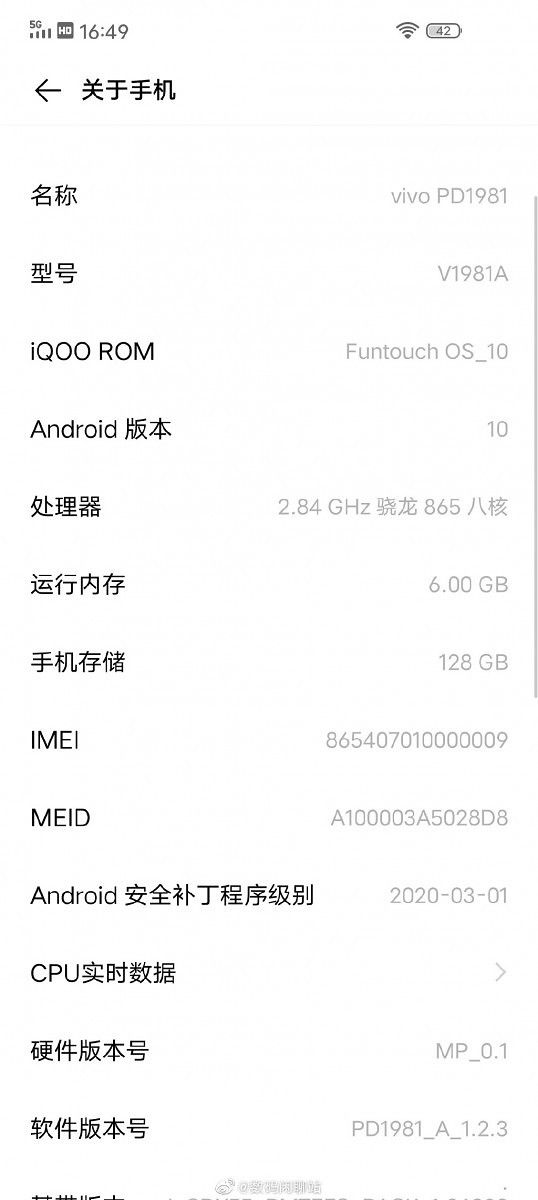
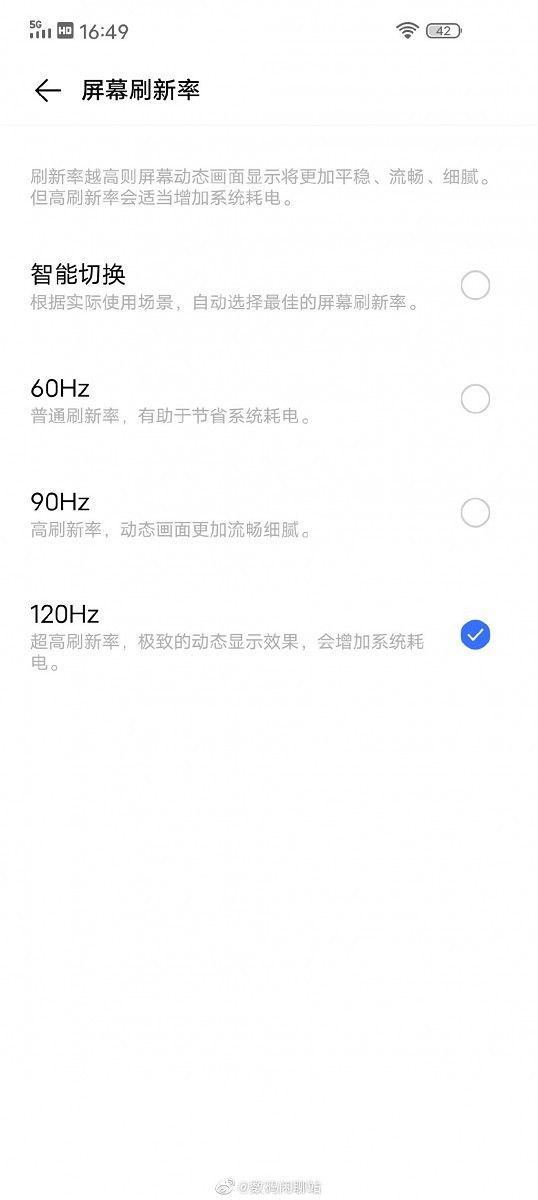
Based on some screenshots found on Weibo, we learn that an upcoming Vivo-branded phone with model number PD1981 will allow users to choose among the different screen refresh rates. The screenshots are allegedly captured on the iQOO Neo3 since there is no other Vivo flagship (iQOO still sells under Vivo in China) appears to be in pipeline. The available options include a 60Hz option for better battery performance, a 90Hz option for optimal performance and battery backup, and a 120Hz option to unleash a super-smooth display. Additionally, the screenshots also reveals the phone runs on Vivo’s overlay skin Funtouch OS based on Android 10.

Vivo has also launched a microsite for iQOO Neo3 and we can expect to see more updates on the same in the coming days. We’ll update you as we learn more about the phone.


Update: iQOO reveals Neo3’s front and back design revealed

In further teasers, iQOO has revealed key details about the design of the upcoming Neo3 smartphone. It comes with a hole-punch display just like the iQOO 3 and a triple camera setup on the back. The camera module has mentions details like the sensor size and the aperture but not the resolutions of the sensors. For now, we know there is an ultrawide sensor along with the primary sensors.


iqoo neo3

The phone also comes with dual speakers, Hi-Fi audio, and 1.05cc audio chambers on either side for amplifying the sound.

Source: Weibo (1)(2)

The post [Update: Design revealed] iQOO Neo3 launches next week with a Qualcomm Snapdragon 865 and 144Hz display appeared first on xda-developers.


from xda-developers https://ift.tt/2JXpjjN
via IFTTT

WhatsApp prepares to increase the group video and audio call limit

Facebook-owned WhatsApp is undoubtedly one of the most popular IP-based messengers, with over two billion users around the world. In a bid to keep its users from migrating to other more feature-rich messengers, the company keeps bringing new features with each major update. Over the last couple of months, the company has added several new features to the messenger including the much-awaited dark mode, support for fingerprint unlock, and more. Now, according to recent posts from WABetaInfo, the company is preparing to increase the group video and audio call limits on the messenger.

WhatsApp first introduced group audio and video calling on the platform all the way back in 2018 and the feature currently only allows a maximum of 4 participants per call. However, WABetaInfo has discovered strings of code in WhatsApp beta for Android (v2.2.128) which suggest that the messenger is preparing to increase the limit in a future update. The strings also reveal that all users will have to be on the latest version of the app in order to take advantage of the increased group call limit. As of now, it isn’t quite clear what the new limit will be and we have no information regarding the release timeline.

WhatsApp

Along with the new group call limit, WhatsApp is also working to add a new call header to the app which is already available in WhatsApp beta for Android v.2.20.129. The call header, which was first spotted in WhatsApp beta for iOS v2.20.50.23, aims to inform users that their calls are end-to-end encrypted.


Source: WABetaInfo (1,2,3)

The post WhatsApp prepares to increase the group video and audio call limit appeared first on xda-developers.


from xda-developers https://ift.tt/3ae4KKE
via IFTTT

jeudi 16 avril 2020

Google Pixel 4/4 XL get support for eSIM and DSDS on Verizon with April 2020 update

The Google Pixel series doesn’t include any devices with dual physical SIM card slots. However, Dual SIM functionality is possible through a feature called “Dual SIM, Dual Standby.” Using the SIM card slot and eSIM in tandem, the Pixel 4 and Pixel 3a can use two SIMs. eSIM was previously disabled on the Verizon Pixel 4 models, but the April 2020 update enables it.

Pixel 4 XDA Forums ||| Pixel 4 XL XDA Forums

With the eSIM enabled, the Pixel 4 series on Verizon can finally support Dual SIM, Dual Standby (DSDS). This means you can receive calls and text from the secondary SIM, but it can’t be used simultaneously with the primary SIM. People like this feature because it can allow you to carry one device instead of two if you have multiple lines. Verizon’s changelog explicitly mentions eSIM and DSDS, but some people are saying it still doesn’t work. Verizon has yet to issue a solution.

What’s changing:

Verizon Wireless is pleased to announce a new software update for your Google Pixel 4. This update includes the latest security patches, system enhancements, and the enablement of eSIM and Dual SIM Dual Standby capability.

Dual SIM, Dual Standy first popped up for Pixel phones with Android Q beta 2 on the Pixel 3 series. It was removed in beta 3 and never returned (though you can enable it with root). The Pixel 3a eventually launched with support for DSDS and that carried over to the unlocked Pixel 4 models. Both Verizon and Google have instructions for getting DSDS setup on your Pixel.


Source: Verizon (Pixel 4, 4 XL)

The post Google Pixel 4/4 XL get support for eSIM and DSDS on Verizon with April 2020 update appeared first on xda-developers.


from xda-developers https://ift.tt/3ag5oHs
via IFTTT

Qualcomm uploads some of the Snapdragon 865 and Snapdragon 765 sources on CAF

Back in December of 2019 during the Snapdragon Tech Summit, Qualcomm announced the Snapdragon 865 and Snapdragon 765 mobile platforms. These chipsets are Qualcomm’s most powerful flagship and upper mid-range SoCs to date, and they’re already shipping on a number of premium devices such as the Samsung Galaxy S20 (865), Xiaomi Mi 10 (865), OnePlus 8 (865), and OPPO Reno3 Pro (765). Over 4 months since Qualcomm first announced these SoCs, the company has started to upload some of the sources associated with the two mobile platforms.

Code Aurora Forum, or CAF for short, hosts the source code for various Qualcomm Snapdragon SoCs. Qualcomm, as an SoC vendor, distributes a forked version of the Linux kernel to OEMs/ODMs, who then add device-specific changes on shipping devices. In addition, Qualcomm makes changes to the AOSP framework to optimize Android for each of the company’s Snapdragon mobile platforms. Qualcomm privately distributes their modified Linux kernel, AOSP framework, and other software tools to its partners as part of a Board Support Package, or BSP. On the other hand, CAF is where Qualcomm publically publishes these Linux kernel changes and AOSP framework changes. This CAF release can be useful for custom ROM developers who wish to use it as a starting point rather than pure AOSP, which is why you sometimes see “CAF-based” ROMs on our forums.

To summarize:

  • Mainline Linux Kernel –> Android Common Kernel –> SoC-specific kernel (what Qualcomm publishes on CAF) –> BSP –> device-specific kernel (what OEMs are required to publish)
  • AOSP –> AOSP + framework changes made by SoC vendors (not required to be published under Apache 2.0, but Qualcomm does anyway) –> BSP –> OEM Android software (OxygenOS, ZenUI, etc.)

You can browse the associated release for the Snapdragon 865 (code-named “kona”) and Snapdragon 765 (code-named “lito”) on CAF now. Qualcomm previously released some of the source code for the Snapdragon 855 back in May of 2019, meaning today’s release has come about a month earlier than we expected.

The post Qualcomm uploads some of the Snapdragon 865 and Snapdragon 765 sources on CAF appeared first on xda-developers.


from xda-developers https://ift.tt/2RJZ8kI
via IFTTT