LightBlog

vendredi 31 juillet 2020

[Update: Reno 4 too] OPPO unveils Reno4 Pro global variant with a curved 90Hz Super AMOLED display, 65W charging, and Snapdragon 720G

Update 1 (07/31/2020 @ 03:50 AM ET): In addition to launching the Reno 4 Pro in India, OPPO has also launched the global version of Reno 4 in Thailand. Scroll to the bottom for more information.

OPPO introduced the Reno series last year with a higher mid-range and an affordable flagship — the Reno and the Reno 10X Zoom editions. The first-gen Reno devices were succeeded shortly with the Reno2 series, which was then succeeded by the Reno3 series powered by MediaTek’s Dimensity chipsets in December 2019. While the outbreak of COVID-19 slowed down OPPO a bit, the company still went ahead and launched the Reno 4 and the Reno 4 Pro in China back in June 2020. They are now launching the Reno 4 Pro globally but with Snapdragon 720G instead of the Snapdragon 765G, and an extra camera on the back.

The OPPO Reno 4 Pro global variant varies from both — the Chinese Reno 4 and the Reno 4 Pro variants — in terms of dimensions. It is actually lighter than both of the Chinese variants and weighs only 161 grams. This is because of the plastic composite material used in place of the AG glass on the Chinese variants. Despite the difference in materials, the global Reno4 Pro comes with a similar “anti-glare matte finish.” Globally, the Reno 4 Pro will be available in two different colors — Starry Night & Silky Black.

Oppo Reno4 pro global color

The Reno 4 Pro retains the same 6.5-inch curved Super AMOLED display as on the Chinese version of the device. The display is claimed to cover 100% of the DCI-P3 color gamut as well as have a peak brightness of 1,100nits. OPPO boasts of a high contrast ratio of 5000000:1 along with a screen-to-body ratio of about 92%. The display also houses a hole-punch cutout for the selfie camera. In addition, the display sports a 90Hz refresh rate beside all the other virtues.

Oppo Reno4 pro screen

When it comes to the cameras, the Reno 4 Pro global features a quad-camera setup. This includes a 48MP primary camera with a Sony IMX586 sensor, an 8MP ultra-wide, a 2MP macro sensor, and a 2MP mono sensor for phase detection. Unlike the Chinese variant, there’s no Laser Autofocus on this variant. On the front, the Reno 4 Pro features a 32MP camera with a Sony IMX616 sensor — the same as the OnePlus Nord and the Realme X3 SuperZoom. Besides supporting OIS on the primary rear camera, the phone also supports EIS for videos recorded using the front camera.

The next major highlight of the phone is the 65W SuperVOOC 2.0 charging technology that can recharge the entire 4,000mAh battery in about 30 minutes. OPPO provides a 65W charger within the box. The same charging technology is also supported on the OPPO Find X2 Pro and the Realme X50 Pro and the claims of getting the battery fully charged in about 30 minutes have turned out to fairly accurate.

In terms of internals, the OPPO Reno 4 Pro global variant comes with 8GB of RAM along with a Snapdragon 720G chipset. This primarily means that the global variants lack 5G support. The phone also uses a graphite-based cooling system to keep the phone from overheating. There is a 128GB UFS 2.1 storage which can be expanded further using the dedicated microSD card slot.

In terms of software, the smartphone features OPPO’s custom Android skin ColorOS 7.2 based on Android 10.

OPPO Watch

OPPO has also announced the OPPO Watch powered by the Snapdragon Wear 3100 SoC. The OPPO Watch resembles the Apple Watch aesthetically and comes in 41mm and 46mm dial sizes. The 46mm variant features a 1.91-inch display but the company does not reveal the size of the display on the smaller variant.

oppo watch

The OPPO Watch 46mm and 41mm have 24 hours and 36 hours of battery life. Additionally, the Watch also supports VOOC Flash charging that allows the Watch to get fully charged in 75 minutes.

Price & Availability in India

The OPPO Reno 4 Pro will be available in India starting August 5th. The 8GB/128GB is priced at ₹34,990 (~$470).

The OPPO Watch is priced at ₹14,990 (~$200) for the 41mm variant and the ₹19,990 (~$270) for the 46mm. The Watch will be available starting August 10th.


Update: OPPO Reno 4 launches in Thailand

OPPO announced the standard Reno 4 in Thailand alongside the Reno 4 Pro in Inda. The standard variant is similarly tweaked for the global market. It comes with the same flat 6.4 AMOLED screen with dual hole-punch cameras. The Laser Autofocus from the Chinese variant has been replaced by a 2MP depth sensor. Similarly, the phone is also powered by a Snapdragon 720G chipset and therefore lacks 5G support.

Furthermore, the regular Reno 4 global variant comes with 30W VOOC fast charging instead of 65W charging on the Chinese variant. The changes in dimensions also align with the global Reno 4 Pro. It is available in Galactic Blue and Space Black colors.

The OPPO Reno 4 is priced at TBH 11,990 (~$385).


OPPO Reno 4 and Reno 4 Pro Global Specifications

Specifications OPPO Reno 4 Global OPPO Reno 4 Pro Global
Dimensions and Weight
  • 160.3 x 73.9 x 7.7 mm
  • 165g
  • 160.2 x 73.2 x 7.7 mm
  • 161g
Display
  • 6.4″ AMOLED
  • Flat display
  • Dual hole-punch
  • 6.5-inch hole-punch FHD+ curved Super AMOLED
  • 1080 x 2400
  • 90Hz, 20:9 aspect ratio
SoC
  • Qualcomm Snapdragon 720G
  • Adreno 618
  • Qualcomm Snapdragon 720G
  • Adreno 618
Storage and RAM 8GB + 128GB 8GB + 128GB
Battery and Charging
  • 4015 mAh
  • 30W VOOC Flash Charge 4.0 fast charging
  • 4000 mAh
  • 65W SuperVOOC 2.0 fast charging
Rear Camera
  • 48MP Sony IMX 586 primary sensor
  • 8MP 119° wide-angle sensor
  • 2MP macro camera
  • 2MP depth sensor
  • 48MP Sony IMX 586 primary sensor, f/1.7, OIS
  • 8MP 119° wide-angle sensor, f/2.2
  • 2MP macro camera, f/2.4
  • 2MP mono camera, f/2.4
Front Camera
  • 32MP +
  • 2MP
32MP
Fingerprint Sensor In-display optical fingerprint In-display optical fingerprint
Android Version ColorOS 7.2 based on Android 10 ColorOS 7.2 based on Android 10


The post [Update: Reno 4 too] OPPO unveils Reno4 Pro global variant with a curved 90Hz Super AMOLED display, 65W charging, and Snapdragon 720G appeared first on xda-developers.


from xda-developers https://ift.tt/39P5SWn
via IFTTT

Android’s Nearby Share now works on Windows via Google Chrome

Google’s alternative to Apple’s AirDrop sharing feature, called Nearby Share, started rolling out to some users in a Google Play Services beta late last month. Shortly thereafter, Google started rolling out Nearby Share support to Chrome OS, allowing Chromebook users to start sharing files with nearby devices by enabling a couple of experimental flags. Now, according to a recent report from Techdows, Nearby Share is rolling out to Google Chrome on Windows on the Chrome Dev and Canary channels.

In order to use the new Nearby Sharing feature, you’ll first need to head over to chrome://flags and enable the “Nearby Sharing” flag. Once you’ve enabled the flag, you’ll need to restart the browser and then head to chrome://nearby. The following page will bring up a list of supported devices that you can share files with.

Chrome Windows Nearby Share

However, there are a couple of requirements that you need to fulfill for the feature to work as intended. First, you will need a Windows PC with Bluetooth support and a supported Pixel smartphone or Chromebook. Secondly, both devices need to be unlocked and close to each other with Bluetooth enabled. And finally, if you’re using a Chromebook to test out the feature, the Chromebook should have Nearby Sharing feature enabled in the Quick Settings.

Google Chrome Windows Nearby Share

While I do have a PC that supports Bluetooth, I wasn’t able to see the feature in action because I don’t have access to a supported Google Pixel smartphone or Chromebook. In case you do have devices that meet all the requirements mentioned above, do try out Nearby Share and share your experience in the comments section below. It’s also worth noting that while Google Chrome on the stable channel (v84.0.4147.105) does show the Nearby Sharing flag on my system, it doesn’t open up the chrome://nearby page yet.


Via: Techdows

The post Android’s Nearby Share now works on Windows via Google Chrome appeared first on xda-developers.


from xda-developers https://ift.tt/3154gnp
via IFTTT

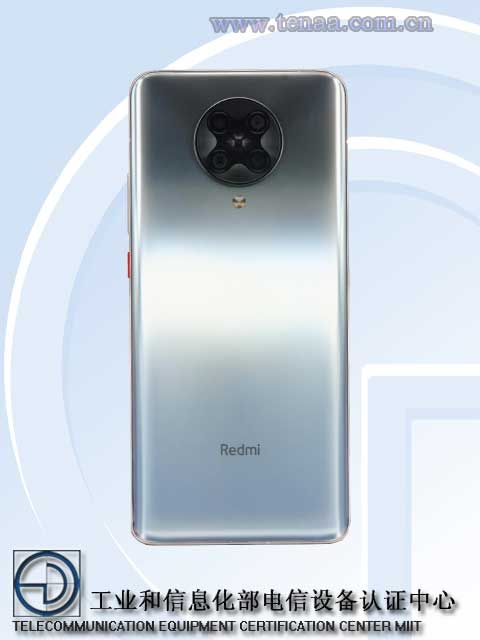
Redmi K30 Ultra spotted at TENAA with 6.67″ display, 4400mAh battery

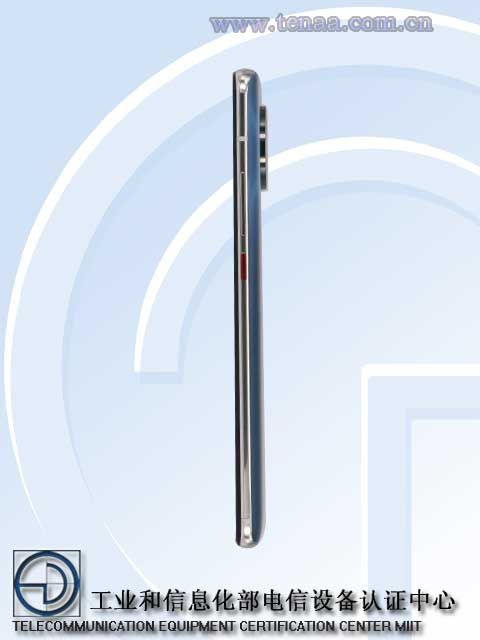
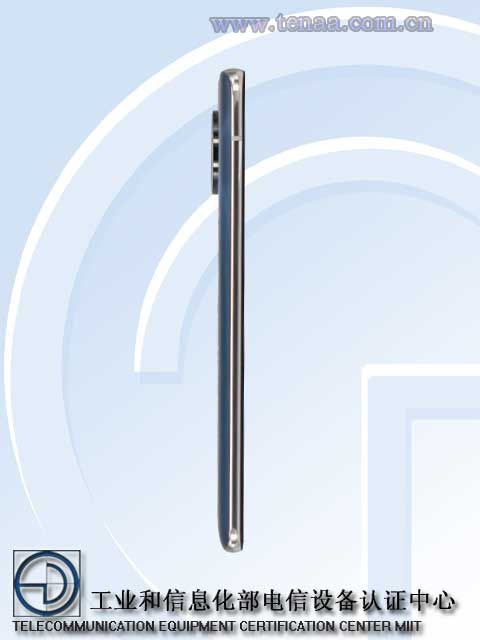
Earlier this month, we revealed the existence of another smartphone in Xiaomi’s Redmi K30 lineup. This device was spotted with the codename cezanne and the branding of Redmi K30 Ultra, indicating that it would be somewhat of an extension of what we have already seen in the existing lineup. Now, a new Xiaomi device has been spotted on TENAA, and it looks suspiciously close to the already available Redmi K30 Pro.

This new Xiaomi device comes with the model number M2006J10C and device dimensions of 163.3 × 75.4 × 9.1 mm and weight of 213g, which largely matches what we have seen on the Redmi K30 Pro. The TENAA certificate also mentions that the device has a 6.67″ FHD+ AMOLED display and a 4400mAh battery. This new phone will be available in 6GB/8GB/12GB RAM options and 128GB/256GB/512GB storage options, at least. There’s also dual-SIM support, as well as support for 5G (though likely to be limited to one SIM). There is no headphone jack on the device according to the listing, which seems to be the one difference from the Redmi K30 Pro. The maximum CPU clock speed is 2.6GHz, while the main rear sensor is 64MP and the front camera is 20MP.

Redmi K30 Ultra TENAA Redmi K30 Ultra TENAA

While the TENAA listing does not explicitly confirm the device codename or the device branding, the device looks to be very similar to the existing Redmi K30 Pro in design. On this basis, one can presume that this new device on TENAA is the upcoming Redmi K30 Ultra.

We expect the Redmi K30 Ultra to come with a 64MP primary rear camera, a pop-up front camera, and a MediaTek SoC. We still do not have details from our sources on the exact processor that will be used on the device, but other unverified rumors suggest that the phone will have the MediaTek Dimensity 1000 (MT6889) SoC. Other rumors also suggested that the phone will come with 33W fast charging support. For now, we also do not have any information on this device launching outside of China, which would be at par expectations from MediaTek Dimensity smartphones. Rumors had suggested that the device was to be launched in late July, but that target obviously has been missed.


Source: TENAA

The post Redmi K30 Ultra spotted at TENAA with 6.67″ display, 4400mAh battery appeared first on xda-developers.


from xda-developers https://ift.tt/3hRD95X
via IFTTT

jeudi 30 juillet 2020

Telegram tests floating chat head bubbles for messages

Telegram for Android appears to be testing chat head bubbles for messages. The feature, which is buried in beta version 6.3.0 of the app, allows users to keep conversations at the forefront of their device in the form of a bubble. This adds convenience if you frequently talk to a certain friend or family member.

The feature was first brought to our attention by Twitter user Nadan Parinda, who uncovered the option in a hidden debug menu found in Telegram’s settings. However, this feature appears to have been spotted even earlier by the folks at TestingCatalog.

If you’re using Telegram version 6.3.0 beta, enabling chat head bubbles is easy. Simply open Telegram’s Settings, scroll down, long-press on the app version until you see the ¯\_(ツ)_/¯ emoji, then long-press on the app version again to show the debug menu. In the debug menu, tap “enable chat bubbles” to show bubbles for incoming messages.

Screenshots courtesy of Nadan Parinda

If you’re running Android 10, you also have to enable “Bubbles” in the Developer Options for it to work. Unfortunately, it doesn’t appear Telegram’s bubbles work on every device running Android 10. We tested the feature on an ASUS ROG Phone 3 and the bubble UI was broken. On the Pixel 4, the bubble crashed when we tried to interact with it. We did get it to mostly work on an OPPO Find X2 Pro (as shown earlier), while our tipster claimed it ran without issue on a Redmi Note 5 Pro running the Pixel Experience custom ROM.

Meanwhile, on Android 11, Telegram’s chat head bubbles don’t work at all, because the notifications aren’t recognized as a “conversation” notification. This could change, however, in future app updates. After all, chat head bubbles are a main feature of Android 11.

Telegram appears to be working out the kinks right now, hence why it’s a beta feature. But as Android 11 is released, chat bubbles will likely become a standard Telegram feature for quicker, more convenient communication.

Telegram (Free, Google Play) →

The post Telegram tests floating chat head bubbles for messages appeared first on xda-developers.


from xda-developers https://ift.tt/316VLID
via IFTTT

Google Assistant-enabled Smart Displays can now play some games

Google Assistant-enabled Smart Displays are great for watching YouTube videos, checking the weather, viewing photos of family and friends, and most recently, watching Netflix. Starting today, these devices also make for a great party distraction thanks to the addition of games.

Google announced today on its official blog that devices like the Nest Hub and Nest Max can now access games “that take full advantage of the screen, and combine with voice and touch controls for instant, easy fun.” Simply say, “Hey Google, Let’s Play a Game,” and you can browse what’s available.

There are a variety of games to choose from, according to Google, including “Jeopardy!”, “Who Wants to Be a Millionaire?”, “Trivia Crack”, and something called “Guess the Drawing”, which challenges players to guess drawings as quickly as possible.

With families and friends quarantined together, these games are meant to provide a light-hearted distraction from the madness. It’s also just a nice way to add more value to Google Assistant-enabled Smart Displays, which are already great home companions.

Google said a handful of games are available beginning today, with more titles from “top game developers” coming later this year. It’s unclear what other titles are planned, but they’ll likely be party-focused.


Source: Google

The post Google Assistant-enabled Smart Displays can now play some games appeared first on xda-developers.


from xda-developers https://ift.tt/33avz2s
via IFTTT

Google Chrome for Android is adding biometric authentication for payments and touch-to-fill for passwords

Google Chrome rolled out support for Windows Hello biometric authentication for payments earlier this year, allowing users with Windows Hello capable devices to authenticate payments on the browser with their face or fingerprint. Earlier this month, we learned that Google was working to bring a similar feature to Chrome for Android which would allow users to select “Screen lock” as an additional payment confirmation method on their smartphones. Now, Google has officially announced that biometric authentication support is making its way to Chrome for Android, along with a few improvements to the Autofill experience.

Once the feature rolls out to Google Chrome for Android, users will be able to enroll their device and retrieve card details via biometric authentication. While the feature will require users to enter their CVC manually the first time they use their credit card, all subsequent transactions will just require biometric authentication to confirm the credit card details. The biometric authentication feature will be optional and users will be able to enable or disable it from within Chrome settings.

Google Chrome Biometric Authentication touch to fill

Google further reveals that the browser will make use of the W3C standard WebAuthn to securely enroll you for biometric authentication and ensures that none of your biometric information will ever leave your device. It’s worth noting that the feature isn’t available in the current build of Google Chrome for Android and it should roll out to users in the coming weeks.

Along with biometric authentication support, Google Chrome for Android is also getting a touch-to-fill feature that will present your saved accounts for the current website in a new dialog. The dialog will let you quickly fill in your information without requiring you to scroll to the respective form fields to choose an account. As with the biometric authentication support, the new touch-to-fill feature isn’t available in the current build of Chrome for Android and should roll out in the coming weeks.

The post Google Chrome for Android is adding biometric authentication for payments and touch-to-fill for passwords appeared first on xda-developers.


from xda-developers https://ift.tt/2XbCSmt
via IFTTT

Report: Huawei overtook Samsung in Q2 2020 to become the #1 smartphone vendor

The Huawei Consumer Business Group (CBG), which both the Huawei and Honor smartphone brands are part of, has achieved incredible growth in the last few years. The Chinese technology giant is a major player in not only its home market of China but also in certain markets in Europe and other parts of Asia. The company’s growth has led them to become the #1 smartphone vendor in the second quarter of this year, finally overtaking Samsung. That’s according to a new report by technology analyst firm Canalys.

Canalys‘ data shows that Huawei shipped 55.8 million devices in Q2 2020, while Samsung shipped 53.7 million phones in the same period. As a result of the smartphone market contraction brought upon by the COVID-19 pandemic, Huawei’s smartphone shipments actually dropped 5% year-on-year. However, Samsung’s smartphone shipments dropped a whopping 30% in the same period, which is what has allowed Huawei to overtake Samsung as the global smartphone vendor. In response to this news, Huawei issued a statement saying that their business has “demonstrated exceptional resilience in these difficult times. Amidst a period of unprecedented global economic slowdown and challenges, we’ve continued to grow and further our leadership position by providing innovative products and experience to consumers.

There’s a big caveat with these smartphone shipment numbers, though. Much of Huawei’s success in Q2 2020 came from increased smartphone shipments in its home market of China where they increased shipments by 8%. In contrast, Samsung has a minuscule presence in China, with only less than 1% of the total market share. Samsung’s core markets including Brazil, India, the U.S., and Europe have been ravaged by the COVID-19 pandemic, and their economic activity contracting as a consequence. In these overseas markets, Huawei’s smartphone shipments actually dropped 27%, a decrease similar to the one Samsung suffered.

Samsung and Huawei’s worldwide smartphone shipments in millions of units tracked from Q1 2015 to Q2 2020. Source: Canalys.

This data is surprising for a big reason. First, U.S. trade sanctions have threatened Huawei’s ability to make new Android smartphones since 2019. With the sanctions in place, Huawei cannot license Google Mobile Services (GMS) for new smartphone models, which means that the company’s latest smartphone models do not ship with the Google Play Store or Google Play Services. Users in Western markets rely on many apps that are either downloaded from the Google Play Store or depend on APIs within Google Play Services. While Huawei offers its own alternatives to the Google Play Store and Google Play Services in the form of the Huawei AppGallery and Huawei Mobile Services (HMS) respectively, many developers have not yet adapted their apps for deployment on HMS-only devices. Huawei has continued to sell smartphones with GMS on board thanks to a clever trick: Rebadging older, already-Google-certified models as new releases with slight design changes. However, this tactic of rebadging older models, as well as the company’s ability to create truly new smartphone models, is in jeopardy with the recent news that contract chip-makers have been barred from using U.S.-developed technology to fabricate chips for Huawei’s HiSilicon. The former measure affects the Chinese market very little, though, as the Chinese app ecosystem is wholly decoupled from Google already, while the latter measure is too recent for us to see the effects of in Q2 2020 smartphone shipments.

Then there’s the fact that we’re still in the middle of the COVID-19 pandemic, the economic effects of which have grown substantially during Q2. With the pandemic came a global recession as stay-at-home orders have affected both supply and demand for new smartphones. It’s thus no surprise to learn that the smartphone market contracted significantly this quarter. Huawei’s lead this quarter can be partly attributed to the effects on the market from the pandemic. Although the outbreak started in China, the country has managed to bounce back to relative normality as factories have reopened and new outbreaks are tightly controlled. Smartphone sales in the country are, thus, returning to normal, and since 70% of Huawei’s shipments are in China, they have weathered the storm better than Samsung.

It may be difficult for Huawei to maintain this lead going forward, though. As President Trump’s administration keeps imposing harsher trade sanctions on Huawei, it will become increasingly difficult for the company to compete in the global smartphone market. When the world recovers from the COVID-19 pandemic, the economy, and thus, smartphone shipments, will bounce back. China may be Huawei’s most important market, but it won’t be enough to keep Huawei at the #1 spot for much longer.

The post Report: Huawei overtook Samsung in Q2 2020 to become the #1 smartphone vendor appeared first on xda-developers.


from xda-developers https://ift.tt/33gt9PX
via IFTTT