LightBlog

lundi 19 octobre 2020

WhatsApp Web prepares to add support for making voice and video calls

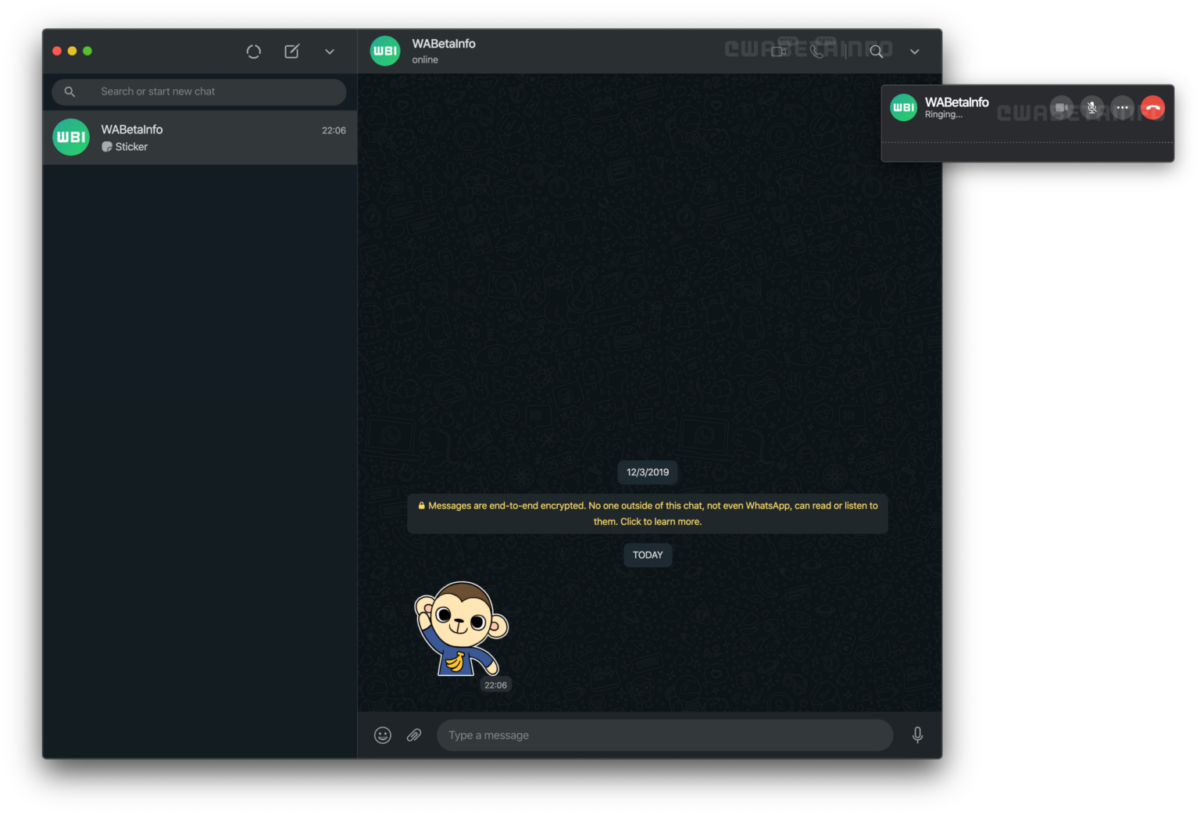
WhatsApp will soon add support for making voice and video calls on the web, two features that have existed for years on mobile clients. WABetaInfo tore into a recent update to the web/desktop client (version 2.2043.7) and enabled the feature while it’s still in-development.

Image credits: WABetaInfo

As of now, voice and videos calls on WhatsApp Web appears to be in a beta stage. Luckily, WABetaInfo still managed to get the feature working, bringing us some screenshots to demonstrate what calls will look like on the web/desktop. When users receive a call on the web, a popup window will appear, allowing users to accept or decline the call. A different window appears when you make a call; it’s smaller and features controls to mute your mic and hang up.

WABetaInfo also said that Group Voice and Video calls are being tested for WhatsApp Web, which will be a great way to communicate with friends and family.

Image credits: WABetaInfo

Of course, voice and video calls are already available on WhatsApp for Android and iOS, so bringing the features to the web would merely bring parity. It would also bring more convenience to users, especially with so many people spending more time on computers while working from home. Updating WhatsApp Web would make users less reliant on their mobile devices.

Keep in mind that WABetaInfo isn’t affiliated with WhatsApp, so the features mentioned haven’t officially been announced. However, the website regularly uncovers features coming to WhatsApp before they’re widely available, giving users an idea of what to expect. Recently, WABetaInfo uncovered that WhatsApp was testing a redesigned Storage Usage section, along with several other new features.

The post WhatsApp Web prepares to add support for making voice and video calls appeared first on xda-developers.


from xda-developers https://ift.tt/2HiHGSl
via IFTTT

An LTE version of the Mobvoi TicWatch Pro 3 is on the way

Mobvoi is to release an LTE version of its well-received flagship the Ticwatch Pro 3. The Wear OS-powered device was the first to be powered by Qualcomm’s wearable SoC, the Snapdragon Wear 4100 (SDM429), and was praised for its reduced profile and improved responsiveness compared to almost every other Google-powered watch.

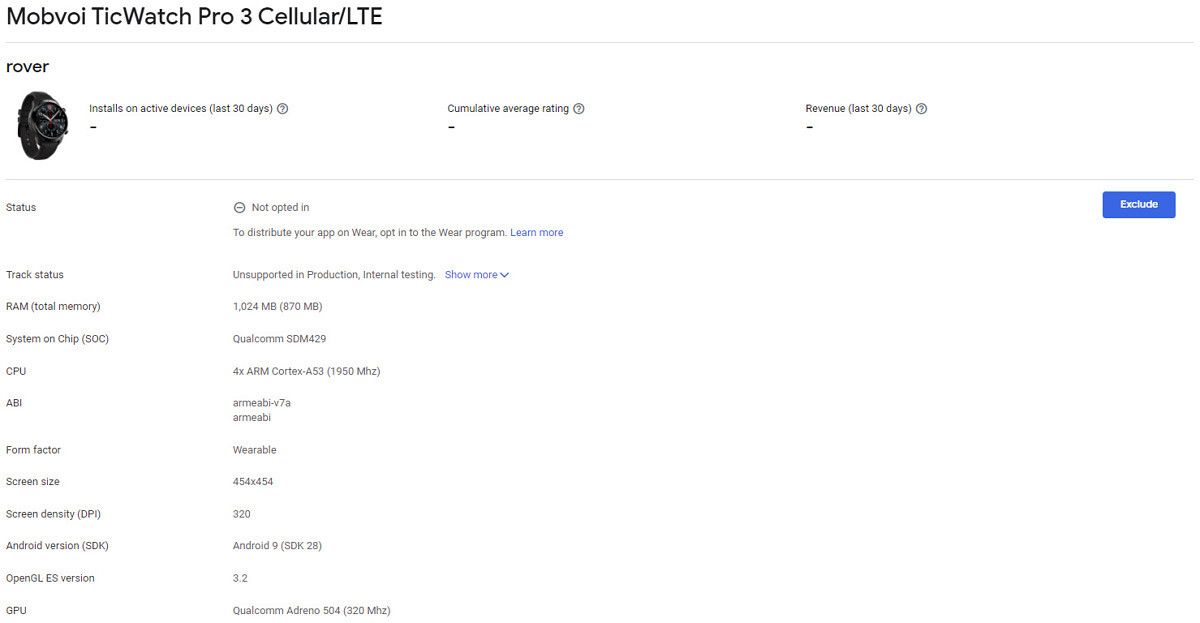
The LTE edition of the Ticwatch Pro 3, which has been spotted under the codename ‘rover’ in the Google Play Console Device Catalog, appears to boast all the same specifications as the original, but will also include eSIM functionality, making it compatible with some, but definitely not all, cellular networks without the need for a second contract. Huawei is among the manufacturers who have experimented with adding a nano-sim slot to its watches but they generally add too much weight and height to devices – eSIM is definitely the future of wearables and that’s the route Mobvoi has chosen. We’re not clear if the LTE circuit replaces the GPS chip in the original, but we’re hoping there’ll be room for both.

In case you missed our review of the original, the TicWatch Pro 3 has a 454×454 circular screen at 320DPI running Android Wear OS 9. It’s powered by a Qualcomm Snapdragon Wear 4100 SoC containing a quad-core ARM Cortex A53 array tuned to 1950Mhz, and an Adreno 504 GPU tuned at 320Mhz.

The Ticwatch Pro 3 brought us a more comprehensive range of fitness tracking options, most notably a blood oxygen saturation check, which was also one of the additions to the new Apple Watch 6.

There’s no official news from Mobvoi about release date or pricing (or indeed official confirmation it exists) but based on what we already know, we’d expect to start seeing it hit the stores sometime in November. We’d expect pricing to be somewhere between the price of the original GPS edition and the previous generation’s LTE edition. If your network supports eSIM, it’s definitely worth keeping your eye on.


Source: Google Play Console

The post An LTE version of the Mobvoi TicWatch Pro 3 is on the way appeared first on xda-developers.


from xda-developers https://ift.tt/3o2lLzs
via IFTTT

Become AWS, Cisco, and CompTIA Certified With 22 Courses for $99

From network engineering to cybersecurity, there are millions of well-paid jobs available in IT right now. They are open to anyone with the right skills and the certifications to prove it. With 22 courses and over 240 hours of video training, The 2021 All-In-One AWS, Cisco & CompTIA Super Certification Bundle helps you build the perfect résumé. It’s worth over $4,000, but you can get it today for just $99 at the XDA Developers Depot.

While different jobs require different skills, most technical employers are looking for people with all the fundamentals. This means you need at least to understand cloud computing, operating systems, networking, security, and so on.

This mammoth training bundle covers all bases, helping you acquire practical knowledge and work towards key exams. 

Through concise video tutorials, you learn how to handle Cisco networking equipment, work with various AWS services, and deploy software with Microsoft Azure. You also get an introduction to IT troubleshooting and cybersecurity with CompTIA. 

These courses work towards an array of CCNP, AWS, Microsoft, and CompTIA tests, touching on everything you need to know. The content comes from Integrity Training, a company that has created over 600 courses in the past 20 years. 

All the courses have great ratings from previous students, and you get lifetime on-demand access.

The full line-up is worth $4,378, but you can get the training today for just $99.

 
The 2021 All-In-One AWS, Cisco & CompTIA Super Certification Bundle – $99

See Deal

Prices subject to change

The post Become AWS, Cisco, and CompTIA Certified With 22 Courses for $99 appeared first on xda-developers.


from xda-developers https://ift.tt/37mlNfE
via IFTTT

The iPhone 12 could set these trends for smartphones in 2021

I recently wrote about how Apple finally jumping on board the 5G bandwagon will make people care about 5G in ways they didn’t before, because as much as it pains me, an Android geek, to say, the reality is when Apple does something, the rest of the mobile industry usually follows.

But 5G is not the only thing the iPhone 12 will make a thing. There are several other changes Apple has made with the iPhone 12 series that I think will lead to Android brands following suit. Here are potential trends to watch for in 2021.

No charger in the box

When Apple removed the century-old headphone jack from the iPhone 7 in 2016, it led to backlash from consumers and media. Rival smartphone brands even took jabs at Apple for it. But ultimately, Apple had its way, and now virtually all Android flagships — including those from brands that initially poked fun at the idea — don’t have the 3.5mm jack.

The same thing could happen with Apple’s controversial decision to no longer ship chargers with its iPhones. Apple claims it’s an effort to reduce e-waste. Whether you believe that or not is a topic for another day; the thing to note here is that we may see Android brands follow suit.

In fact, rumors coming from South Korea indicates Samsung is already considering the move. Samsung, OnePlus, and ASUS have already posted ads mocking Apple for its decision, but how long will it be before they do the same?

Mini sized flagships

The iPhone 12 Mini is really small. Like, funny-looking if held by a large-sized adult small. Just look at Apple’s official marketing images below.

iPhone 12 Mini looking very small in the hands of a consumer.

But despite its petite size (131.5 x 64.2 x 7.4mm), the iPhone 12 Mini is not lacking in power, because it runs on the same 5nm A14 Bionic SoC as its bigger brothers. Its 5.4-inch screen is still an FHD AMOLED panel, too. It’s a flagship phone in a compact size.

Judging by the responses from North American tech media, it seems like the Mini is going to be a hit, because let’s face it, modern day Android flagships have gotten a bit too big in recent years. The Samsung Galaxy Note 20 Ultra, for example, has a 6.9-inch display and measures 164.8 x 77.2 x 8.1 mm. The OnePlus 8 Pro has a 6.8-inch screen and measures 165.3 x 74.4 x 8.5 mm.

It’s okay for phones to get bigger as there is proven market interest in them, but somewhere along the line, Android phonemakers seem to have adopted a “the smaller phone should have inferior components” mantra. To its credit, Google has been pretty good throughout the years by providing a small Pixel that still packs a punch, but as much as we Android enthusiasts may love the Pixel, it’s ultimately a niche brand with little mainstream exposure. It’s the Samsungs and Huaweis that set the trends for Android.

The success of the iPhone 12 Mini would show Android brands there is a demand for a smaller form factor — without sacrificing power.

Shooting in Dolby Vision

The last few iPhones have, in the opinion of many reviewers (including myself), the best video camera in smartphones in terms of stabilization and dynamic range. The iPhone 12 brings another huge upgrade in that it is the first smartphone to shoot in Dolby Vision, which is like a superior, more technologically advanced version of HDR 10+. Considering that every recent Android manufacturer namedrops HDR 10+ in marketing copy and spec sheets, it’s likely that Dolby Vision won’t be far behind.

Dolby Vision samples on the iPhone 12

Sample Dolby Vision footage shot by the iPhone 12 shown off during the Apple event.

Dolby Vision beats HDR 10+ because it encodes data dynamically in real-time, and these data instructs the video to adjust color and temperature and exposure as the scene shifts. HDR 10+ receives only static metadata, meaning whatever enhancements are made to the video is a one-time application and applies for the entire video without accounting for shifts in lighting condition. There are other advantages to Dolby Vision, as RTINGS points out.

So why haven’t other phones been able to shoot in Dolby Vision? Well, for one, you need a really powerful, bleeding-edge SoC to handle all that processing in real time. Of the available Qualcomm Snapdragon SoCs, only the Snapdragon 865 currently supports video capture in Dolby Vision. More importantly, it costs money to license the encoding tech from Dolby. However, if big Android brands like Samsung and Huawei want to compete, they’ll likely have to jump on the Dolby Vision train too.

LiDAR sensor for better AR

Remember a few years ago when Android brands were pushing virtual reality (VR), while Apple pivoted to augmented reality (AR)? While neither tech has gone mainstream on mobile, it appear AR is faring a bit better on smartphones, with more practical use cases, while smartphone-based VR platforms are virtually dead.

There are AR apps in Android, but they mostly pale in comparison to what’s been available for iPhones and iPad for years. And Apple is adding to it this year by introducing the LiDAR (Light Detection and Ranging) sensor from this year’s iPad Pros, to the iPhone 12 Pro and 12 Pro Max. LiDAR is sort of like the TOF (time-of-flight) sensor that some Android phones have used, in that they both shoot beams to create a radar effect to “map” an area and objects in it.

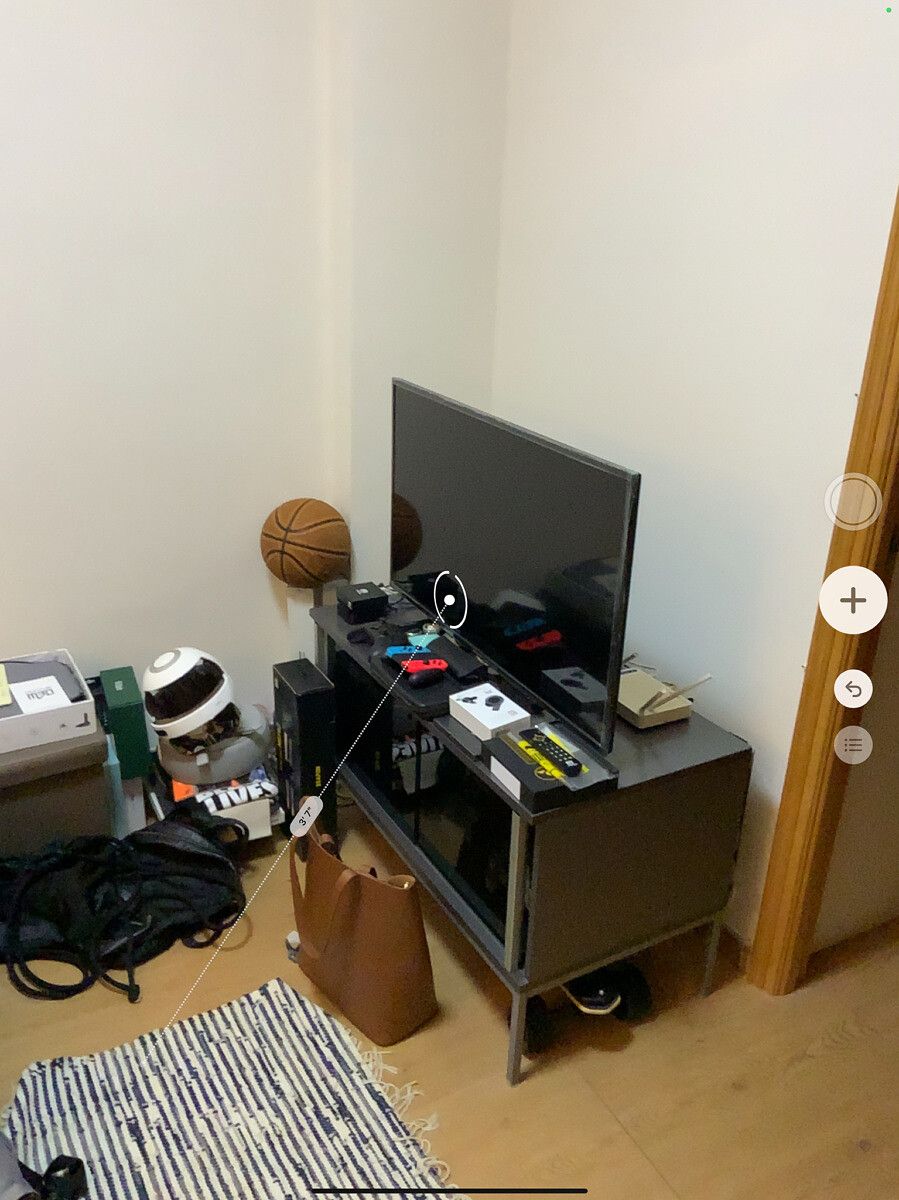
Let’s take the Measure app that comes pre-installed in all recent iOS devices, for example. It’s arguably the most practical reason to justify AR’s existence — it allows users to measure things in the real world using their smartphone or tablet. My iPad Pro with a LIDAR sensor can correctly identify surfaces including not just the floor and walls, but also my television. On Android, I tried Google’s own Measure app and a third-party-app named ARuler, and neither could correctly identify my TV.

Of course, for AR to grow, it will require third-party app makers to step up. Now that the iPhone 12 Pro and Pro Max have LIDAR scanners in them, that gives third-party app makers plenty of incentive to build AR apps. If Android phones want in, they’ll have to do a bit better than 2MP depth sensors.

Of course, these are just my predictions. There’s always the chance Android brands don’t follow any of these. It’s also worth mentioning that there’s a fair share of trends Google (or Android) started that Apple followed suit, like computational photography and widgets on the home screen. As fans of smartphones, we should want competitors to adopt what works – even if the idea came from the other side.

The post The iPhone 12 could set these trends for smartphones in 2021 appeared first on xda-developers.


from xda-developers https://ift.tt/3lXCLVN
via IFTTT

HTC Desire 20+ with Snapdragon 720G and 3.5mm headphone jack launched in Taiwan

HTC has announced the new HTC Desire 20+ in Taiwan, following up on the launch of the HTC Desire 20 Pro and HTC U20 5G. This new phone is a statement of intent to anyone who had written the brand off. The Desire 20+ is a mid-range handset based around the Qualcomm Snapdragon 720G chipset and a quad-lens rear camera, and although the launch hasn’t made any specific mention of it, the Snapdragon 720G should make for a reasonable gaming experience too.

HTC Desire 20+: Specifications

Specification HTC Desire 20+
Build Polycarbonate
Dimensions & Weight
  • 164.9 x 75.7 x 9mm
  • 203g
Display
  • 6.5-inches HD+
  • 720 x 1600 pixels
  • 20:9 aspect ratio
  • Waterdrop notch
SoC Qualcomm Snapdragon 720G
RAM & Storage
  • 6GB + 128GB
  • MicroSD slot for expansion
Battery & Charging
  • 5000mAh
  • Supports Quick Charge 4.0
Security Fingerprint Sensor (rear)
Rear Camera(s)
  • Primary: 48MP, f/1.8
  • Secondary: 5MP, f/2.2, wide-angle
  • Tertiary: 2MP, f/2.4, macro
  • Quarternary: 5MP, f/2.4, depth-of-field
Front Camera(s) 16MP, f/2.0
Port(s)
  • USB-C
  • 3.5mm headphone jack
Audio <information not available>
Connectivity
  • Dual nano SIM
  • GNSS:
    • AGPS
    • Beidou
    • GLONASS
  • Bluetooth 5.0
  • NFC
  • Wi-Fi 802.11 a/b/g/n/ac
Software Android 10
Other Features

The 6.5-inch display on the HTC Desire 20+ only offers 720×1600 pixel HD+, albeit in a super-wide 20:9 aspect ratio, but FHD video capture is supported, backed by a reasonable 6GB of RAM. In fact, the main camera is capable of 48MP, flanked by additional lenses for wide-angle, depth, and macro. The front camera is a not-too-shabby 16MP. All cameras support Auto-HDR and the rear array offers a dual-LED flash.

Storage is 128GB out of the box, but there’s a microSD slot to double or even triple that figure. A rear-mounted fingerprint sensor, Bluetooth 5.0, A-GPS, NFC are all present and correct too, creating a reasonable bouquet of connectivity at this price-point. Surprisingly, there is a 3.5mm headphone jack at the bottom.

The outer casing of the HTC Desire 20+ is made of durable plastic with HTC’s trademark textured “twill” finish, which improves grip in the hand, whilst under the hood, a modest 5000mAh battery is aided by a power-saving mode and Qualcomm Quick Charge 4.0.

All in all, this is one of the most “mid-range” handsets you could possibly imagine. Nothing is missing, but nothing is exceptional either. We can see it being popular with younger users, but only if they find it in an increasingly crowded field of similar devices. It’s fine, but it’s going to take a lot more to than this to turn around HTC’s floundering fortunes.

Pricing and Availability

The HTC Desire 20+ is available from HTC Taiwan only in Dawn Orange or Twilight Black for TWD8490 ($295). There is no word on international availability at this moment. The HTC Desire 20 Pro did go on sale in Europe eventually, so there is hope for the Desire 20+ to also make its way outside of Taiwan.


Source: HTC
Story via: Gizmodo China

The post HTC Desire 20+ with Snapdragon 720G and 3.5mm headphone jack launched in Taiwan appeared first on xda-developers.


from xda-developers https://ift.tt/37jCgBl
via IFTTT

Microsoft is installing Office web apps on Windows 10 without your permission

Microsoft recently pushed an update for Windows 10 that covertly installs progressive web apps (PWA) for Microsoft Office apps without asking for permission. The ‘forced update’ installs Word, Excel, Powerpoint, and Outlook web-based apps. These are basically shortcuts to the web version of Office that can be accessed through any browser, such as Chrome or Firefox, although the installed apps open through Microsoft Edge only even if your default browser is set to something else.

There are also some reports that suggest Windows 10 devices were restarted without asking for any sort of permissions. This was done to install these apps through a forced software update. It was initially assumed that the update was pushed for Windows Insider members only. However, it seems to have reached non-Insider members as well. We can confirm the same, as a recent update has installed these apps on our system as well, with the installation date as October 14.

Windows 10 will soon get hardware-based AV1 codec, Spotlight for Desktop

Do note that these apps are not the full version of Microsoft Office. They will only open a web-version of the app where you need to sign in with your Microsoft account to gain access. It does seem like a convenient way for users that rely on the online version of Office as all of your Microsoft 365 apps are tucked nicely on the left allowing for easy access. Having said that, if you don’t care about these apps, you can easily uninstall them. There are two methods – by going to opening Settings App > Apps & Features page or using Control Panel > Programs & Features. The web-apps are mere shortcuts that hardly take any space on your system, nor are they the worst piece of bloatware that you will see on a PC. However, it has raised the question of forced advertising. A report from The Verge even calls out the company’s move as another “proof that it (Microsoft) doesn’t respect your ownership of your own PC.” If you do have Microsoft Office apps installed, the icons will open the full version of the apps.


Story Via: The Verge

The post Microsoft is installing Office web apps on Windows 10 without your permission appeared first on xda-developers.


from xda-developers https://ift.tt/2IH0Bql
via IFTTT

Samsung Galaxy S9/S9+ and Galaxy A51 receive One UI 2.5 with October 2020 security patches

Samsung has gotten considerably better at delivering updates to its phones in the last few years. The Korean OEM recently rolled out the One UI 2.5 update to the Galaxy A71 and the Galaxy Note 9. Now, the company has started pushing the stable version of One UI 2.5 to the Galaxy S9, Galaxy S9+, and the Galaxy A51.

Galaxy S9 Series

We knew One UI 2.5 was headed to the Galaxy S9 series as it was reported back in August, and today Samsung is finally making good on its promise. The Exynos 9810-powered global variants of the Galaxy S9 (model number SM-G960F) and the S9+ (model number SM-G965F) are receiving the new update in the form of software version G96xFXXUCFTJ2. The new builds are available for download in the DBT region, which is Samsung’s code for Germany. As expected, the update brings along the October 2020 security patches. It also introduces a new bootloader, which means end users can’t downgrade to a previous build after installing this update.

Samsung Galaxy S9 XDA Forums || Samsung Galaxy S9+ XDA Forums

Galaxy A51

At the time of writing this article, the SM-A515F variant of the Galaxy A51 has secured the One UI 2.5 update in Russia. The new firmware is tagged as A515FXXU4CTJ1 and carries the October 2020 security patches. We are unable to get our hands on the complete changelog of this update, but the build number is enough to conclude that the bootloader version has been incremented.

Samsung Galaxy A51 XDA Forums

Since Samsung prefers to conduct staged software rollouts, don’t worry if you’re not seeing any OTA notification on your phone just yet. The updates may take several weeks to reach other regional markets, but power users can skip the queue and manually download the new firmware packages directly from the Samsung update server using Frija or Samloader.

The post Samsung Galaxy S9/S9+ and Galaxy A51 receive One UI 2.5 with October 2020 security patches appeared first on xda-developers.


from xda-developers https://ift.tt/3j5R7By
via IFTTT