LightBlog

mardi 24 novembre 2020

Huawei FreeBuds Pro vs Apple AirPods Pro: The Two Best Wireless Earbuds

While Huawei’s smartphone software has been hit and miss over the years, it’s undeniable that its smartphone hardware has been top-notch — arguably the best in the industry. And over the past couple of years, the Chinese tech giant has focused on bringing that same hardware prowess to other consumer products as part of the company’s “1+8+N” initiative. One of these products is truly wireless earphones. Huawei’s released a few of these before, and while they were solid offerings, they lacked the sleek design or full suite of intelligent features like noise cancellation and active transparency mode of Apple’s AirPods Pro — until now, with the Huawei FreeBuds Pro.

Huawei launched these two months ago during the company’s developer conference, and they are easily Huawei’s best true wireless earbuds ever. My XDA colleague Adam Conway has already expressed his love for it in a review, but I wanted to do a direct comparison against the FreeBuds Pro’s most obvious challenger, Apple’s AirPods Pro.

Apple AirPods Pro and Huawei FreeBuds Pro in case and on a table

Huawei Freebuds Pro vs Apple AirPods Pro: Specification Comparison

Specifications Huawei FreeBuds Pro Apple AirPods Pro
Dimensions & weight
  • Per bud: 26mm x 29.6mm x 21.7mm
  • Per bud: 6.1 grams
  • Charging case: 70mm x 51.3 x 21.7mm
  • Charging case: 60 grams
  • Per bud: 24mm x 30.9 x 21.8 mm
  • Per bud: 5.4 grams
  • Charging case: 60.6mm x 45.2mm x 21.7mm
  • Charging case: 45.6 grams
Chip
  • Kirin K1
  • Apple H1
Battery & Charging
  • 7 hours with ANC off
  • 4.5 hours with ANC on
  • Case contains additional five charges
  • USB-C wired charging
  • Qi wireless charging
  • 5 hours
  • Case contains additional six charges
  • Lightning wired charging
  • Qi wireless charging
Connectivity
  • Bluetooth 5.2
  • Bluetooth 5.0
Other Features
  • IPX5
  • “Intelligent Dynamic” Active Noise Cancellation
  • Transparency mode
  • Dynamic
  • IPX4
  • Active Noise Cancellation
  • Transparency mode
  • Adaptive EQ

Design: Look, Fit, and Comfort

This may be a bit unfair to Huawei’s design team, but considering that the AirPods Pro hit the market first and AirPods themselves are ubiquitous all around the world, it’s hard to describe the FreeBuds Pro as anything other than AirPods-like. The charging cases have a similar shape and open the same way. Huawei’s case is slightly heavier and taller, but both are highly portable and can fit into my pant pocket along with wallet and keys without creating an unsightly bulge.

Huawei FreeBuds Pro and Apple AirPods Pro

Huawei FreeBuds Pro and Apple AirPods Pro

The FreeBuds Pro sport thicker and more squared-off stems than most wireless earbuds on the market. This design allowed Huawei more space to put sensors and drivers, and these are all cutting-edge, top-notch components. On a personal level, I also like that the boxier look (along with the deep grey color of my unit) make the earbuds look distinct from Apple’s AirPods. I have not been a fan of the flood of truly wireless earbuds from other phone brands that seem to want to look like AirPod clones.

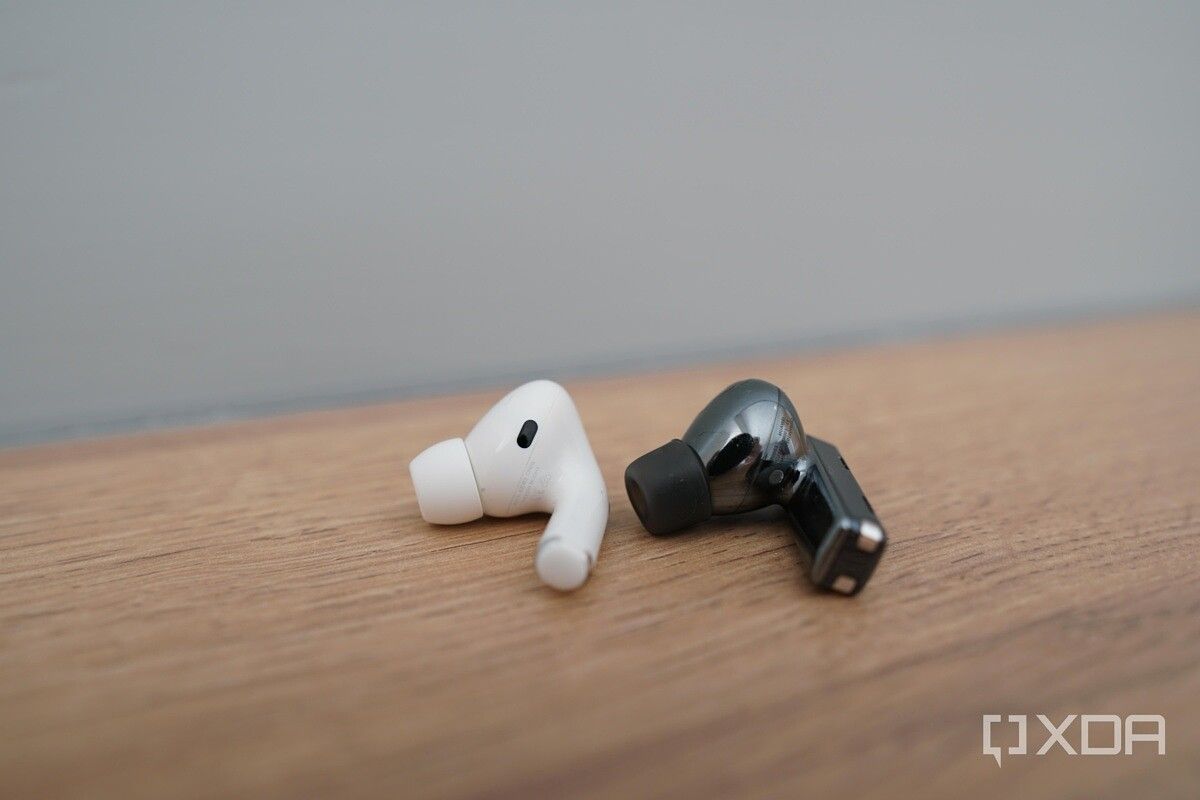
Earbud of Apple AirPods Pro and Huawei FreeBuds Pro on a table for comparison Case of Apple AirPods Pro and Huawei FreeBuds Pro on a table for comparison

I'm also a fan of the fact that neither of the stems are too long

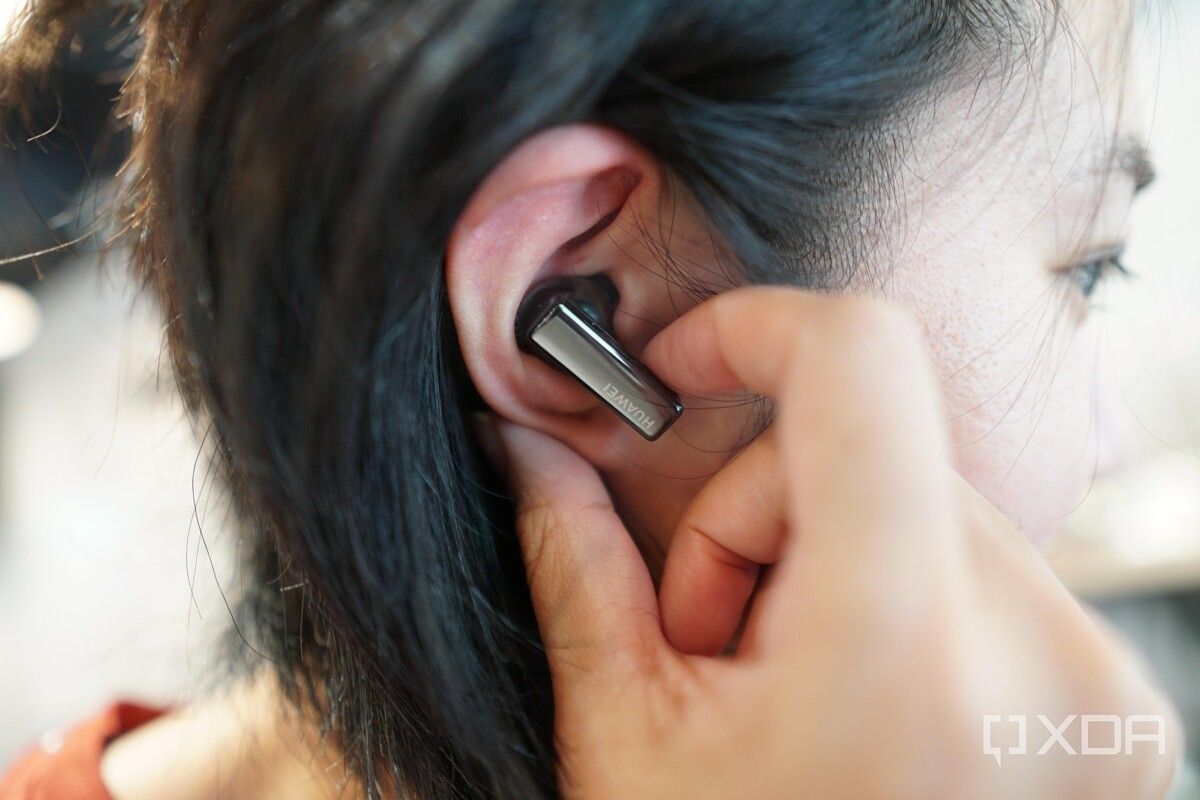
Both earbuds have silicone tips that aim to provide a seal around the wearer’s ear canal. The tips are easy to remove on both and can be swapped for smaller or larger ones that are included with the packaging. I find both the FreeBuds Pro and AirPods Pro to be a comfortable, secure fit for my ears. I’m also a fan of the fact that neither of the stems are too long. Compared to the non-pro regular AirPods or Huawei’s older wireless earbuds, these are far more discreet in my ears. In fact, if you look at me straight on when I’m wearing them, they are hard to notice. You certainly can’t say that about other recent wireless earbuds from Xiaomi or Vivo.

Man wearing both the AirPods and FreeBuds Pro at once

I have the AirPods Pro on my left ear and FreeBuds Pro on my right ear.

Controls

The stems on both earbuds provide pressure-activated touch controls. I love that both require just a bit of force — as if I’m pressing a button — instead of just taps like many other true wireless earbuds. Just tapping often results in accidental or unwanted touches, and both the FreeBuds Pro and AirPods Pro are designed so that you’re not pressing the buds into your ear — another problem I’ve seen from many earbuds. So controlling both of these earbuds needs to be intentional, which is good.
Huawei FreeBuds Pro controls AirPods Pro controls

The controls are very similar too: both FreeBuds Pro and AirPods Pro play or pause music with a single press on either stem. Double pressing skips forward a track, while triple pressing rewinds the track. Press and hold to cycle through noise cancellation or transparency mode.

Huawei one ups Apple, however, by providing volume controls too via swiping -- and they work like charm

Huawei one ups Apple, however, by providing volume controls too via swiping — and they work like charm. You cannot adjust volume directly on the AirPods Pro.
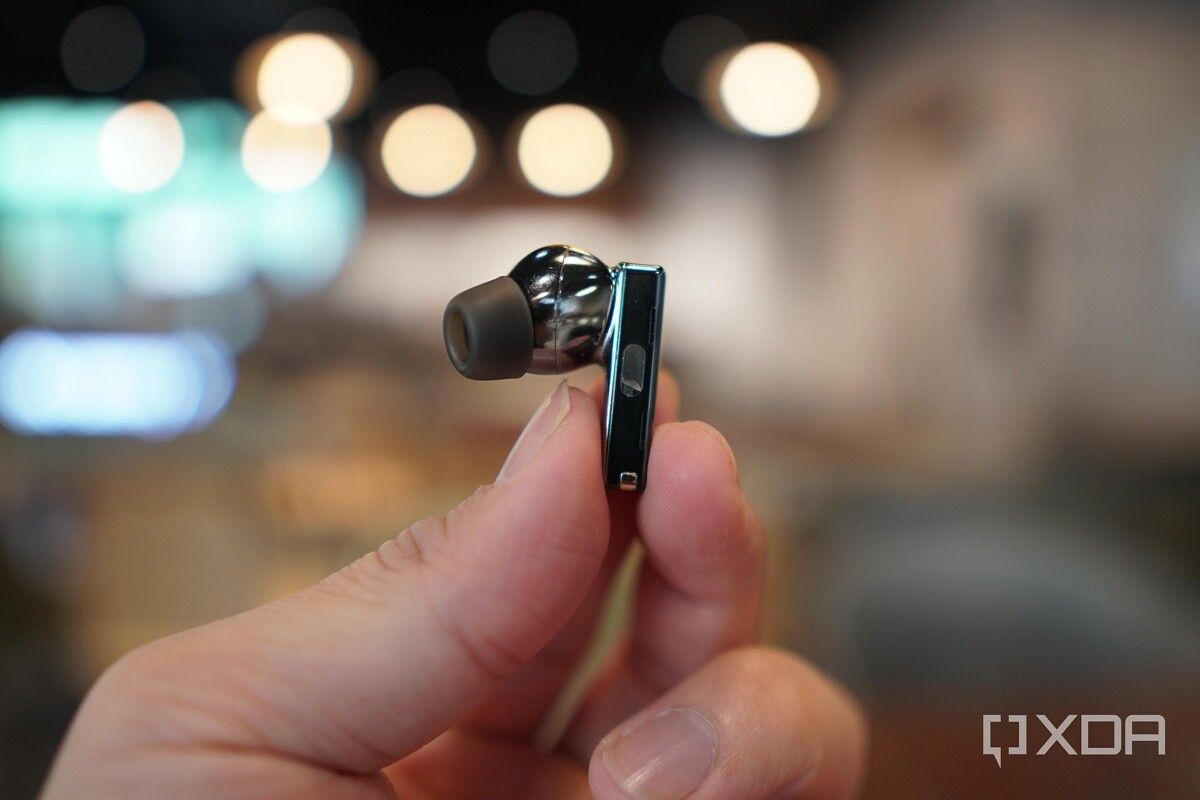
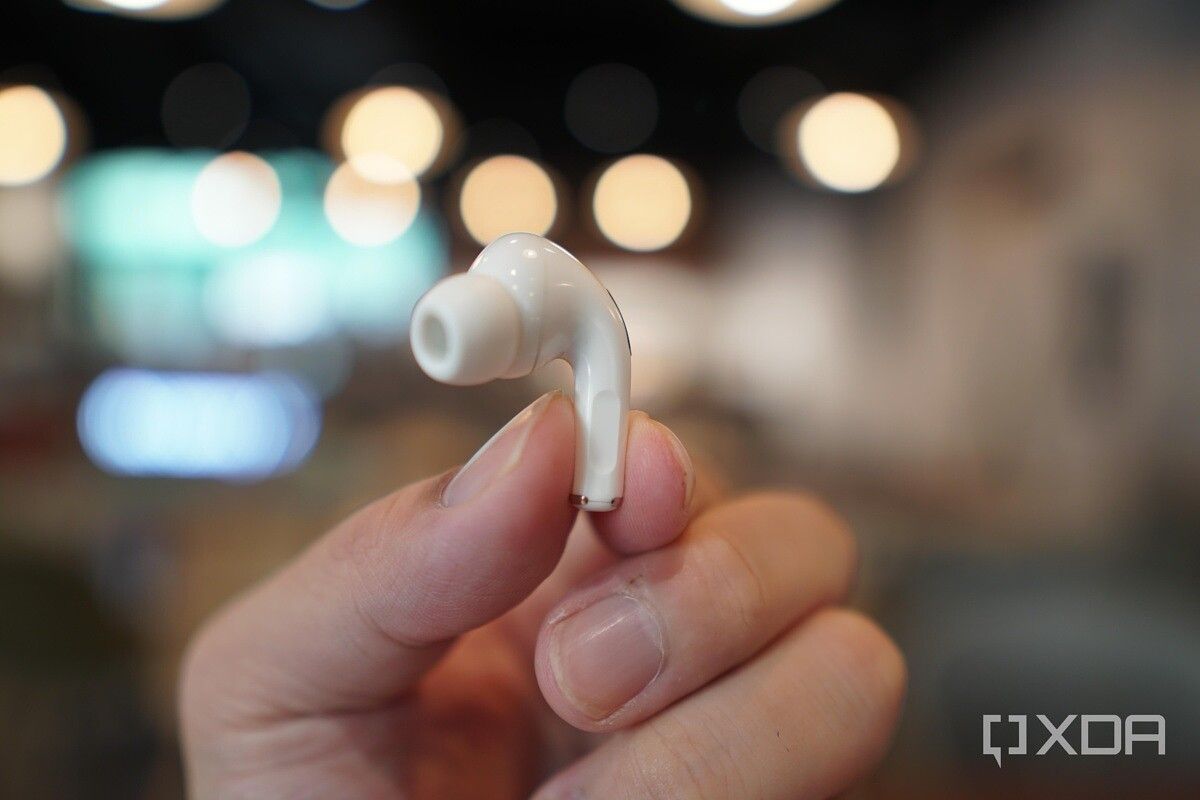
FreeBuds Pro control from the stems AirPods Pro control from the stems

Performance: Audio quality, noise cancellation, transparency

In terms of audio quality, my colleague Adam declared in his review the FreeBuds Pro are the best sounding wireless earbuds he’s ever tested. I’m not ready to go that far — but I do think the FreeBuds Pro are among the very best sounding ones. For my music tastes — a lot of 90s hip hop (Nas, Dr Dre), 90s California pop rock (Green Day, Blink 182), and classic rock and roll (Beatles, Rolling Stones, David Bowie) —  I generally find the AirPods Pro a bit more balanced, with crisp mids and clear highs. Huawei’s FreeBuds Pro seems to emphasize the low end more.

Where the FreeBuds Pro win easily in my opinion is noise cancellation and transparency

Where the FreeBuds Pro win easily in my opinion is noise cancellation and transparency. This is a big statement for me to make because the AirPods Pro had previously been my favorite in this category. And while both the FreeBuds Pro and AirPods Pro can muffle out typical city traffic noises quite well, where the FreeBuds Pro stand alone at the top is its ability to dynamically analyze the environment and adjusts its noise cancellation type accordingly. Huawei calls this “Intelligent Dynamic ANC,” and it really works. It can isolate the low humming buzz of an air conditioner or loud talking people in a packed coffee shop.

Conversely, Huawei’s intelligent algorithms also can enhance human voices, this is useful for transparency mode. I have tested over a dozen true wireless earbuds, and the FreeBuds Pro are the only ones I can keep wearing with music playing and still conduct a conversation where I can hear the other party clearly.

The AirPods Pro’s transparency mode is good, but it not only lets all the sound in but also amplifies the noise level — so in a very noisy city like Hong Kong, it almost hurts my ears to have transparency mode on in busy places.

Performance: Phone calls, Connectivity, Latency

Connectivity with both earbuds are strong — they automatically pair to my phone after the first set-up and from there they very rarely suffer audio drops. To be fair, true wireless earbuds generally suffer in vast open spaces because there aren’t buildings or walls off which to bounce wireless signal. Ultra-dense Hong Kong is as far from “vast open space” as possible, so neither earbuds are being tested much here in terms of connectivity. From testing, I left my phone (a Galaxy Z Fold 2 for reference) in one end of a co-working space and walked to the other end — 40 feet away — and both earbuds kept a stable connection.

For phone calls, the FreeBuds Pro have three mics to the AirPods Pro’s two and while I don’t know if that’s indeed the difference-maker, I can say the FreeBuds Pro consistently sounded better for the other end during voice calls. I have tested this over a dozen calls in various conditions with two different person on the other end. Every time, they told me my voice sounded more clear and less muffled on the FreeBuds Pro.

Both earbuds do an excellent job of reducing latency to the point it’s almost hard to notice. I have worn both earbuds for the past several months watching dozens of hours of videos, and very rarely have I ever noticed that a voice isn’t syncing with the person’s lips.

Additional Features

You won’t have to stress when it rains with either the FreeBuds Pro or the AirPods Pro, as they’re rated IPX5 and IPX4 respectively. The stronger rating does mean the FreeBuds Pro can sustain stronger splashes of water than the AirPods Pro but it’s hard to find an example in real-world usage — I suppose the FreeBuds Pro has a higher chance of surviving heavy rainstorms? The point is both of these earbuds can’t be taken for a swim, but you can wear them in even heavy rain.

The FreeBuds Pro and AirPods Pro connected to a Galaxy Fold 2

The FreeBuds Pro are also more flexible for cross-platform or cross-brand usage. Huawei’s buds can connect up to two devices at the same time, and it doesn’t matter what device it is — could be a Sony laptop and a Samsung Galaxy phone, or an iPhone and an iPad. The AirPods Pro, meanwhile, can connect to two devices only if they are iOS devices. Also, AirPods Pro suffered from low volume issues with some Samsung devices, requiring the user to jump into developer options and “disable absolute volume” to fix.

Battery Life

Not surprising for a Huawei product, the FreeBuds Pro have jaw-dropping endurance. On a single charge, Huawei advertises seven hours of audio playback time if the earbuds have both transparency and active noise cancellation off, and five hours with either of those features on. From my testing, those numbers are accurate. The AirPods Pro, meanwhile, can go around five hours on a single charge.

Both earbuds can be charged wirelessly or wired: the FreeBuds Pro take USB-C, while the AirPods Pro take Lightning.

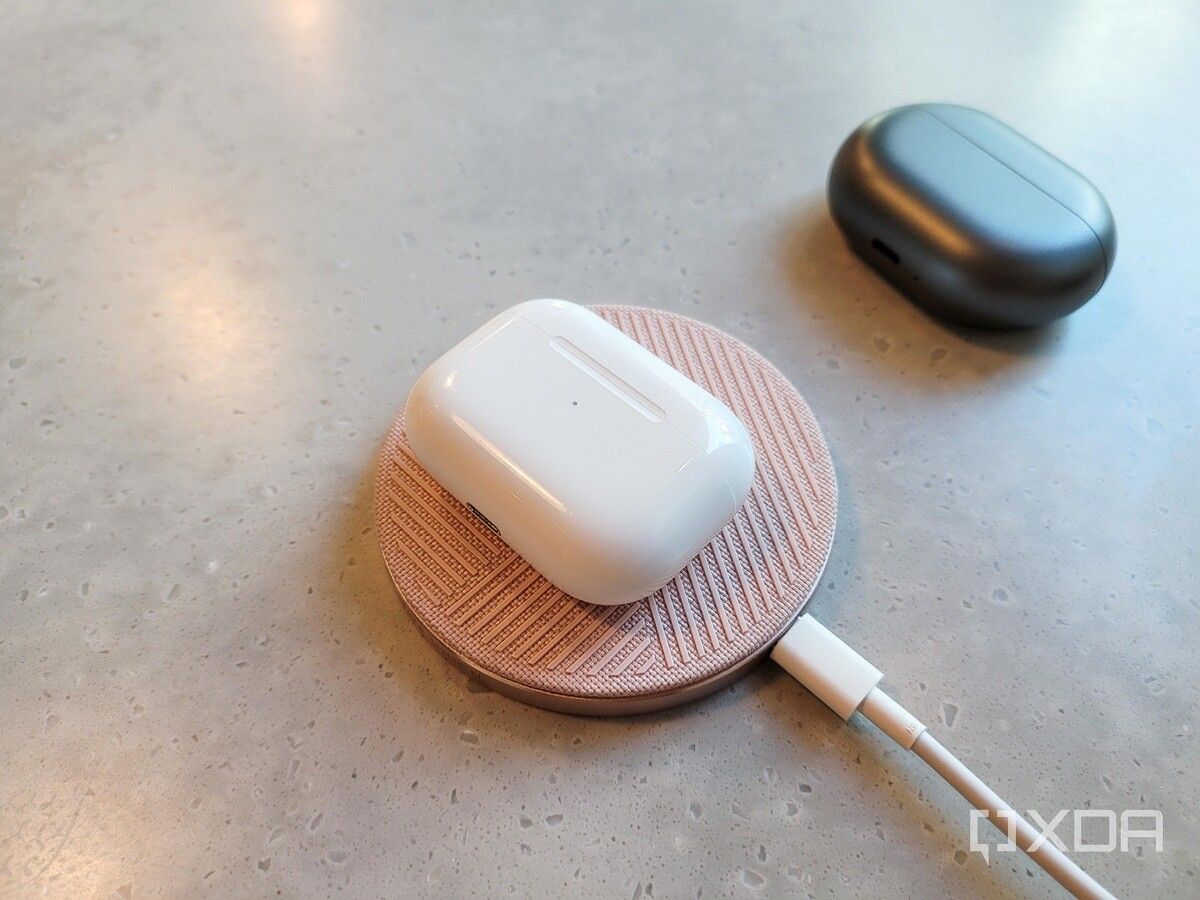
The FreeBuds Pro wirelessly charging AirPods Pro wirelessly charging

Conclusion: Two wireless audio powerhouses — but you have to pay the price

I have tested many wireless earbuds over the past couple of years — especially in 2020 when seemingly every phone brand launched one — and I can confidently say the FreeBuds Pro and AirPods Pro are the two best overall in terms of having all the features (however, I do have a soft spot for the Samsung Galaxy Buds Live for its unique shape and fit).

But these are also two of the most expensive ones around. The FreeBuds Pro retail at €199 ($235), while the AirPods Pro go for $249. In late 2020, you can find very capable wireless earbuds for under $100. The $90 TicPods ANC offers almost all the features as Huawei’s and Apple’s earbuds — noise cancellation, transparency mode — except they don’t work as well, and the earbuds themselves have long, chunky stems.

If you have the money to spend and you want the best in wireless audio tech right now, it makes sense that Apple and Huawei have the two best options. I think the FreeBuds Pro are better overall because it has longer battery life, better transparency mode, and better compatibility across devices and platforms. However, if you are fully immersed in Apple’s eco-system, the AirPods bring the ability to summon Siri via voice (you can’t trigger any digital assistant with Huawei’s buds).

    Huawei FreeBuds Pro
    Huawei's FreeBuds Pro is a major improvement over the company's recent audio offerings, and it even beats the AirPods Pro in many key areas.
    AirPods Pro
    The AirPods Pro are ubiquitous for a reason -- they sound great and if you're using an iPhone, MacBook and iPad, the AirPods Pro will fit nicely into the eco-system.


We thank HUAWEI for sponsoring this post. Our sponsors help us pay for the many costs associated with running XDA, including server costs, full time developers, news writers, and much more. While you might see sponsored content (which will always be labeled as such) alongside Portal content, the Portal team is in no way responsible for these posts. Sponsored content, advertising and XDA Depot are managed by a separate team entirely. XDA will never compromise its journalistic integrity by accepting money to write favorably about a company, or alter our opinions or views in any way. Our opinion cannot be bought.


The post Huawei FreeBuds Pro vs Apple AirPods Pro: The Two Best Wireless Earbuds appeared first on xda-developers.


from xda-developers https://ift.tt/3m1d8nf
via IFTTT

The best travel cases for your Nintendo Switch and Nintendo Switch Lite

It’s just lovely that the Nintendo Switch can be used both at home as a docked console, and on the go as a portable device. Just popping your Switch into a bag or purse isn’t the best idea, though. It’s all too easy for something to scrape against your expensive electronic and ruin the screen. If you’re traveling, it’s also useful to have a case that can store extra games, so you can have any game you want on the go. For these, you’ll want a travel case that suits your needs, and we’ve rounded up the best Nintendo Switch travel cases below!

As with many Switch accessories, what you’ll want to get varies by whether you have a Nintendo Switch or a Nintendo Switch Lite. While the Switch Lite can technically fit in a normal Switch travel case, it’s not going to be a good fit and your device has a chance of rattling around and even getting damaged within the case. So it’s best to get a case that fits!

Looking for other Switch accessories? We also have round-ups for controllers, microSDs, comfort grips, and screen protectors!

Nintendo Switch Travel Cases

There are a larger variety of Nintendo Switch travel cases than you would expect. When it comes to protecting your Switch, it all depends on your needs!

    Official Nintendo Switch Carrying Case

    Official Hard Shell Protection

    If you want to be sure you're protected, you can't beat the official Switch carrying case! This has room for the Switch and eight games, and has an adjustable viewing stand.
    AmazonBasics Carrying Case

    Basic Soft Shell Protection

    Prefer soft cover cases? Go with the AmazonBasics case! This case has room for 10 games, the Switch, and extra accessories.
    Funlab Slim Carrying Case

    Easy to Store Travel Cases

    If you don't have a lot of room in your back, go with a stylish Funlab case! It only holds five extra games but it will keep your Switch safe.
    Zadii Hard Carrying Case

    Store Everything You Need

    With this big travel case, you can transport not only your Switch, but the dock, extra controllers, and more. You can even hold 21 games!
    Tomtoc Carrying Case

    Match Your Switch

    Tomtoc is another solid hard case option. It can hold eight games and comes in all sorts of fun colors!
    Mumba Switch Carrying Case

    The Toughest Around

    If you need a case that will survive anything, Mumba's Nintendo Switch travel case will do that job. This is a bulky case that can absorbs shocks!

Nintendo Switch Lite Travel Cases

Given that the Switch Lite is a portable-only device, a travel case is incredibly important for it! There are all sorts of cases that will fill your needs.

    PowerA Protection Case Kit

    Officially Licensed Protection

    PowerA makes officially licensed Nintendo Switch gear, so you know if you pick up this case you'll get quality! It also comes with a screen protector and cleaning cloth. Now that's value!
    iVoler Hard Shell Travel Case

    Hold Everything You Need

    If you need to hold a lot of stuff, iVolar's hardshell case will be the one for you. You can hold 20 games, as well as a bunch of accessories, in this hefty case.
    Funlab Switch Lite Case

    Slim, Stylish Protection

    Like its normal Switch counterpart, the Funlab is slim and holds five games, makes it easy to pack in a bag. And, I mean, can you resist a cute Snorlax case?
    Fintie Carry Case

    Hard Shell Shock Protection

    If your Switch Lite needs the best protection, this Fintie case comes with shock protection and a bunch of different styles to boot. This case can hold 15 cases, as well as 2 microSDs.
    Tomtoc Switch Lite Carrying Case

    Match your Switch Lite

    Tomtoc is another solid hard case option. It can hold eight games and comes in all sorts of fun colors, so check them out!
    Tomtoc Switch Lite Carrying Case

    A Splash of Color

    Want just a little bit of color with your Switch Lite travel case? ButterFox's cases are semi-hard shell bulky cases that are mostly black, and can hold up to 20 games.

You got the list, but what are the best of the best Nintendo Switch travel cases? In the end, it really depends on the level of protection you’re looking for. The case I use for my regular Switch is the Tomtoc case because it’s relatively slim, but still provides enough protection from something sharp or pointy in my carry-on or purse. I also got the black case, and it doesn’t show dirt! As for my Switch Lite, my case isn’t actually on this list, because I just picked something up quickly to protect the device for the time being. But, honestly? I’d probably just pick up the Tomtoc case for it as well since it’s tried and true for me.

I also have the Zadii carrying case for my Switch if I need to take the dock and some extra controllers to a friend’s house to hook up. It’s a great case to pack everything you need!

The post The best travel cases for your Nintendo Switch and Nintendo Switch Lite appeared first on xda-developers.


from xda-developers https://ift.tt/376H5fs
via IFTTT

Mandalorian Fans: Check if the Google AR Experience works on your device

The Mandalorian has been the highlight of streaming service Disney+ during its first year, and as we approach Christmas, supplies of toys and other merchandise are already running out in many places. But no such problem for Google’s Mandalorian Augmented Reality Experience (AR), which launched yesterday. The collaboration between Google, Disney, and Lucasfilm lets you place life-sized virtual characters from Season 1 of the hit show into your real-world environment and interact with scenes from the story.

Mandalorian AR

The app is available primarily for the Google Pixel 5 and 4a 5G, but Google has also made it run on a number of other “5G Android phones”. That’s by no means all of them, but we’ll come to that in a moment. Early reviews from users have been mixed, with reports that it’s fairly sluggish and laggy. We suspect that might be the reason that it hasn’t been released as a free-for-all for all handsets. We’d also venture that the recommendation that you use a 5G connection might have some effect, but with some of the issues, therefore, caused by the relatively limited 5G service in many areas. If none of that has put you off and you want to recreate the taking of The Child or the downing of Moff Gideon’s X-Wing, then ‘This Is The Way’. Ahem. Sorry – couldn’t resist. You can download the Mandalorian AR Experience on these handsets:

Mandalorian AR Experience Compatibility List:

  • Google: Pixel 4a 5G, Pixel 5
  • LG: G9/Velvet, K92, V60 ThinQ 5G, Wing
  • Motorola: Edge+, One5G, Razr 5G
  • OnePlus: 7 Pro 5G, 7T Pro 5G, 8, 8 Pro, 8T
  • Oppo: Find X2 (we had no luck with the Pro version), Reno 3
  • Samsung: A51 5G, Note10 5G, Note 20+, S10 5G, S20 Ultra, S20, S20+, Z Flip 5G
  • Sharp: AQUOS zero 5G
  • Sony: Xperia 1 II
  • Xiaomi: Mi 10 Lite 5G, Mi 10, Mi 10 Pro

The app is available until the end of October 2021, with five planned updates offering new content, dropping weekly between now and Christmas 2020. You’ll need to have Google AR Core installed and updated on your device. More details are available at the Google support page.

The Mandalorian AR Experience (Free, Google Play) →

The post Mandalorian Fans: Check if the Google AR Experience works on your device appeared first on xda-developers.


from xda-developers https://ift.tt/2J2wJ86
via IFTTT

Huawei unveils EMUI 11 update plans for its smartphone range

At its HDC 2020 event in September this year, Huawei unveiled EMUI 11, the company’s latest Android-based software release for smartphones and tablets. Soon after the announcement, the company rolled out an EMUI 11 beta release for a couple of devices and we got our first look at the software on our Huawei P40 Pro. This month, the company finally started rolling out a stable EMUI 11 release for the Mate 30 Pro, and now it has officially unveiled its update plan for other devices in its lineup.

In case you own a Huawei smartphone or tablet, you can check the table below for the EMUI 11 update timeline for your device:

EMUI 11 update plan for all regions

Device Model Name Scheduled Date
Africe, Middle East, and Russia
Huawei P40 ANA December, 2020
Huawei P40 Pro ELS December, 2020
Huawei P40 Pro+ ELS December, 2020
Huawei Mate 30 Pro LIO December, 2020
Huawei Mate 30 Pro 5G LIO December, 2020
Huawei Mate Xs TAH January, 2021
Huawei Nova 7 JEF January, 2021
Huawei P30 ELE Q1, 2021
Huawei Mate 20 X EVR Q1, 2021
Huawei Mate 20 X (5G) EVR Q1, 2021
Huawei Mate 20 HMA Q1, 2021
Huawei Mate 20 RS Porsche Design LYA Q1, 2021
Huawei Mate 20 Pro LYA Q1, 2021
Huawei P30 Pro VOG Q1, 2021
Huawei Nova 5T YAL Q1, 2021
Huawei MatePad Pro MRX Q1, 2021
Huawei MatePad Pro 5G MRX Q1, 2021
Huawei MediaPad M6 (10.8 inch) SCM Q1, 2021
Asia Pacific
Huawei P40 ANA December, 2020
Huawei P40 Pro ELS December, 2020
Huawei P40 Pro+ ELS December, 2020
Huawei Mate 30 Pro LIO December, 2020
Huawei Mate 30 Pro 5G LIO December, 2020
Huawei Mate 30 TAS December, 2020
Huawei Mate Xs TAH January, 2021
Huawei Nova 7 JEF January, 2021
Huawei P30 ELE Q1, 2021
Huawei Mate 20 X EVR Q1, 2021
Huawei Mate 20 X (5G) EVR Q1, 2021
Huawei Mate 20 HMA Q1, 2021
Huawei Mate 20 Pro LYA Q1, 2021
Huawei Mate 20 RS Porsche Design LYA Q1, 2021
Huawei P30 Pro VOG Q1, 2021
Huawei Nova 5T YAL Q1, 2021
Huawei MatePad Pro MRX Q1, 2021
Huawei MatePad Pro 5G MRX Q1, 2021
Huawei MediaPad M6 (10.8 inch) SCM Q1, 2021
West Europe
Huawei P40 ANA December, 2020
Huawei P40 Pro ELS December, 2020
Huawei P40 Pro+ ELS December, 2020
Huawei Mate 30 Pro LIO December, 2020
Huawei Mate Xs TAH January, 2021
Huawei P30 ELE Q1, 2021
Huawei P30 Pro VOG Q1, 2021
Huawei Mate 20 HMA Q1, 2021
Huawei Mate 20 Pro LYA Q1, 2021
Huawei Mate 20 RS Porsche Design LYA Q1, 2021
Huawei Mate 20 X EVR Q1, 2021
Huawei Mate 20 X (5G) EVR Q1, 2021
Huawei Nova 5T YAL Q1, 2021
Huawei MatePad Pro MRX Q1, 2021
Huawei MediaPad M6 (10.8 inch) SCM Q1, 2021
Northeast Europe
Huawei P40 ANA December, 2020
Huawei P40 Pro ELS December, 2020
Huawei P40 Pro+ ELS December, 2020
Huawei Mate 30 Pro LIO December, 2020
Huawei Mate Xs TAH January, 2021
Huawei P30 ELE Q1, 2021
Huawei P30 Pro VOG Q1, 2021
Huawei Mate 20 HMA Q1, 2021
Huawei Mate 20 Pro LYA Q1, 2021
Huawei Mate 20 RS Porsche Design LYA Q1, 2021
Huawei Mate 20 X (5G) EVR Q1, 2021
Huawei Nova 5T YAL Q1, 2021
Huawei MatePad Pro MRX Q1, 2021
Huawei MediaPad M6 (10.8 inch) SCM Q1, 2021
Latin America
Huawei P40 ANA January, 2021
Huawei P40 Pro ELS January, 2021
Huawei P40 Pro+ ELS January, 2021
Huawei Mate 30 Pro LIO January, 2021
Huawei Mate Xs TAH January, 2021
Huawei P30 ELE Q1, 2021
Huawei P30 Pro VOG Q1, 2021
Huawei Mate 20 HMA Q1, 2021
Huawei Mate 20 Pro LYA Q1, 2021
Huawei Nova 5T YAL Q1, 2021
Huawei MatePad Pro MRX Q1, 2021
Huawei MediaPad M6 (10.8 inch) SCM Q1, 2021
Japan
Huawei P40 Pro ELS January, 2021
Huawei Mate 30 Pro 5G LIO January, 2021
Huawei P30 ELE Q1, 2021
Huawei Nova 5T YAL Q1, 2021
Huawei Mate 20 Pro LYA Q1, 2021
Huawei MatePad Pro MRX Q1, 2021
India
Huawei Mate 20 Pro LYA Q1, 2021
Huawei P30 Pro VOG Q1, 2021

Do note that the aforementioned update schedule only applies to unlocked devices. In case you have a carrier-locked device, you’ll have to refer to your carrier’s website for the EMUI 11 update schedule. For an in-depth look at everything new in EMUI 11, check out our hands-on review of Huawei’s latest software release.


Thanks to XDA Senior Member Some_Random_Username for the tip!

The post Huawei unveils EMUI 11 update plans for its smartphone range appeared first on xda-developers.


from xda-developers https://ift.tt/2HwjgFf
via IFTTT
India bans 43 more Chinese apps, including AliExpress and Lalamove

The ban hammer on Chinese apps has struck again, as the Government of India has now added 43 more apps to the ever-expanding list of banned apps in India. The ban wave began with the first set comprising of 59 apps including TikTok and Mi Community, then another 47, another 118 including PUBG Mobile, and now 43. This brings the tally to 267 Chinese apps that are banned in India.

Much like the previous orders, these 43 apps in this round have been found to be “prejudicial to [the] sovereignty and integrity of India, defence of India, security of state and public order.” Section 69A of the Information Technology Act, 2000 is once again being used as the provision of law under which the ban order is being passed.

List of apps banned in Wave 4

The list of 43 apps banned in this round are:

  • AliSuppliers Mobile App
  • Alibaba Workbench
  • AliExpress – Smarter Shopping, Better Living
  • Alipay Cashier
  • Lalamove India – Delivery App
  • Drive with Lalamove India
  • Snack Video
  • CamCard – Business Card Reader
  • CamCard – BCR (Western)
  • Soul- Follow the soul to find you
  • Chinese Social – Free Online Dating Video App & Chat
  • Date in Asia – Dating & Chat For Asian Singles
  • WeDate-Dating App
  • Free dating app-Singol, start your date!
  • Adore App
  • TrulyChinese – Chinese Dating App
  • TrulyAsian – Asian Dating App
  • ChinaLove: dating app for Chinese singles
  • DateMyAge: Chat, Meet, Date Mature Singles Online
  • AsianDate: find Asian singles
  • FlirtWish: chat with singles
  • Guys Only Dating: Gay Chat
  • Tubit: Live Streams
  • WeWorkChina
  • First Love Live- super hot live beauties live online
  • Rela – Lesbian Social Network
  • Cashier Wallet
  • MangoTV
  • MGTV-HunanTV official TV APP
  • WeTV – TV version
  • WeTV – Cdrama, Kdrama&More
  • WeTV Lite
  • Lucky Live-Live Video Streaming App
  • Taobao Live
  • DingTalk
  • Identity V
  • Isoland 2: Ashes of Time
  • BoxStar (Early Access)
  • Heroes Evolved
  • Happy Fish
  • Jellipop Match-Decorate your dream island!
  • Munchkin Match: magic home building
  • Conquista Online II

The biggest app in this list is AliExpress, without a doubt. While the e-commerce platform isn’t as popular as Amazon and Flipkart in India, it is still a popular choice for scouting deals on less-popular and niche products. Further, this list also includes a few dating apps, but none of them are too popular in the country. Lalamove was an upcoming delivery app connecting businesses with commercial truck drivers, but even that seems to have been caught in the crosshair.

Apps that have been banned in these ban waves have not yet made a return to the Indian market. PUBG Mobile is charting its return to the country in the form of PUBG Mobile India, but other than that, no information is available on other apps like TikTok.

The post India bans 43 more Chinese apps, including AliExpress and Lalamove appeared first on xda-developers.


from xda-developers https://ift.tt/3kZRIpr
via IFTTT

POCO M3 with Snapdragon 662 and 6000 mAh battery launches in Europe

After establishing itself as an independent brand, POCO has rapidly expanded its presence by launching several new smartphones covering different price segments. Continuing its steady march ahead, the company has now launched a new budget smartphone: POCO M3. The POCO M3 succeeds the POCO M2, which was launched just over two months ago. Unlike its predecessor, the POCO M3 is hitting the European markets first, offering several notable upgrades, ranging from a switch over to the Snapdragon 662 chipset, a more capable primary camera, and a bigger battery.

POCO M3: Specifications

Specification POCO M3
Dimensions and Weight
  • 162.3 x 77.3 x 9.6 mm
  • 198g
Display
  • 6.53″ FHD+ (2340×1080) IPS LCD;
  • Waterdrop notch
  • 400 nits brightness
  • L1 Widevine certified
  • Gorilla Glass 3 on front
SoC Qualcomm Snapdragon 662:
  • 4x performance Kryo 260 CPU cores (Up to 2.0GHz)
  • 4x efficiency Kryo 260 CPU cores

Adreno 610

RAM and Storage
  • 4GB RAM LPDDR4
  • 64GB/128GB UFS 2.1/2.2 fash storage
Battery & Charging
  • 6,000 mAh battery
  • 18W fast charging support
  • 22.5W fast charger (inside the box)
  • Reverse wired charging
Rear Camera
  • Primary: 48MP, f/1.79, 0.8μ
  • Secondary: 2MP macro sensor, f/2.4, fixed focus
  • Tertiary: 2MP depth sensor, f/2.4
Front Camera
  • 8MP selfie shooter
Other Features
  • 3.5mm headphone jack
  • Dual speakers
  • Bluetooth 5.0
  • Hi-Res Audio certified
  • Wi-Fi 802.11a/b/g/n/ac
  • USB Type-C, USB 2.0
  • Side-mounted fingerprint scanner
  • IR blaster
Android Version Android 10 with MIUI 12 for POCO

The most striking visual change on the POCO M3 is a giant rear camera module on the back — which takes up one-fourth of the back — with a triple camera assembly arranged vertically on the left corner and the attention-grabbing POCO branding printed on the right corner of the module. What remains unchanged is the front, as you still get a 6.53-inch IPS Full HD+ display with a waterdrop notch cutout for the front camera.

The processor has been swapped from MediaTek Helio G80 to Snapdragon 662, paired with Adreno 610 GPU, 4GB of RAM, and up to 128GB of UFS 2.1/2.2 storage. The number of cameras has dropped from four to three, but on the flip side, there’s a new 48MP primary sensor compared to the previous 16MP shooter, accompanied by 2MP depth and macro sensors. The 8MP selfie camera is unchanged from the previous model.

Another upgrade comes in the form of a bigger 6,000 mAh battery that charges via a 22.5W fast charger and supports reverse wired charging. The phone runs MIUI 12 for POCO based on Android 10 out-of-the-box. Other specifications of the POCO M3 include a side-mounted fingerprint scanner, Bluetooth 5.0, dual speakers, microSD card expansion, a 3.5mm audio jack, and an IR blaster.

Price & Availability

The POCO M3 goes on sale starting this Friday November 27th (Black Friday) on various online platforms including Amazon, Aliexpress, and more with a special early bird price of $129 for the base 4GB RAM, 64GB storage model, and $149 for the 128GB model. After that, beginning November 28th, the official retail price climbs to $149 for the base model and $169 for the 128GB storage variant. The phone comes in three colors: Cool Blue, POCO Yellow, Power Black. POCO hasn’t confirmed the device’s availability for other markets, including India, but we expect to hear more on that in the coming days. Meanwhile, you can read our hands-on of the POCO M3.

The post POCO M3 with Snapdragon 662 and 6000 mAh battery launches in Europe appeared first on xda-developers.


from xda-developers https://ift.tt/2IUX1tn
via IFTTT

POCO M3 Hands-on: A Good-Looking Budget Phone

The POCO brand entered the scene two years ago with the POCOPHONE F1, offering flagship-level specs at a lower mid-range price tag in Europe and India. While many were hoping the brand to replicate this “flagship-killer” formula, POCO pivoted to offering mid-range and budget smartphones to better compete in price-conscious markets in Asia. The brand’s last release, the POCO X3 NFC, for example, was an extremely well-equipped mid-range device considering its €229 price tag. But with its latest European release, the POCO M3, POCO is aiming to appeal to those on an even tighter budget. I’ve been testing the handset for a few days and here are some early thoughts.

POCO M3 hands-on

POCO M3: Specifications

Specification POCO M3
Dimensions and Weight
  • 162.3 x 77.3 x 9.6 mm
  • 198g
Display
  • 6.53″ FHD+ (2340×1080) IPS LCD;
  • Waterdrop notch
  • 400 nits brightness
  • L1 Widevine certified
  • Gorilla Glass 3 on front
SoC Qualcomm Snapdragon 662:
  • 4x performance Kryo 260 CPU cores (Up to 2.0GHz)
  • 4x efficiency Kryo 260 CPU cores

Adreno 610

RAM and Storage
  • 4GB RAM LPDDR4
  • 64GB/128GB UFS 2.1/2.2 fash storage
Battery & Charging
  • 6,000 mAh battery
  • 18W fast charging support
  • 22.5W fast charger (inside the box)
  • Reverse wired charging
Rear Camera
  • Primary: 48MP, f/1.79, 0.8μ
  • Secondary: 2MP macro sensor, f/2.4, fixed focus
  • Tertiary: 2MP depth sensor, f/2.4
Front Camera
  • 8MP selfie shooter
Other Features
  • 3.5mm headphone jack
  • Dual speakers
  • Bluetooth 5.0
  • Hi-Res Audio certified
  • Wi-Fi 802.11a/b/g/n/ac
  • USB Type-C, USB 2.0
  • Side-mounted fingerprint scanner
  • IR blaster
Android Version Android 10 with MIUI 12 for POCO

Design and Hardware

The POCO M3’s front features a very typical budget phone look, with a teardrop notch and a relatively large (for 2020) chin bezel measuring about a quarter of an inch that wraps around the 6.53-inch FHD+ LCD display.

The POCO M3's 6.5-inch LCD display.

But flip the phone around and it looks quite unique and striking, with a giant camera module that takes up one-third of the phone’s back, a design similar to the beautiful OnePlus 8T Cyberpunk 2077 Edition. The rest of the backside features this plastic back with a faux leather finish that looks and feels great (relative to other plastic backs).

The Poco M3

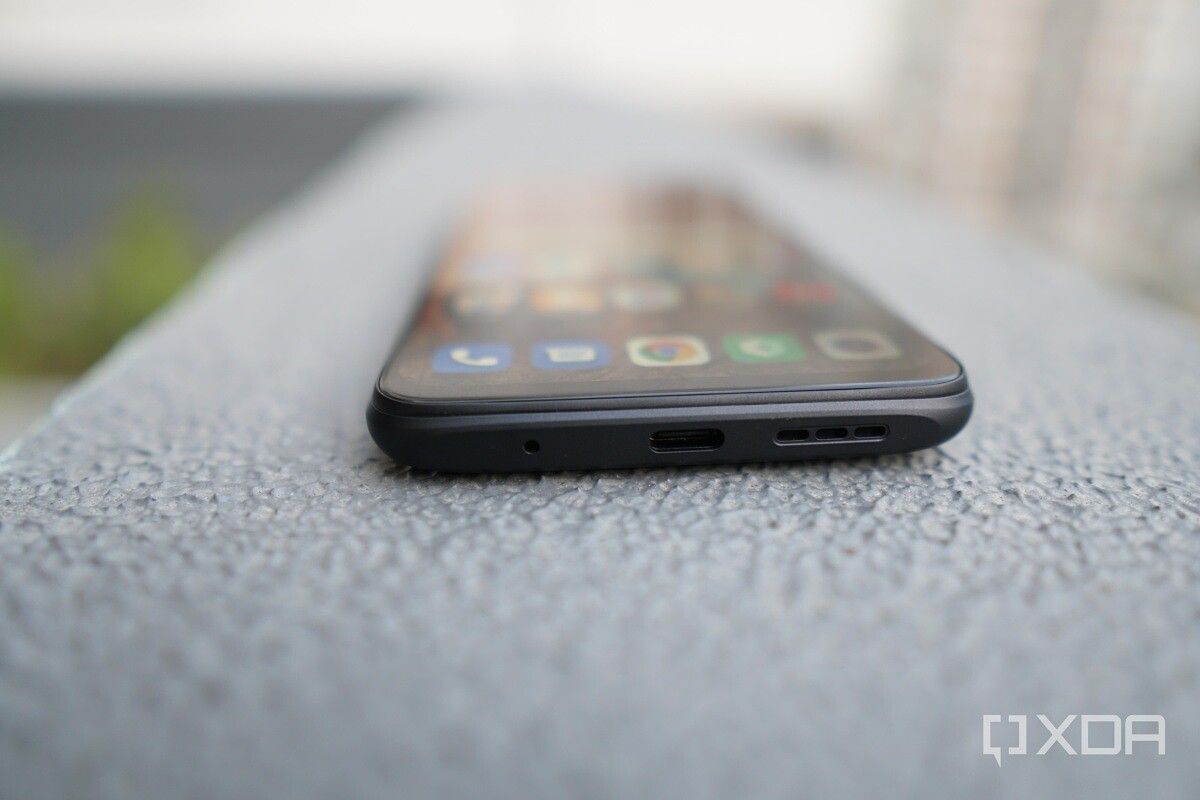
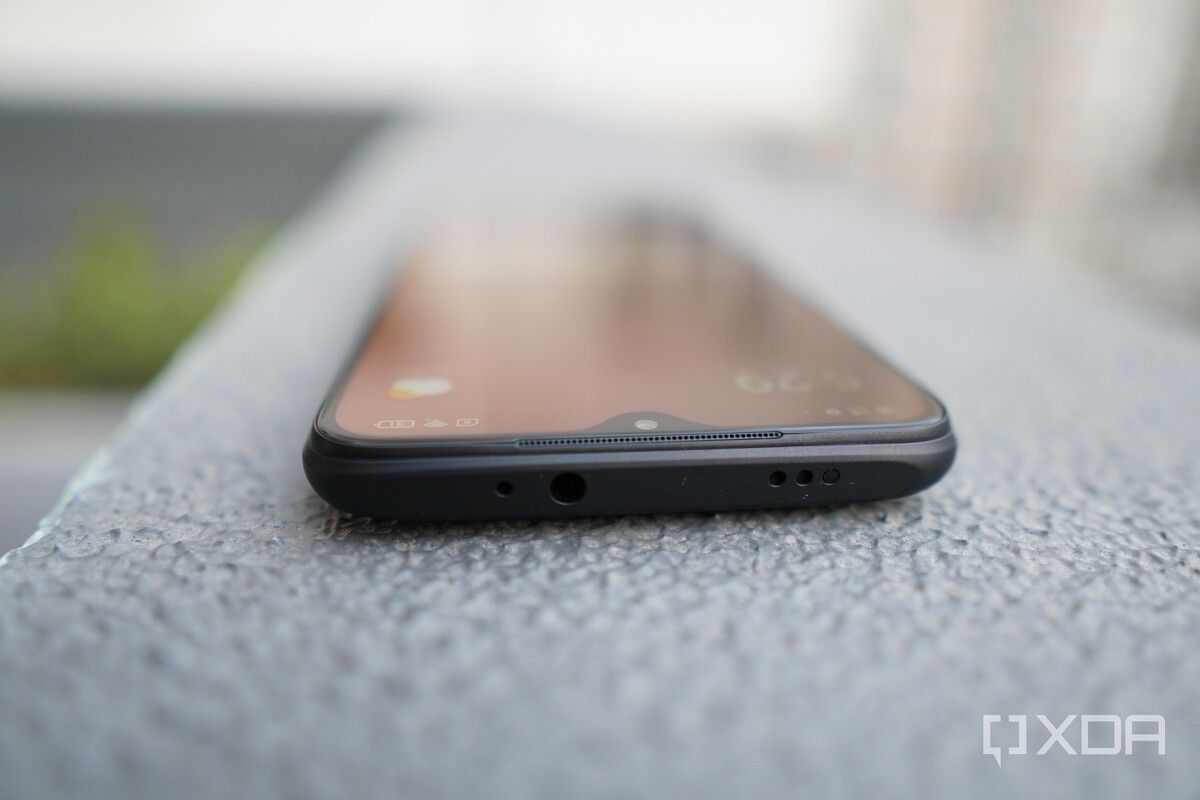
Bottom of POCO M3 Right side of POCO M3 with an in-display scanner Top of POCO M3 with an earpiece and speaker Top of POCO M3 with a headphone jack.

Powering the device is a Snapdragon 662, which, for the POCO M3’s price tag, is a capable chipset with an Adreno 610 GPU that’s optimized for gaming on a budget. There’s also a 6,000 mAh battery which is impressive for a device that weighs only 198g and measures 9.6mm thick. There’s also a 3.5mm headphone jack and dual speakers that get quite loud.

The faux leather finish looks and feels great for the price

The rest of the components are entry-level parts — the LCD panel refreshes at 60Hz, and while it looks sharp, it doesn’t get too bright (maxes out at 400 nits); the main camera system is a “triple” lens setup in marketing only, as the 48MP main sensor is flanked by two mostly meaningless 2MP sensors. The lack of an ultra-wide camera is really jarring in late 2020. The selfie 8MP selfie camera is serviceable during the day and nothing more.

POCO M3 camera module

Software: The typical MIUI fare

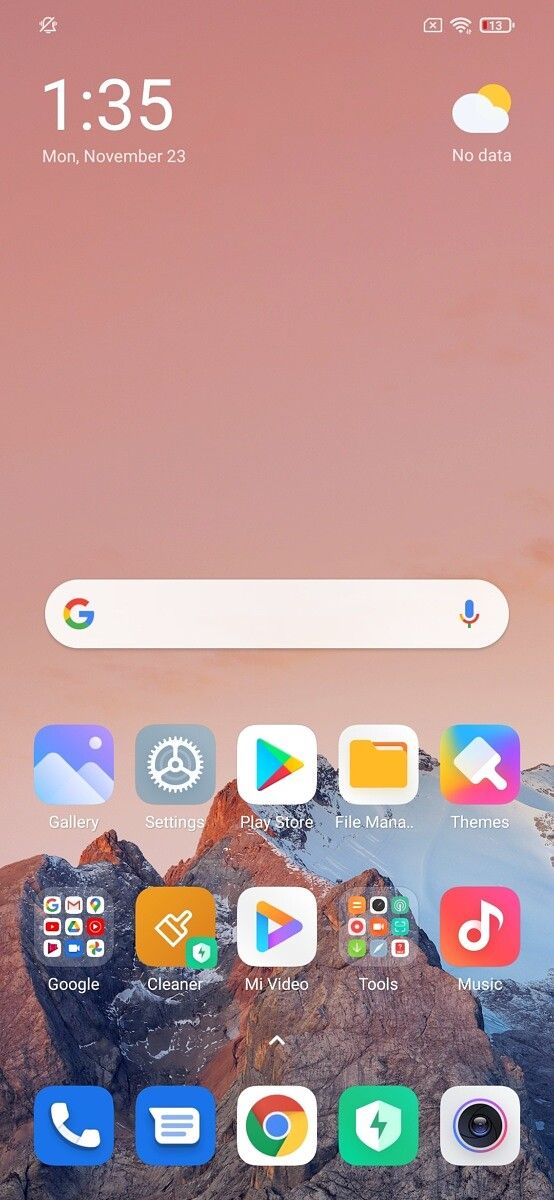
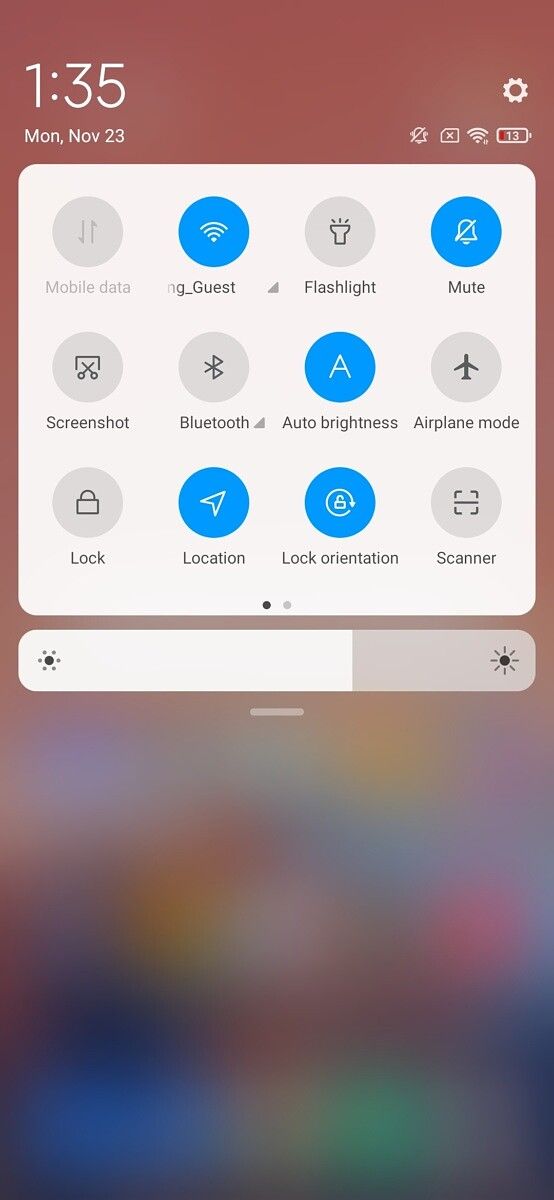
The POCO M3 runs MIUI 12 over Android 10, and the overall experience is very similar to previous Xiaomi or POCO devices released in 2020. However, since many other POCO releases this year featured a high refresh rate, the UI here feels a tad slow to my eyes — but then again, I’m spoiled. For this budget price range, the phone’s speed and fluidity are fine.

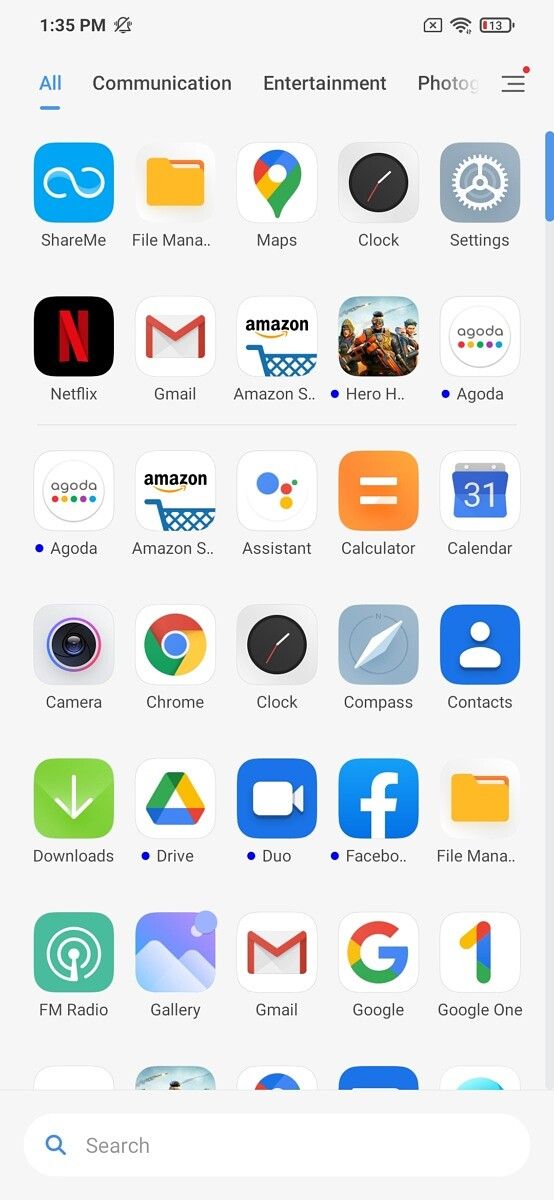
I’m testing the European variant, and there are a couple of bloatware apps pre-installed (Amazon and Agoda), however.

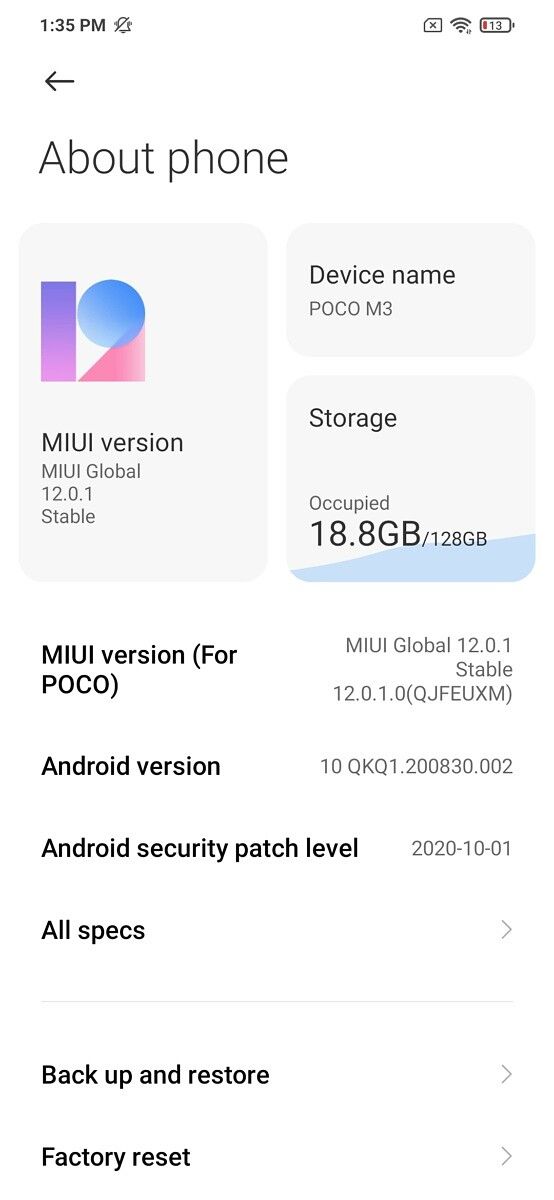
MIUI 12 on the POCO M3

Performance: System and Camera

The Snapdragon 662 is a solid octa-core 11nm chip that handles almost all daily tasks fine. I was able to play the game Hero Hunter with graphics settings on high without seeing stutter or framerate drops on the POCO M3.

As for the camera performance — I think it’s important to evaluate within the context of its price tag, because for someone like me who tests a lot of flagship phones, obviously, the photos produced by the POCO M3 are going to leave me wanting. But if we compare the POCO M3 against other devices in this price range, it can be considered capable. The main 48MP, f/1.79 sensor is decent during the day, producing sharp photos — but the dynamic range is limited.

In less than optimal lighting situations, both the 48MP camera and 8MP selfie camera struggle, producing very noisy shots. However, the main camera’s photos can be saved by turning on night mode, but the selfie sensor cannot really be salvaged at night.

The 2MP macro and depth sensors are mostly there for decoration, as the POCO M3’s macro shots are low on detail and portrait shots are just average.

Video recording maxes out at 1080p/30fps, and the footage is, again, acceptable at a budget phone price range, but for someone like me who’s used to testing more expensive phones, the footage appears grainy with no stabilization.

Battery life is, as expected, very good.

Battery life is, as expected, very good. Over the weekend, I unplugged on Saturday morning at 100%, went out for a full day, and returned home after 15 hours out with 45% battery. I was using the phone relatively heavily with lots of web surfing and photo taking. I didn’t charge it that night on purpose, and I woke up Sunday morning with 39%, which then lasted me through Sunday around 7 pm. That is solid performance in my eyes, and possibly the highlight of the POCO M3.

POCO M3: Price is the key

The Poco M3

The POCO M3 goes on sale starting this Friday, November 27 — which is Black Friday. POCO is offering an early bird discount price of $129 for the base 64GB storage variant and $149 for the 128GB model. After the early bird sales period, the price increases to an official $149 for the base model and $169 for the 128GB model.

Personally, I think the $129 price is reasonable for the M3, but at $169, it is relatively expensive compared to the far more capable X3 NFC, which only costs another $70 or so.


The post POCO M3 Hands-on: A Good-Looking Budget Phone appeared first on xda-developers.


from xda-developers https://ift.tt/3m0ngN3
via IFTTT