LightBlog

lundi 28 décembre 2020

Xiaomi announces MIUI 12.5 for its Mi and Redmi smartphones

Xiaomi’s MIUI 12 was one of its best received and most popular updates, riding atop the continued rally of smartphone launches and sales across the globe. Now, at the launch of the new Xiaomi Mi 11 flagship, Xiaomi is back with a new version update. Meet MIUI 12.5, the latest update to the popular smartphone UX present on Mi, Redmi, and POCO smartphones.

MIUI 12.5

MIUI 12.5 is numbered like a minor update, and that’s because it does not feature any dramatic redesigns. Instead, this update focuses on bringing in more polish and smaller UX changes and collating all the built-up updates since the launch of the last major update. Here are all the changes from the new MIUI 12.5 update!

New Super Wallpaper and Live Wallpaper on MIUI 12.5

MIUI 12’s Super Earth, Super Mars, and Super Saturn Live Wallpapers are some of the most popular live wallpapers around, on Mi and Redmi smartphones and even on other smartphones not from the Chinese OEM. Xiaomi is now adding two more live wallpapers to this set: Snow Mountain and Geometry!

MIUI 12’s latest Geometry and Snow Mountain live wallpapers are now available for download

Both of these new live wallpapers are available for download and sideloading/installing across Android smartphones, so check out the link above for download links!

New Sounds

MIUI 12 is known for the nature-inspired sound pack present within, allowing users to set notifications, ringtones, and other event tones with sounds from nature. This feature is now seeing further expansion, with new sounds inspired from the jungles of Amazon and Africa to the ice dessert in the Arctic.

A lot more sound options have been added across the UX alongside complementing haptics, contributing to the unique experience. And of course, if you don’t like them, you can always turn them off.

MIUI+ with MIUI 12.5

We’re looking for more clarity on this particular feature, since the live stream announcement was in Chinese. But based on what was presented on stage, MIUI+ on MIUI 12.5 is a way to integrate the functions of your Android phone with your Windows PC. Think Microsoft’s Your Phone app, but for Xiaomi.
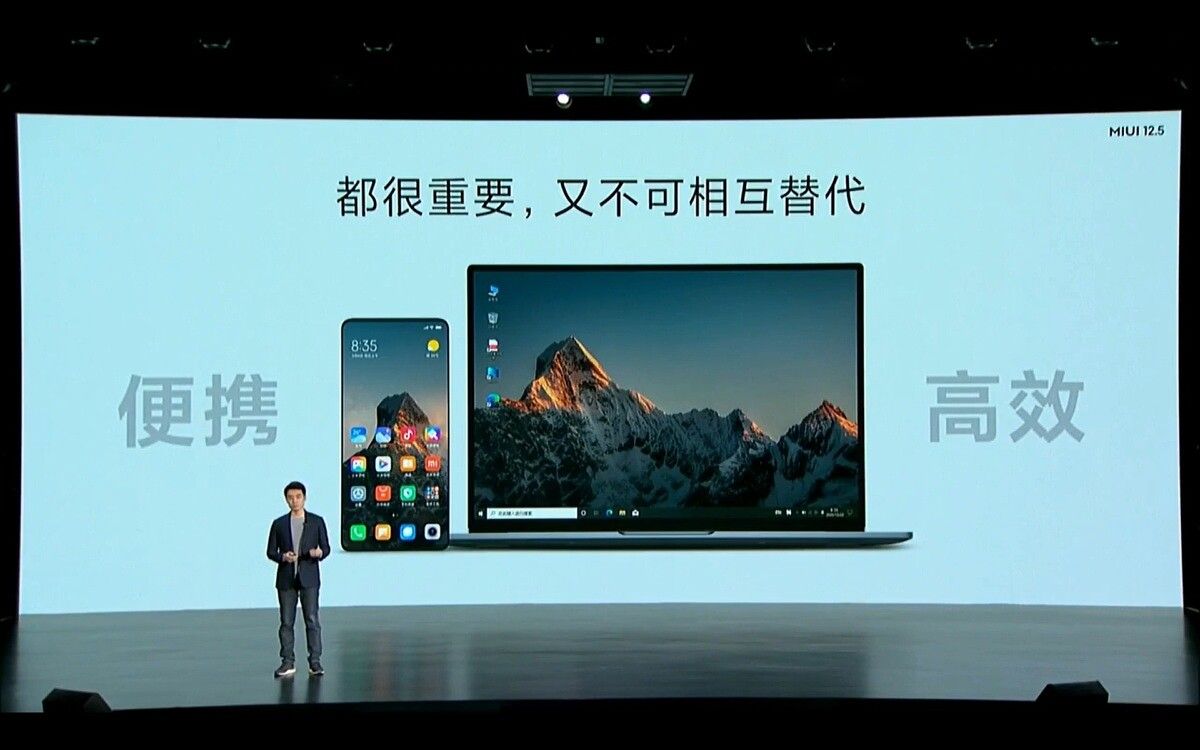
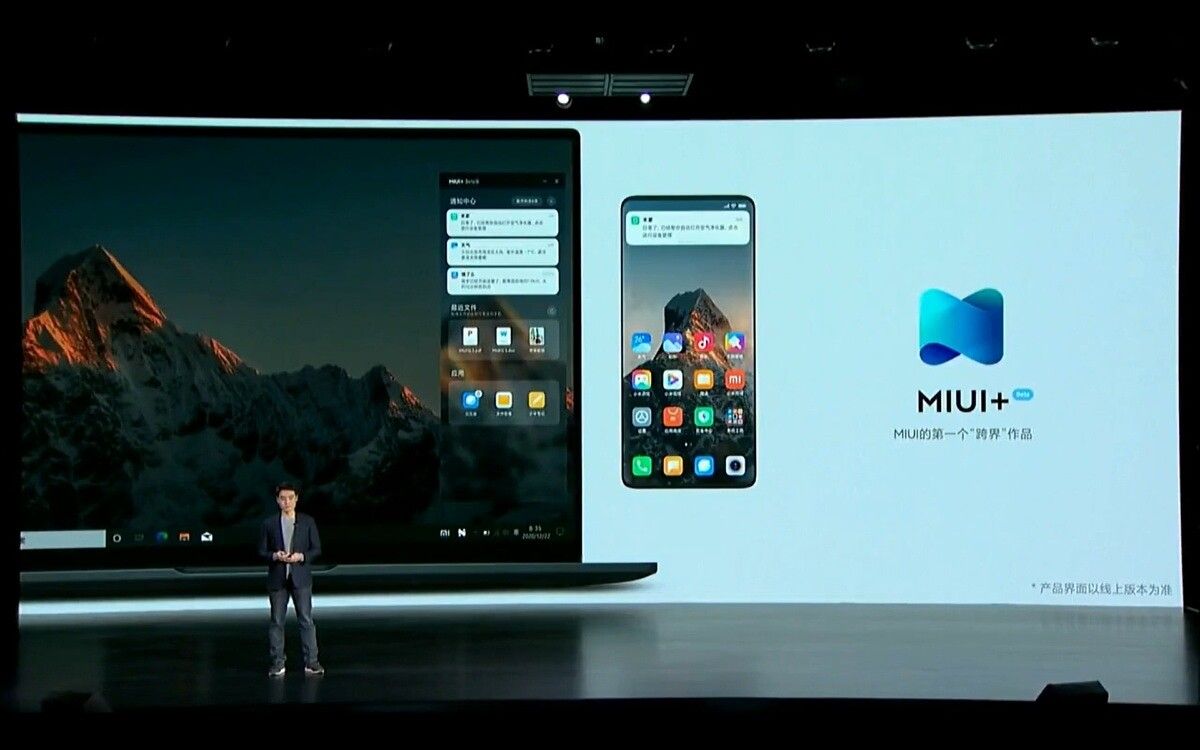
MIUI+ with MIUI 12.5 MIUI+ with MIUI 12.5

You can view your phone notifications on the laptop, takeover select running mobile apps on your laptop, copy text on phone and paste directly on laptop, immediately have your screenshots show up on your laptop, access files on your phone through the laptop and even edit and sync them back, and more. We’ll be exploring this feature further in-depth soon. For now, these are the currently supported smartphones for this feature on MIUI 12.5:

  • Mi 10 Ultra
  • Mi 10 Pro
  • Mi 10
  • Mi 9 Pro 5G
  • Mi 9
  • Redmi K30 Ultra
  • Redmi K20 Pro
  • Redmi K30 Pro

Xiaomi also recommends using the feature on these laptops:

  • Mi Notebook Pro 15 Enhanced Edition
  • Mi Notebook Pro 15.6″ 2020
  • Redmi G gaming notebook
  • RedmiBook 16
  • RedmiBook 14 II
  • RedmiBook Air 13

Performance on other laptops is not guaranteed. But in theory, this MIUI+ app should work across all Windows machines in conjunction with compatible phones on MIUI 12.5.

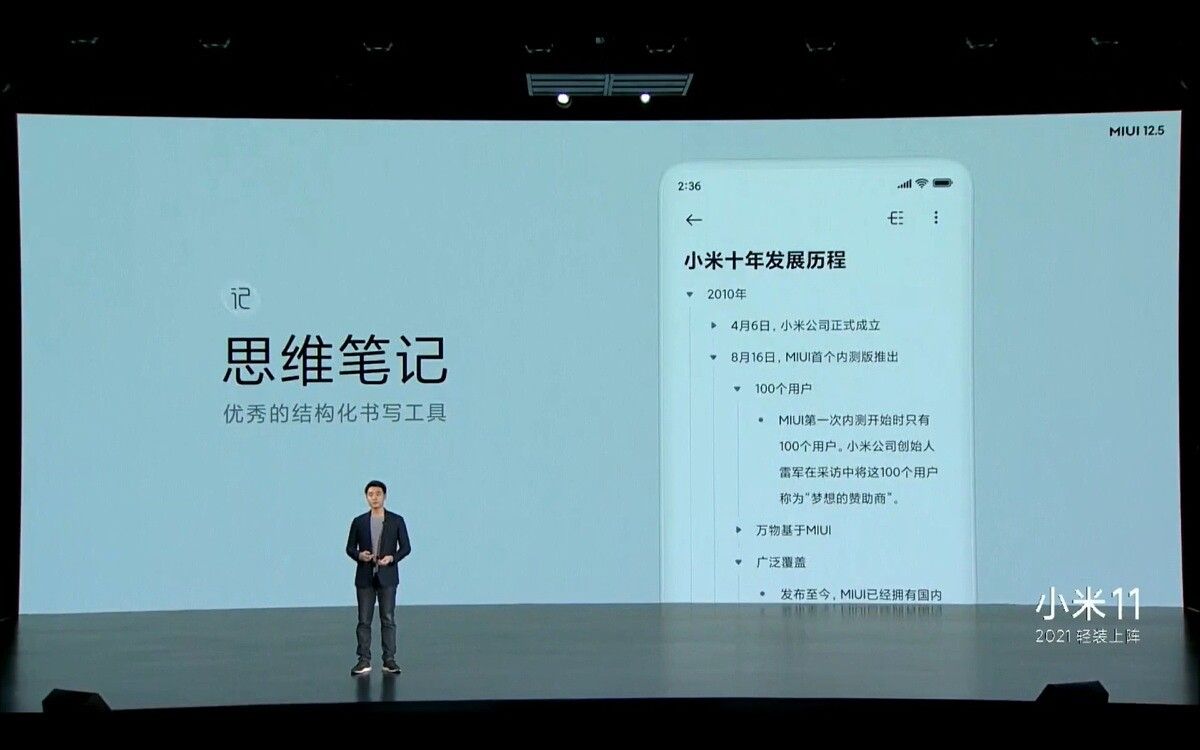
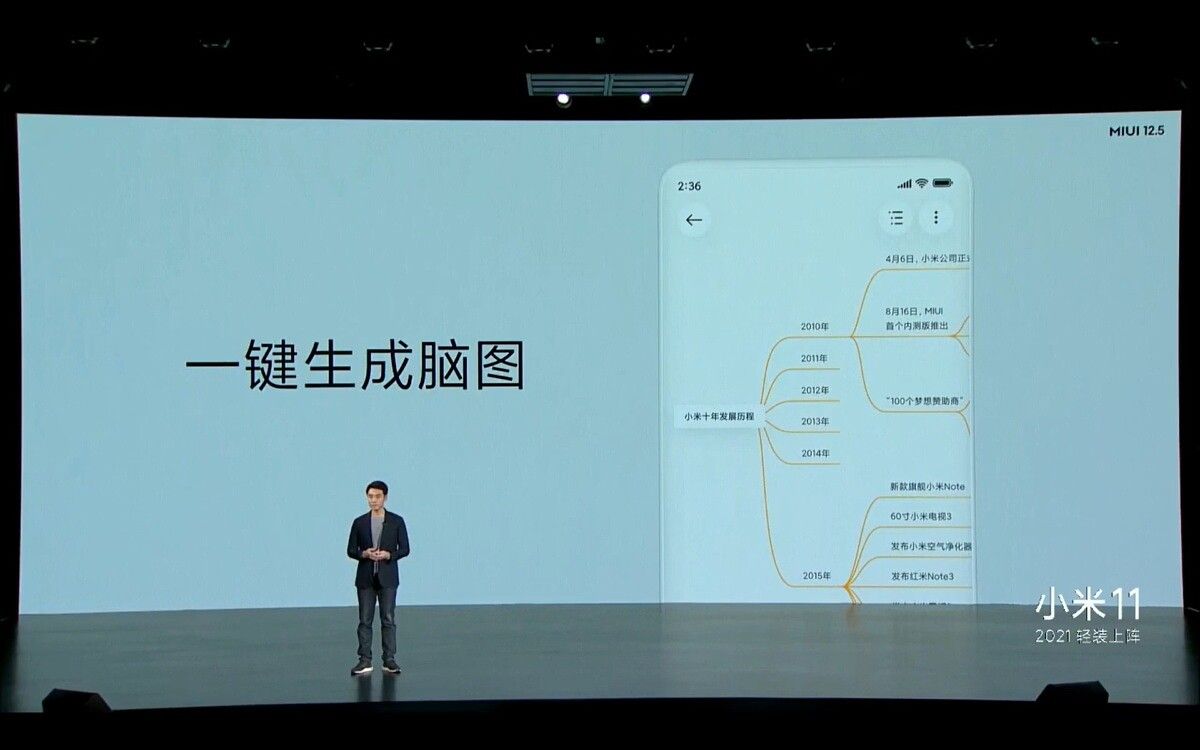
Notes App: New Icon, Indented Dropdown with Brainmap Generation, Drawing, and more

The default Notes app within MIUI 12 is getting a lot of attention with MIUI 12.5.

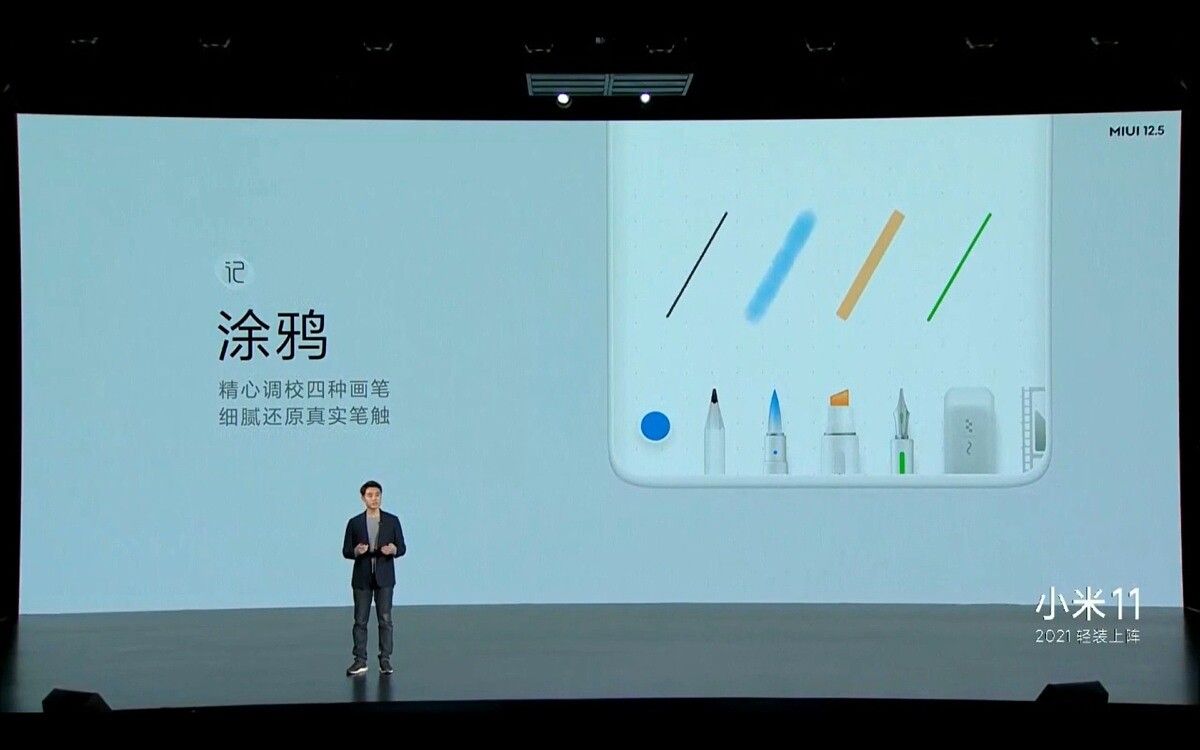
First, there’s a new icon, followed by new features like Indented lists with the ability to collapse, the ability to then create brain maps out of these lists with one click, the ability to draw and doodle, and more!
Privacy: Clipboard access, Coarse location, and more

With MIUI 12.5, Xiaomi is bringing in a few changes to how privacy is handled.

When apps attempt to access clipboard data, the user will be shown a prompt with the text within the clipboard, and the ability to grant permission, automatically decline after a timeout, or always decline.

MIUI 12.5 will also allow users to pass on Coarse location to apps instead of Fine location. In a lot of instances, apps do not require your location data down to the exact lane, and purposeful location fudging will help retain some privacy.

The Browser app is also getting some updates, with the ability to automatically block downloads from malicious pages, and other changes to internet-tracking (though we will not take Xiaomi’s word for it).

System Enhancements

Xiaomi claims that MIUI 12.5 focuses on optimization, with a 20% decrease in memory usage across core usage scenarios. In the same context, system operations now consume up to 32% less memory and offer a 17% decrease in power consumption. Super Wallpapers now consume 40% less power under MIUI 12.5.


MIUI 12.5 Complete Changelog

Here’s the complete changelog for the MIUI 12.5 update:

MIUI 12.5 Complete Changelog

MIUI 12.5:

  • System:
    • New: Response to gestures is now instant
    • New: With 20 times more rendering power, there are now few limited to what you can see on your screen.
    • New: With custom device model adjustments, any phone becomes faster after the upgrade.
    • Optimization: MIUI became lighter, faster, and more durable.
  • System Animations:
    • New: A new animation framework renders movement more realistically.
    • New: New UI design is focused on visualization and making your interaction with the device more lifelike.
  • System Sounds:
    • New: Nature mix is a new exciting way of creating your own notification sound system.
    • New: Hundreds of system sounds that represent animals from all around the world.
    • New: Stereo system sounds.
  • Super Wallpapers:
    • New: Mount Siguniang super wallpaper.
  • Privacy Protection:
    • New: Now you can see what apps access your clipboard and control access.
    • New: Using approximate location adds up points to privacy protection.
    • New: You can now manage sensitive permissions and related app behavior independently.
    • New: The behavior of web pages is also tracked now, which helps you to block unwanted and malicious actions.
    • New: Now it’s up to you who and when can track your online behavior.
    • New: All apps now come with a security statement from GetApps.
    • New: Privacy risk scanner.
    • New: Control which apps access and delete items from your Gallery.
    • New: A comprehensive overview of all sensitive permissions.
    • New: You’ll be notified whenever high-risk permissions are used and will be able to block the corresponding actions.
    • Optimization: An all-new privacy protection page.
  • Notes:
    • New: Compose mind maps with complex structures.
    • New: New tools for doodling and sketching.
    • New: Press and hold a sketch to adjust the strokes automatically.
    • New: A gesture shortcut now allows you to create notes, tasks, and excerpts anywhere.
    • New: Excerpts save texts, URLs, and images to Notes in a few simple taps.
    • New: Dynamix layouts make bring the typography in Notes to a new level.
    • All-new Notes.
  • MIUI+:
    • You can combine your phone and computer into a single working station.
    • You can view MIUI notifications and open phone apps on your computer.
    • Apps from your phone can be handed off to your computer.
    • The items copied on a phone can now be pasted on the computer and vice versa.
    • Photos and screenshots from a mobile device can be instantly used on a computer.
    • Web pages can be seamlessly handed over from one device to another.
    • You can transfer files to your mobile device using the “MIUI+” panel on your computer.
    • New “File Manager” and “Notes” for computers.
  • Floating Windows:
    • New: Instant messengers now support floating windows.
    • New: Floating windows can be quickly replaced with fullscreen versions of the apps.
    • New: App flashcards show key info when apps are displayed as floating windows.
    • Learn more about new features in “Special features”/
  • Xiaomi Health:
    • New: You can measure your heart rate using the camera now.
    • New: Start recording running, walking, and cycling workouts manually, and enjoy lots of online workout classes.
    • Optimization: Automatic workout recognition is much more accurate now.
  • Home screen:
    • New: “Ripples” animation for downloading apps.
    • New: “Burst” animation for uninstalling apps.
    • New: New design for app folders.
    • New: A vertical layout for Recents.
  • Casting:
    • New: The aspect ratio is adjusted to the external monitor automatically during casting.
    • New: The audio of the app that’s being cast in a floating window is separated from other audio.
  • Xiaomi Cloud:
    • New: Password manager allows you to store passwords in the cloud.
    • New: You can share device location with other people in your family sharing group.
    • New: Location information can be recorded automatically before the device powers off.
    • New: Convert images to PDF.
  • Mi Carrier Services:
    • New: You can manage multiple SIM cards now.
  • IME:
    • New: A more convenient way to move a cursor using the scrollbar.
    • New: Function buttons support switching between languages and keyboards.
    • New: You can press and hold the function buttons to access more features.
    • New: Custom themes for keyboards.
  • Themes:
    • New: Font weight adjustment options for third party fonts.
    • Optimization: Personalization features for system wallpapers, animations, and sounds.
  • Browser:
    • New: Wallpaper customization in the lite mode.
    • Optimization: Redesigned Incognito mode.
    • Optimization: Pages load much faster now.
  • Mi Family:
    • New: You can manage multiple SIM cards now.
    • Optimization: Revamped device control center.
  • Search:
    • Optimization: Local search results are sorted automatically now.
    • Optimization: All-new design.

MIUI 12.5 Rollout Schedule

Xiaomi did not explicitly mention when the update will be rolling out to devices. We hope to hear more information from them on this soon. However, the first set of MIUI 12.5 builds are already live on the China Closed Beta branch, which you can flash if you are feeling adventurous. Regions outside of China may have to wait patiently for the builds to progress to the China Stable branch first, and then onto the respective Global branches.

The post Xiaomi announces MIUI 12.5 for its Mi and Redmi smartphones appeared first on xda-developers.


from xda-developers https://ift.tt/3aPpkVE
via IFTTT

Xiaomi launches the Mi 11 flagship 5G phone with Qualcomm’s Snapdragon 888

The fateful year is drawing to a close. And just when you thought we have seen everything there is to see this year in tech, Xiaomi is here with its “one more thing”, and it’s their biggest reveal from the dedicated launch event in China today. Meet the new Xiaomi Mi 11, Xiaomi’s next flagship and the first smartphone with the new Qualcomm Snapdragon 888.

Xiaomi Mi 11: Specifications

Specification Xiaomi Mi 11
Build
  • Metallic mid-frame
  • Corning Gorilla Glass Victus on front
  • Glass back
Dimensions & Weight
  • Frosted Glass:
    • 164.3 x 74.6 x 8.06 mm
    • 196g
  • Vegan Leather:
    • 164.3 x 74.6 x 8.56mm
    • 194g
Display
  • 6.81″ QHD+ AMOLED display
  • 120Hz refresh rate
  • 480Hz touch response rate
  • 515 ppi pixel density
  • 1500 nits peak brightness
  • 10-bit color
  • HDR10+
  • Hole punch display
SoC Qualcomm Snapdragon 888:
  • 1x Kryo 680 Prime Core @ 2.84GHz
  • 3x Kryo 680 Performance Cores @ 2.4GHz
  • 4x Kryo 680 Efficiency Cores @ 1.8GHz

Adreno 660

RAM & Storage
  • 8GB LPDDR5 + 128GB UFS 3.1
  • 8GB + 256GB
  • 12GB + 256GB
Battery & Charging
  • 4,600mAh
  • 55W wired fast charging
  • 50W wireless fast charging
  • 10W reverse wireless charging
Security In-Display Optical Fingerprint Sensor
Rear Camera(s)
  • Primary: 108MP, 1/1.33″ sensor, f/1.85, 1.6µm, OIS
  • Secondary: 13MP, f/2.4, 123° FoV, wide-angle sensor
  • Tertiary: 5MP, f/2.4, AF, macro

Video:

  • 8K
  • HDR 10+
Front Camera(s) 20MP, f/2.4
Port(s) USB Type C
Audio Stereo Speakers tuned by Harman Kardon
Connectivity
  • NFC
  • Wi-Fi 6
  • IR Blaster
Software MIUI 12.5 based on Android 11
Other Features
  • Simultaneous audio sharing with two Bluetooth devices

The Xiaomi Mi 11 picks up where the Mi 10 and Mi 10 Pro left off, even though Xiaomi had the even crazier Mi 10 Ultra launching later in the year. So while the device is not as overkill as the Ultra, it still pulls in specifications that are known for a stellar experience in the premium flagship space.

Xiaomi Mi 11 Leather Edition

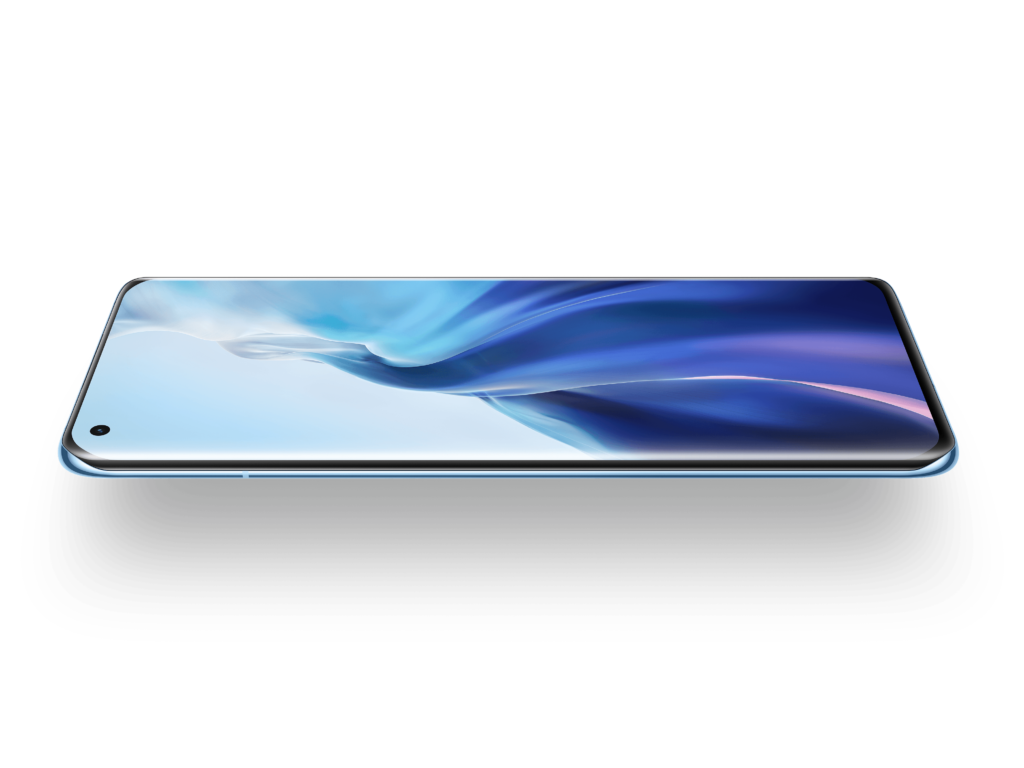
If you have been following Xiaomi’s flagship smartphones, you’d see a familiar package up front on the Mi 11. The display curves over the edges, but now the back also flows in more drastically. The end result is a svelte figure through the 1.8mm metal frame that needs more surface area around the power button and volume rocker. On the back, the camera island is a combination of familiarity and uniqueness — familiar because we have seen such designs on other phones, and unique because of the 108MP primary camera that lends it a large footprint and attracts attention with its silver ring accent. The Xiaomi branding on the bottom is subtle, and we definitely prefer the clean look over the large obnoxious branding exercises that we have seen on more budget offerings.

The display is a 6.81″ QHD+ AMOLED panel with a 120Hz refresh rate. Unfortunately, there’s no variable refresh rate here, though the display can switch between 30Hz, 60Hz, 90Hz, and 120Hz depending on the content. The panel is 10bit capable and is protected by Gorilla Glass Victus on the front.

Even though the Mi 11 has technically been released in 2020, it still qualifies to be called a 2021 flagship. The sole reason for this is because it uses the brand new Qualcomm Snapdragon 888, and also because the device will become commercially available only in 2021, which is about 3 days away. As Idrees notes in his deep-dive and Mishaal concludes in the benchmark followup, the chip is a respectable step forward for Qualcomm, with a lot of attention on the AI Engine and the Spectra ISP alongside the usual CPU and GPU increments. It’s very likely the Snapdragon 888 becomes the best Android SoC in 2021, and the Mi 11 can take it to that position thanks to the complementing LPDDR5 RAM (clocked at 6400Mbps compared to the previous 5500Mbps clock) and UFS 3.1 storage.

Xiaomi Mi 11 Camera 108MP

The camera is also impressive. While the Mi 10 and Mi 10 Ultra attempted to pack in four cameras, Xiaomi is rightfully cutting down on the numbers to focus more on the size of the sensor. The primary sensor is a 108MP sensor, flanked by a 13MP ultra-wide angle sensor and a 5MP tertiary sensor. The front camera is a 20MP sensor.

As for battery and charging, this is a flagship, so you get some great specifications here too. The 4,600 mAh battery can be charged up to 55W with a wire, or up to 50W wirelessly. However, one regression creeps into the package, as Xiaomi has removed the charger from the box, as expected after Apple’s move. But but but, Xiaomi will give you a 55W GaN charger (worth CNY 100 (~$15)) separately, outside the box. Customers can opt to forego the same if they have an abundance of chargers with them.

The Xiaomi Mi 11 is also the first phone to launch with MIUI 12.5 based on Android 11. This MIUI update collates all the relevant features added since the introduction of MIUI 12. The Mi 11 is also capable of sharing audio with two connected Bluetooth audio accessories, allowing your friends to listen to the same music from your phone without disturbing others.

Xiaomi Mi 11: Pricing and Availability

The Xiaomi Mi 11 will be available to pre-order in China for CNY 3,999 (~$612) for the 8GB + 128GB variant, CNY 4,299 (~$657) for the 8GB + 256GB variant, and CNY 4,699 (~$719) for the 12GB + 256GB variant. Pre-orders begin today in China, with open sales from January 1, 2021.

Xiaomi Mi 11 pricing in China and Chinese Yuan

The phone is available in Midnight Gray, Horizon Blue, and Frost White in anti-glare frosted glass, as well as Lilac Purple and Honey Beige in vegan leather.

While the company has not explicitly confirmed any plans, we can confidently presume that the device will make its way to the international markets of Europe and India at least. After all, this is Xiaomi’s flagship, and it does make a splash.

The post Xiaomi launches the Mi 11 flagship 5G phone with Qualcomm’s Snapdragon 888 appeared first on xda-developers.


from xda-developers https://ift.tt/34RvyAi
via IFTTT

Windows 10 free upgrade is still available for Windows 7/8.1 owners

A few years back, Microsoft offered Windows 7 and Windows 8 users to upgrade to Windows 10 for free. The upgrade program allowed users with genuine license keys to upgrade to the latest operating system at no extra cost. While the free update program ended in 2016, it seems that the offer continues to remain valid.

Customers can continue to take advantage of Microsoft’s free Windows 10 upgrade. As tested by Windows Latest, users with a genuine license of Windows 7 or Windows 8.1 can upgrade to Windows 10 and get a digital license for free. A Reddit comment by a self-proclaimed Microsoft employee says that the whole “free” upgrade for a year was complete marketing fluff.

This should be good news for Windows 7 users, especially since Microsoft ended support for the operating system in January 2020. During the time Microsoft had also confirmed that there would be no more security updates, or emergency patches unless you’re a business that is willing to pay.

How to get Windows 10 upgrade for free:

  • Make sure you are using a genuine copy of Windows 7/8.1 on your device or virtual machine.
    • Note that a corporate/volume licensed instance of Windows — even if it’s genuine — isn’t eligible.
  • Head over to the Windows 10 download page and download the tool to install the OS.
    • Alternatively, you can download the full ISO of Windows 10 from this page (may redirect to the Media Creation Tool download page if opened on Windows).
  • Open the Media Creation Tool and select ‘Upgrade this PC now’.
  • Accept the terms and conditions and choose the upgrade option where you keep your files and information. Doing a fresh install via the Media Creation Tool may not get you Windows 10 for free, so be careful!
    • A summary of available upgrade paths from Windows 7 or a later operating system to Windows 10 can be found here.
  • Once the installation completes, connect your device or virtual machine to the internet and open Windows Update > Activation. Click on the ‘Activate’ button if required and your PC will be activated with a digital license after it establishes a connection to the Microsoft servers.
  • In case you are unable to obtain the license, you can enter your Windows 7/8/8.1 product key and manually activate the operating system.

Do note that these steps will work only if you have a legitimate Windows 7 or Windows 8.1 installation. You cannot upgrade to genuine Windows 10 if you have a non-activated or a non-genuine version of Windows 7 or 8.1. It is also interesting to note how Microsoft has kept this a secret and doesn’t publicize the fact that users can still continue to upgrade to the more secure and powerful operating system, free of cost.

Microsoft releases x64 app emulation in preview for Windows 10 on ARM

The post Windows 10 free upgrade is still available for Windows 7/8.1 owners appeared first on xda-developers.


from xda-developers https://ift.tt/3aLG1Bh
via IFTTT

TWRP adds support for the ASUS ZenFone 7, ROG Phone 3, Samsung Galaxy Note 10 (Exynos), and more

The TWRP custom recovery is an essential tool for Android enthusiasts who wish to install third-party software on their devices. With it, you can flash new custom ROMs, take full data backups, modify protected files, and do much more. But to do any of these things, you need to have a device that’s officially supported by the TWRP project. Thankfully, the team behind the project keeps adding support for new devices ever so often. Since our previous coverage, the team has expanded support to the ASUS ZenFone 7 series, ROG Phone 3, Samsung Galaxy Note 10 series (Exynos), Galaxy Tab S6 Lite, Galaxy J4, and the Galaxy M30s.

ASUS ZenFone 7 series

The ASUS ZenFone 7 and ZenFone 7 Pro are the latest flagship smartphones from the Taiwanese smartphone maker. The devices feature Qualcomm’s flagship chipsets for 2020, the Snapdragon 865 and Snapdragon 865 Plus, coupled with a unique camera module that swivels up to become the best selfie camera setup in the market right now.

ASUS ZenFone 7/7 Pro Forums

While both the devices run ZenUI 7 based on Android 10, third-party development for the devices is in full swing on our forums, with a couple of custom ROMs and mods already available for download. Thanks to the official TWRP support, you can now flash these ROMs and mods on your device with ease.

ASUS ROG Phone 3

The ASUS ROG Phone 3 is one of the best gaming smartphones that you can get your hands on at the moment. Much like the ZenFone 7 Pro, it’s powered by Qualcomm’s Snapdragon 865 Plus chipset. But it offers a few unique additions that set it apart from ASUS’s regular flagships. The ROG Phone 3 offers a unique design with a gamer-y aesthetic, it features a 144Hz high refresh rate AMOLED display, a massive 6,000mAh battery, 16GB of LPDDR5 RAM, and 512GB of fast UFS 3.1 storage.

ASUS ROG Phone 3 Forums

As with the ZenFone 7 series, third-party development for the ROG Phone 3 is in high gear on our forums, and developers have already released unofficial LineageOS 18.1, a Google Camera port, and unofficial TWRP for the device. Now, thanks to the official TWRP support, you’ll be able to flash the latest custom ROMs and mods on the device without worrying about any issues that you may face with the unofficial build.

Samsung Galaxy Tab S6 Lite

The Samsung Galaxy Tab S6 Lite is a toned-down version of Samsung’s flagship Android tablet from last year. The mid-range tablet features a 10.4-inch display coupled with Samsung’s Exynos 9611 SoC and the ARM Mali-G72 MP3 GPU.

Samsung Galaxy Tab S6 Lite Forums

The tablet recently received its first official build of LineageOS 17.1 based on Android 10, and now you flash it on your unit without relying on unofficial builds of the TWRP recovery. In case you’re not interested in flashing Android 10-based ROMs anymore, you can also check out an unofficial build of LineageOS 18.1 based on Android 11 on the tablet, which is now available on our forums.

Samsung Galaxy Note 10 series (Exynos)

The team behind the TWRP custom recovery has now officially extended support to the Exynos versions of the Galaxy 10 series devices, finally allowing users outside of the US to experience custom ROMs and mods on their Galaxy Note 10 devices.

TWRP for the Galaxy Note 10 4G || Galaxy Note 10 5G || Galaxy Note 10+ || Galaxy Note 10+ 5G

Samsung Galaxy Note 10 Forums || Samsung Galaxy Note 10+ Forums

The TWRP recovery is now available for the Exynos variants of the Galaxy Note 10 4G, Galaxy Note 10 5G, Galaxy Note 10+, and the Galaxy Note 10+ 5G. You can follow the links above to download the custom recovery for your respective device.

Samsung Galaxy J4

The budget-friendly Samsung Galaxy J4 from 2018 has also received official support for the TWRP custom recovery. The device features Samsung’s Exynos 7570 quad-core SoC, coupled with up to 3GB of RAM and up to 32GB of onboard storage.

TWRP for the Samsung Galaxy J4

It launched with Android 8.0 Oreo out of the box, and Samsung has already stopped releasing OS updates for the device. So, the official TWRP support is expected to give the Galaxy J4 a new lease on life, allowing users to install custom ROMs based on newer versions of Android.

Samsung Galaxy M30s

The Samsung Galaxy M30s is a mid-range Exynos 9611-powered device from last year, which was released with One UI based on Android 9.0 Pie. The device features a 6.4-inch Super AMOLED display, up to 6GB of RAM, and up to 128GB of onboard storage, making it quite a capable device even today.

TWRP for the Samsung Galaxy M30s

Samsung Galaxy M30s Forums

However, since Samsung hasn’t updated it to the latest version of One UI, it lacks a bunch of software features. Thanks to the official TWRP support though, you can now install third-party custom ROMs and mods on the device and unlock all of these features, and more, on your device.

It’s worth noting that while the TWRP team has officially announced support for the ASUS ZenFone 7 series, ROG Phone 3, and Galaxy Tab S6 Lite, the builds/wiki pages for these devices aren’t live yet. That’s because the TWRP team is waiting on the release of TWRP 3.5.0. We’ll add the respective links in this post as soon as they go live.

The post TWRP adds support for the ASUS ZenFone 7, ROG Phone 3, Samsung Galaxy Note 10 (Exynos), and more appeared first on xda-developers.


from xda-developers https://ift.tt/3rxAt34
via IFTTT

Report: More phones with MediaTek chips shipped in Q3 2020 than with Qualcomm chips

MediaTek beat Qualcomm to become the world’s largest mobile chipset vendor in Q3 2020. Having a market share of 31%, the company took a formidable leap alongside the recovering smartphone market this year. Other factors for the chip maker’s growth are being attributed to strong performance in the $100 to $250 price segment as well as growth in key regions including India and China.

The report published by Counterpoint, claims that Qualcomm stood at second position with 29% market share while Huawei’s Hisilicon, Samsung and Apple, all three managed to have a 12% share. Just last week, MediaTek had announced that it will be partnering with popular smartphone manufacturers to bring its new Dimensity 800U-powered mid-range 5G devices to the Indian market as early as next month and the Dimensity 1000 Plus-powered 5G flagships early next year.

counterpoint global smartphone chipset market share q3 2020

Image credits: Counterpoint

According to Research Director Dale Gai, emerging markets in Latin America and Middle East regions, along with the US ban on Huawei helped MediaTek grow significantly. He also said that MediaTek chipsets used in Xiaomi handsets increased by over three times as compared to Q3 last year. Affordable MediaTek chips fabricated by TSMC became the first option for many OEMs to quickly fill the gap left by Huawei’s absence.

counterpoint smartphone chipset vendor share by region q3 2020

Image credits: Counterpoint

Qualcomm was, however, the biggest vendor of 5G chipsets in Q3 2020 with 39% of the 5G phones sold worldwide having a Snapdragon processor. The report further suggested that the demand for 5G smartphones doubled during Q3 2020 with 17% of all smartphones sold in the same period being 5G enabled. It is expected that this trend will move in an upwards direction thanks to Apple’s recent launch of 5G-enabled iPhones. It is being speculated that one-third of all smartphones shipped in Q4 2020 are going to be 5G enabled and there is a high chance that Qualcomm will make a comeback and become the leader yet again in Q4 2020.

The post Report: More phones with MediaTek chips shipped in Q3 2020 than with Qualcomm chips appeared first on xda-developers.


from xda-developers https://ift.tt/3rzIVik
via IFTTT

Here’s everything we know about the Samsung Galaxy S21 series, launching in January

Samsung’s flagship smartphones for 2020 were some of the best Android smartphones this year, and we have high hopes for the company’s upcoming Galaxy S21 series. As per recent reports, the company will unveil the Galaxy S21 series in January next year, a few weeks before its usual Galaxy S series launch schedule. Ahead of the official reveal, we’ve seen several leaks and rumors about the upcoming devices, giving us a good look at their design and specifications. In case you’ve not been keeping up with our coverage of the devices, here’s everything we know about the Samsung Galaxy S21, Galaxy S21 Plus, and Galaxy S21 Ultra so far.

Samsung Galaxy S21 series: Release Date and Announcement Date

Samsung has inadvertently confirmed that the Galaxy S21 series will be unveiled on January 14th and that the devices are expected to go on sale in India on January 29th. Global retail availability is expected around January 22, 2021.

Samsung has opened pre-order reservations for the Galaxy S21 series in the U.S. weeks ahead of the official announcement. If you want to be one of the first people in the region to get your hands on the Galaxy S21, S21 Plus, or S21 Ultra, you can now register for a pre-order notification in the Samsung Shop app.

Once you’ve registered, Samsung will notify you as soon as the devices are available for pre-order. All users who pre-order a Galaxy S21 series device via the app will receive $60 in instant credits towards accessories for their new device.


Samsung Galaxy S21 series: Ultra, Plus, and Regular variants

Much like the previous generation, the Galaxy S20, the Galaxy S21 series will also have three devices in it at launch. There will be the regular Galaxy S21, followed by the Galaxy S21 Plus, and topping off with the premium flagship Galaxy S21 Ultra.

If you want an updated flagship from Samsung, the regular variant is the choice for you, as it will feature an updated SoC with a relatively modest package. It’s going to be the most accessible way to get a new Galaxy 2021 flagship in the first half of the year without abusing your wallet.

The Galaxy S21 Plus will be the middle-child in the lineup, and the option that would make sense for most people. It will pack in most of the needed features at a relatively-not-obscene price tag, giving users the sweet medium.

The Galaxy S21 Ultra will obviously be the overkill option. It would make sense for users who want the absolute best within conventional smartphone realms, and do not intend to flinch from spending top dollar for it. It will be the most premium and feature packed device from the South Korean company (outside of foldables and luxury special editions), so it’s the phone to get for those looking to make a statement while still holding something recognizable as a smartphone.

Design

Over the last few weeks, we’ve seen plenty of leaked CAD renders, live images, and even promotional videos of the Galaxy S21 series. These leaks gave us a good look at the device’s design.

Galaxy S21 (Regular)

For the regular Galaxy S21, the design is almost the same as the Galaxy S20. The only major differences between the two devices are the new camera island, which flows over the device’s left edge and blends seamlessly with the frame, and the flat display. This new camera module design is consistent across the Galaxy S21 lineup, and it comes in a couple of different finishes, which depends on the base colorway of the device.

Samsung Galaxy S21 in Phantom Pink, Phantom Purple, Phantom White, and Phantom Black colors in all angles

Speaking of colors, leaked official press renders of the Galaxy S21 suggest that Samsung will be offering the device in four color variants — Phantom Violet Phantom Gray, Phantom White, and Phantom Pink. Out of these, the Phantom Violet and Phantom Pink colorways will feature a copper-colored frame and camera module, the Phantom Black colorway will feature a black frame and camera module, and the Phantom White colorway will have a silver frame and camera module. All variants of the Galaxy S21 will have a plastic back, much like the Galaxy Note 20 from earlier this year.

Galaxy S21 Plus

In terms of design, the Galaxy S21 Plus won’t differ much from the base variant. It will feature the same design elements, including the new camera module, but it will have a slightly larger footprint. However, the device will differ from the regular Galaxy S21 in terms of material choice.

Samsung Galaxy S21 in Phantom Purple, Phantom White, and Phantom Black colors in all angles

Samsung will offer a glass back on the Galaxy S21 Plus, unlike the glasstic back on the base variant. Additionally, Samsung won’t offer as many color variants for the Galaxy S21 Plus, and it will only be available in Phantom Silver, Phantom Black, and Phantom Violet at launch.

Galaxy S21 Ultra

The top-of-the-line Galaxy S21 Ultra will also feature a similar camera island design, but it will be much larger than the camera island on the other two variants. This is due to the fact that it will include a total of 4 camera sensors. Unlike the Galaxy S21 and Galaxy S21 Plus, the Galaxy S21 Ultra will feature a curved display.

Samsung Galaxy S21 in Phantom White, and Phantom Black colors in all angles

As with the Galaxy S21 Plus, the Galaxy S21 Ultra will feature a premium glass back. But the device will only come in two color variants —Phantom Black and Phantom Silver.


Samsung Galaxy S21 series: Specifications

These are the expected specifications for the Samsung Galaxy S21 series. Note that these are not final specifications, and are based on leaks and reasonable guesstimates. We’ll keep them updated, but know that these may change by the time the phones are actually released.

Specifications Samsung Galaxy S21 Samsung Galaxy S21 Plus Samsung Galaxy S21 Ultra
Build
  • Aluminum mid-frame
  • Plastic back
  • Gorilla Glass Victus front
  • Aluminum mid-frame
  • Gorilla Glass back
  • Gorilla Glass Victus front
  • Aluminum mid-frame
  • Gorilla Glass back
  • Gorilla Glass Victus front
Dimensions & Weight
  • 151.7 x 71.2 x 7.9mm
  • 171 grams
  • 161.4 x 75.6 x 7.8mm
  • 202 grams
  • 165.1 x 75.6 x 8.9 mm
  • 228 grams
Display
  • 6.2″ FHD+ Dynamic AMOLED 2X display
  • 2400 x 1080 pixels
  • 421 PPI
  • 120Hz variable refresh rate
  • 20:9 aspect ratio
  • HDR10+
  • 1300nits peak brightness
  • Always-On display
  • Infinity-O display
  • 6.7″ FHD+ Dynamic AMOLED 2X display
  • 2400 x 1080 pixels
  • 394 PPI
  • 120Hz variable refresh rate
  • 20:9 aspect ratio
  • 1300nits peak brightness
  • HDR10+
  • Always-On display
  • Infinity-O display
  • 6.8″ QHD+ Dynamic AMOLED 2X curved display
  • 120Hz variable refresh rate
  • 20:9 aspect ratio
  • 1600nits peak brightness
  • HDR10+
  • Always-On display
  • Infinity-O display
SoC
  • International: Exynos 2100:
    • 1x Core @ 2.9GHz +
    • 3x Cores @ 2.8GHz +
    • 4x Cores @ 2.4GHz
  • USA: Qualcomm Snapdragon 888:
    • 1x Kryo 680 Prime Core @ 2.84GHz
    • 3x Kryo 680 Performance Cores @ 2.4GHz
    • 4x Kryo 680 Efficiency Cores @ 1.8GHz
  • International: Exynos 2100:
    • 1x Core @ 2.9GHz +
    • 3x Cores @ 2.8GHz +
    • 4x Cores @ 2.4GHz
  • USA: Qualcomm Snapdragon 888:
    • 1x Kryo 680 Prime Core @ 2.84GHz
    • 3x Kryo 680 Performance Cores @ 2.4GHz
    • 4x Kryo 680 Efficiency Cores @ 1.8GHz
  • International: Exynos 2100:
    • 1x Core @ 2.9GHz +
    • 3x Cores @ 2.8GHz +
    • 4x Cores @ 2.4GHz
  • USA: Qualcomm Snapdragon 888:
    • 1x Kryo 680 Prime Core @ 2.84GHz
    • 3x Kryo 680 Performance Cores @ 2.4GHz
    • 4x Kryo 680 Efficiency Cores @ 1.8GHz
RAM & Storage
  • 8GB + 128GB
  • 8GB + 256GB
  • 8GB + 128GB
  • 8GB + 256GB
  • 12GB + 128GB
  • 12GB + 256GB
  • 12GB + 512GB
Battery & Charging
  • 4,000mAh
  • 25W USB Power Delivery 3.0 fast charging
  • 15W wireless charging
  • 4.5 reverse wireless charging
  • 4,800mAh
  • 25W USB Power Delivery 3.0 fast charging
  • 15W wireless charging
  • 4.5 reverse wireless charging
  • 5,000mAh
  • 25W USB Power Delivery 3.0 fast charging
  • 15W wireless charging
  • 4.5 reverse wireless charging
Security Ultrasonic In-Display Fingerprint Scanner Ultrasonic In-Display Fingerprint Scanner Ultrasonic In-Display Fingerprint Scanner
Rear Camera(s)
  • Primary: 12MP, wide-angle lens, f/1.8, 1/1.76″, 1.8µm, OIS, Dual Pixel PDAF
  • Secondary: 12MP, ultra-wide-angle lens, f/2.2, 1/2.55″, 1.4µm
  • Tertiary: 64MP, telephoto lens, f/2.0, 1/1.76″, 0.8µm, PDAF, OIS
  • Primary: 12MP, wide-angle lens, f/1.8, 1/1.76″, 1.8µm, OIS, Dual Pixel PDAF
  • Secondary: 12MP, ultra-wide-angle lens, f/2.2, 1/2.55″, 1.4µm
  • Tertiary: 64MP, telephoto lens, f/2.0, 1/1.76″, 0.8µm, PDAF, OIS
  • Primary: 108 MP, wide-angle lens, f/1.8, 79°, 24mm, 1/1.33″, 0.8 µm, OIS, PDAF, Laser AF
  • Secondary: 12 MP, ultra-wide-angle lens, f/2.2, 120°, 13mm, 1/2.55″, 1.4 µm, AF
  • Tertiary: 10 MP, telephoto lens, f/2.4, 35°, 72mm, 1/3.24″, 1.22µm, OIS, 3x optical zoom
  • Quarternary: 10 MP, telephoto lens, f/4.9, 10°, 240mm, 1/3.24″, 1.22µm, OIS, 10x optical zoom
Front Camera(s) 10MP, f/2.2, 1.22µm, Dual Pixel PDAF 10MP, f/2.2, 1.22µm, Dual Pixel PDAF 40MP, f/2.2, 0.7µm, Dual Pixel PDAF
Port(s) USB 3.2 Type-C USB 3.2 Type-C USB 3.2 Type-C
Audio Stereo speakers Stereo speakers Stereo speakers
Connectivity
  • Bluetooth 5.1
  • NFC
  • Wi-Fi 6
  • 5G
  • Bluetooth 5.1
  • NFC
  • Wi-Fi 6
  • 5G
  • Bluetooth 5.1
  • NFC
  • Wi-Fi 6
  • 5G
Software Samsung One UI 3.1 based on Android 11 Samsung One UI 3.1 based on Android 11 Samsung One UI 3.1 based on Android 11
Other Features
  • IP68 water resistance
  • ANT+
  • DeX
  • Knox
  • UWB
  • Bixby Voice Assistant
  • Google Discover pane
  • IP68 water resistance
  • ANT+
  • DeX
  • Knox
  • UWB
  • Bixby Voice Assistant
  • Google Discover pane
Colors
  • Phantom Violet
  • Phantom Gray
  • Phantom White
  • Phantom Pink
  • Phantom Violet
  • Phantom Gray
  • Phantom White
  • Phantom Gray
  • Phantom White

The baseline for performance is set, with all three of the flagships in this series coming in with the top-end Qualcomm Snapdragon 888 in the USA and select other regions, and with the Exynos 2100 internationally. There should be plenty of RAM and storage onboard, though microSD card expansion is not yet known. The rear and front camera setup remains the same on the regular and Plus variant, while the Ultra gets a complete overhaul. Between the regular and Plus variant, the differentiating factor would be the slightly larger size and the difference in plastic back and glass back.


Samsung Galaxy S21 Ultra camera module leaked

The camera setup on the Galaxy S21 Ultra is expected to be significantly better, with a second-gen 108MP primary camera, the same 12MP wide-angle camera as the other two variants, a 3x telephoto sensor, and a 10x optical “super” telephoto sensor. The new telephoto sensors will feature 130% larger pixels and dual-pixel autofocus, and with the 10x telephoto sensor, Samsung will be reviving its 100x Space Zoom feature. As per the latest leak, all three devices in the Galaxy S21 lineup will offer 8K video capture capability at 30 frames per second, and 4K video capture at 50 frames per second. The devices will be able to capture Full HD video at 240 frames per second.

The leaks further reveals that all three devices will feature stereo speakers, NFC, Bluetooth 5.1, Wi-Fi 6, and IP68 dust and water-resistance. However, only the top of the line model will offer extras like S Pen support.


Samsung Galaxy S21 series: Price

As for pricing, reports suggest that the Galaxy S21 will start at €849 for the 128GB storage variant and €899 for the 256GB storage variant, €1,049/ €1,099 for the Galaxy S21 Plus 128GB/256GB, and the Galaxy S21 Ultra will cost €1,349/€1,399/€1,529 for the 128GB/256GB/512GB variant respectively. The pricing for the base model is lower than what the Galaxy S20 launched within Europe, but the higher-end model is more expensive than the Galaxy S20 Ultra possibly because of the improved camera hardware and S Pen support. In all, there’s a wider price bracket to cover with the coming flagship series.

Samsung Galaxy S21 / Galaxy S21 Plus / Galaxy S21 Ultra XDA Forums

Reports also suggest that Samsung might not offer a charger with the Galaxy S21 series in some regions. While we haven’t seen much information about the new software features that may launch with the devices, we’ve learned that Samsung may let users unlock the Galaxy S21 series devices with Bixby Voice and that the devices could come with the Google Discover feed on the minus one screen.


S Pen support on the Galaxy S series and the end of the Galaxy Note?

Historically, the S Pen had been the defining feature of the Samsung Galaxy Note series, clearly differentiating the product lineup towards productivity-focused pro-consumers. Some of Samsung’s tablets have come with support for S Pen, but by and large, the S Pen has been part of the Note identity.

Samsung Galaxy S Pen

But with the rise of foldables as the new forte for productivity-focused pro-consumers, and with the S-series also closing the gap in terms of other features, there’s little left for the Note and its own identity. Many rumors suggested that the Note lineup is dead. But Samsung had to come clean and reaffirm the existence of the Note series for another year, with the rider that some signature Note features will make their way on to other devices. This is the signal needed to reaffirm all rumors of the S Pen support coming over to the S series with the Galaxy S21 Ultra.

With the Galaxy S21 Ultra, the S Pen will reportedly be sold separately and stored separately. There’s no housing cavity within the device to store the stylus. Instead, Samsung will offer a couple of case options that will make it easier to store the stylus when not in use and charge it up as well.

The rest of the three phones, the Galaxy S21 and Galaxy S21 Plus, have not been rumored to come with S Pen support, indicating that Samsung will lock the feature to the top of the line model only. Note that this is not a software-lock, but a limitation on hardware as the needed digitizer components will not be present on the other two phones.


Will there be a Galaxy S21 FE or Galaxy S21 Mini?

The Samsung Galaxy S20 FE was a runaway hit in a year of widespread economic recession and rising smartphone pricing, thanks to its relatively affordable price tag for a pseudo-flagship. There’s good reason to believe Samsung is considering a successor simply because the predecessor was pretty successful, though there have been no leaks or rumors to this end just yet. If a Galaxy S21 FE comes into existence, it will be in the second half of the year.

As for the Galaxy S21 Mini, this is a form factor that many would hope Samsung takes considering the positive reception to the iPhone 12 Mini. Samsung has done “mini” flagships before, like the Samsung Galaxy S3 Mini, Galaxy S4 Mini, and Galaxy S5 Mini, so a “mini” flagship would not be out of place for the S series at all. There’s no indication that Samsung is indeed working towards a Galaxy S21 Mini. But if they do, it should hopefully follow along with the same principles as Apple followed for its mini: all of the flagship in just a smaller size. Samsung has three devices in its Galaxy S21 lineup, which then begs the question: which of the three forms the base for expectations for the Galaxy S21 Mini? If the South Korean company uses the regular variant as the base, then the resultant phone would be similar in concept to early A-series and M-series smartphones, with just a flagship processor. And we aren’t sure if that alone would be enough reason to convince everyone looking for a small-footprint device, especially with Exynos 2100 at the helm.


What are your thoughts on the Galaxy S21 series? Do you think that they’ll live up to the hype? Share your thoughts in the comments section below.

The post Here’s everything we know about the Samsung Galaxy S21 series, launching in January appeared first on xda-developers.


from xda-developers https://ift.tt/3pfq9uF
via IFTTT

dimanche 27 décembre 2020

Samsung opens pre-order reservations in the U.S. for the Galaxy S21 series

Over the last few weeks, we’ve seen plenty of leaks about Samsung’s next-gen flagship lineup. These leaks have revealed pretty much everything about the upcoming devices, right from their design to their specifications. On top of that, we’ve also seen some information about the alleged pricing for the Galaxy S21 series in Europe. Although Samsung hasn’t confirmed or denied any of the information revealed in these leaks, it has inadvertently revealed that the devices would be announced on January 14th. While we’re still a few weeks away from the official launch event, the company has now opened pre-order reservations for the Galaxy S21 series in the U.S.

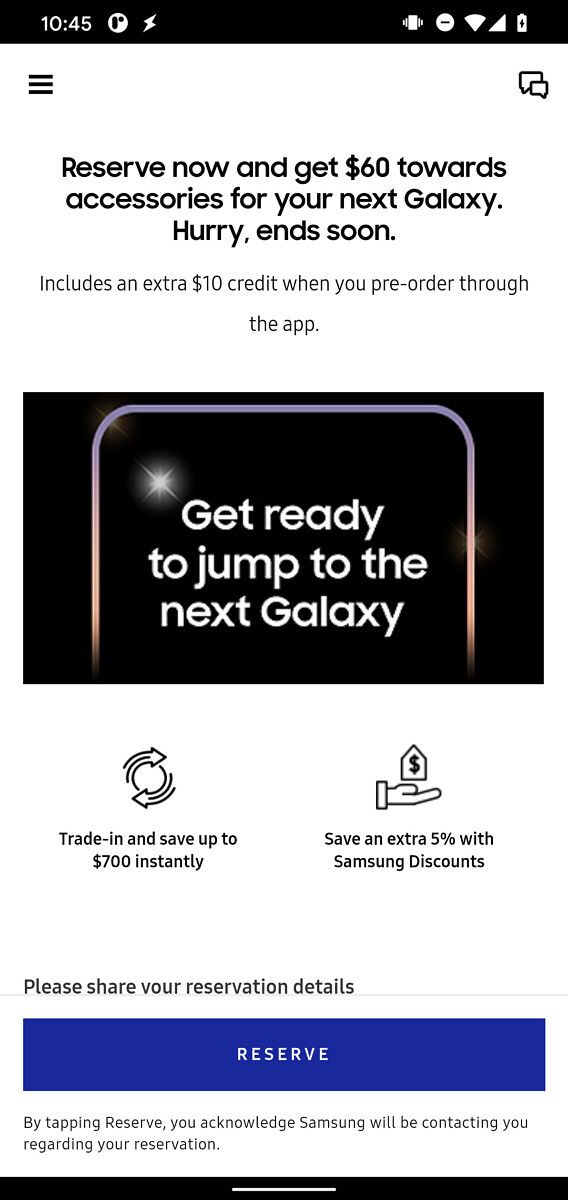
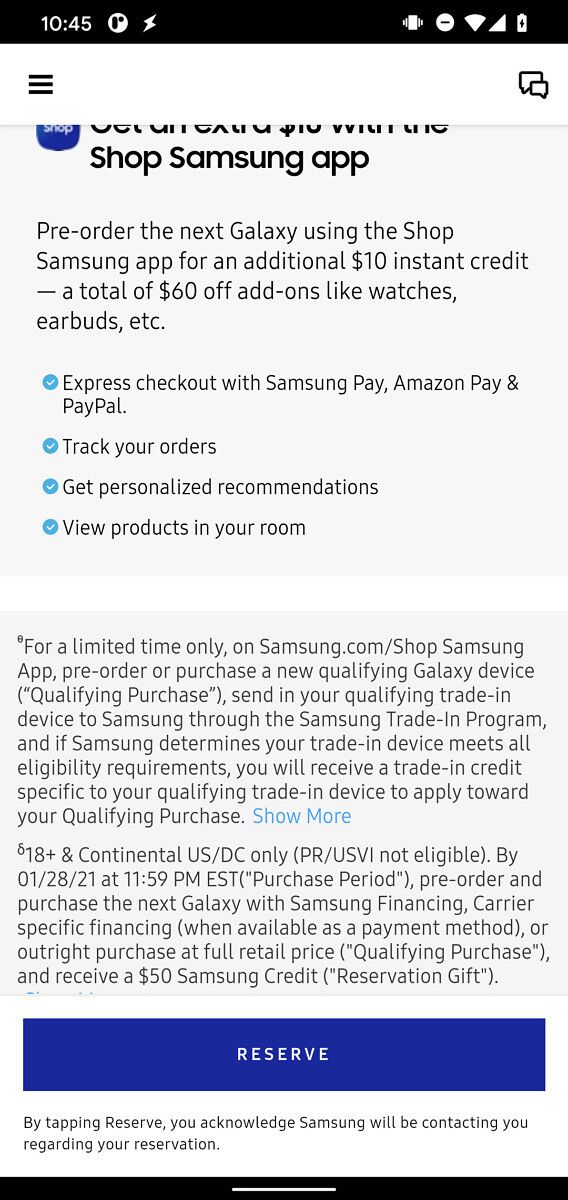
As you can see in the attached screenshots, people in the U.S. can now sign up to be notified when pre-orders go live for the upcoming Galaxy S21 series. If you want to get your hands on a Galaxy S21, Galaxy S21 Plus, or Galaxy S21 Ultra as soon as possible, you can register for the pre-order notification from within the Samsung Shop app. To do so, open the app and tap on the “Reserve Now” button on the new banner image. This will redirect you to a pre-order registration page, which highlights all the terms and conditions of the offer.

Samsung Galaxy S21 US pre-order reservation Samsung Galaxy S21 US pre-order reservation Samsung Galaxy S21 US pre-order reservation

Registering for the pre-order notification will get you $60 in instant credits towards accessories for your new Galaxy S21 series device. This includes an extra $10 credit for those who pre-order through the app. Once you click on the Reserve button, Samsung will send you a notification as soon as the Galaxy S21 series pre-orders are live. It’s worth mentioning that you will also be able to trade-in your old device and get a discount of up to $700 on your purchase and save an extra 5% on the purchase with Samsung Discounts.

The post Samsung opens pre-order reservations in the U.S. for the Galaxy S21 series appeared first on xda-developers.


from xda-developers https://ift.tt/3ppQmH2
via IFTTT